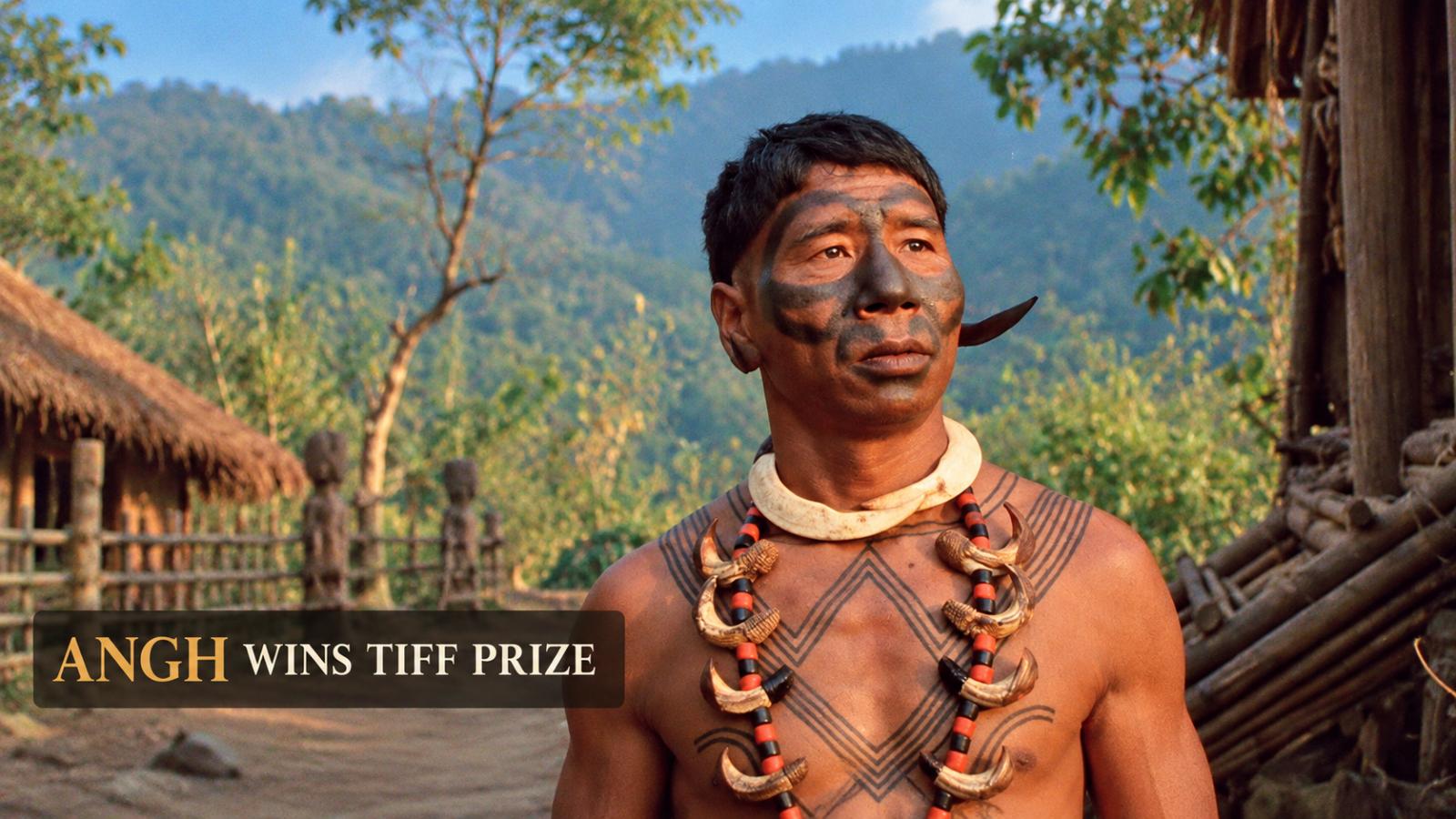
Theja Rio’s feature debut Angh has won the Platform Prize at the 2026 Toronto International Film Festival, a landmark moment for cinema from Nagaland. Told in Konyak and set in the 1960s, the film follows a village chief determined to hold on to his beliefs as Christianity and new ways of life reshape the community around him.
At the centre of the story is the chief’s difficult relationship with his teenage son. Rio uses their conflict to explore a larger question: what happens to a family when its world is changing faster than its members can accept? The film’s TIFF recognition has also opened a path for it to be considered in the Best International Feature Film Oscar race. Eligibility is an opportunity for consideration, not an Oscar nomination.
Theja Rio draws Angh from Naga history and culture
Raised in Kohima, Rio has said he once felt disconnected from his roots and rarely saw stories like his represented on screen. After studying English literature at Delhi University, he pursued screenwriting and filmmaking. An earlier short-film version of Angh helped him develop the story into a feature.
The film examines cultural change through its characters without reducing either tradition or Christianity to a simple villain. The chief’s resistance, his son’s curiosity and the tensions within the village give the period drama its emotional force. Much of that story unfolds through expressions, silence and the sounds of the surrounding forest rather than lengthy dialogue.
Local cast and 16mm filming shape the world of Angh
Finding performers was a major challenge for Rio and casting director Bendang Walling. Anghlong was chosen to play the village chief, while Sobino Rengma took the role of his son. Scottish actor Douglas Henshall plays an American Baptist missionary. Most of the cast had never worked on a film set before.
To recreate a 1960s village, production designer Margarida Caetano Dias worked with members of the Konyak community to build the setting. Cinematographer Adam Pietkiewicz shot on 16mm film, giving Angh a textured look suited to its historical setting. Rio also involved the Konyak Literature Board and Konyak Union during development.
Producer Nancy Nisa Beso and Rio now hope to bring Angh to audiences in Nagaland, where access to cinemas is limited. Its festival success has given the film an international platform; sharing it with the community whose culture helped shape it remains a central goal.