Plot
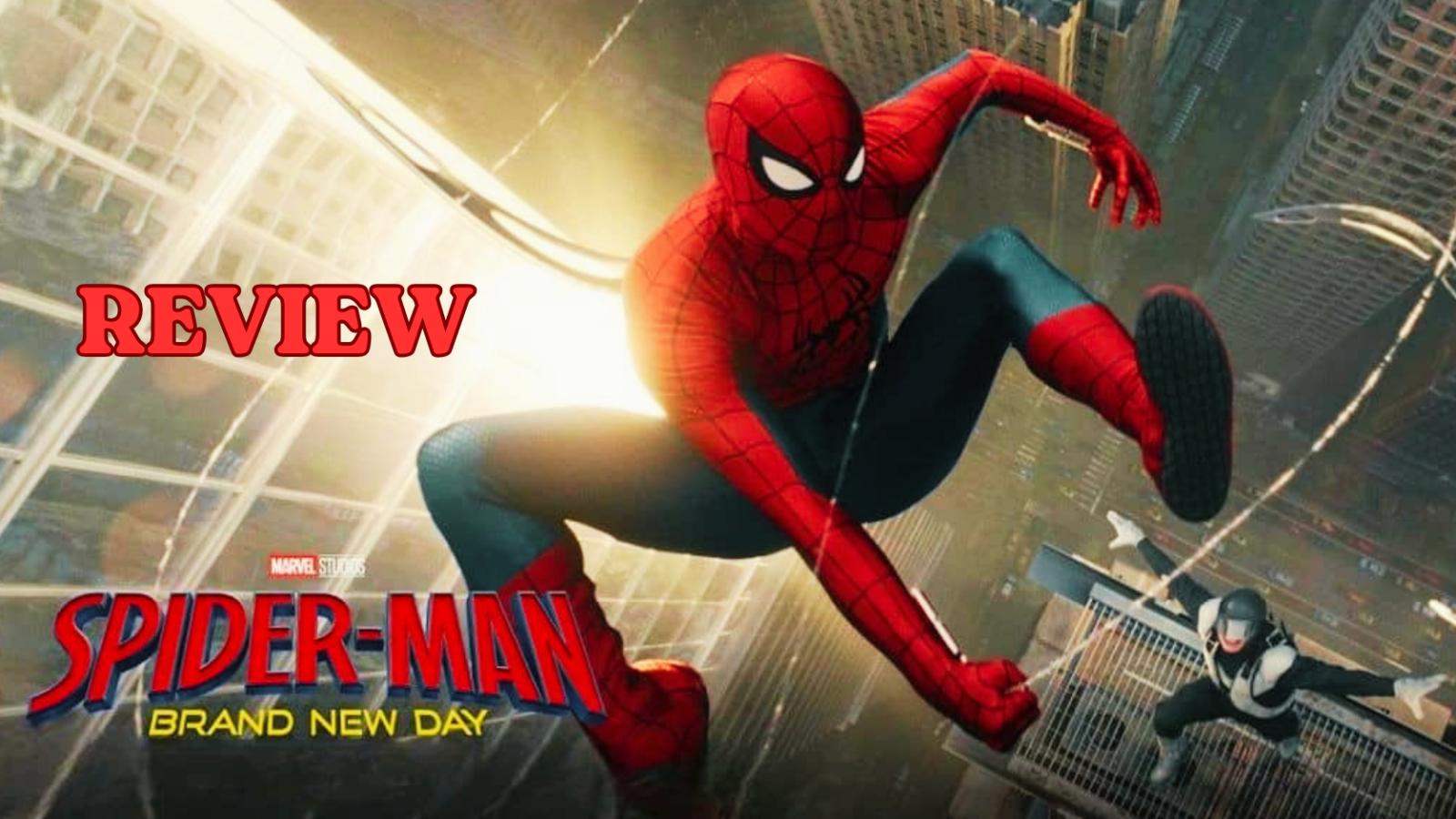
Spider-Man: Brand New Day follows Peter Parker after the devastating events of Spider-Man: No Way Home. With the world no longer remembering his identity, Peter lives an isolated life while continuing to protect New York as Spider-Man.
Without mentors, close friends or emotional support, Peter must learn to carry the consequences of his earlier decisions. As new threats emerge, he is forced to balance his responsibility as a superhero with grief, loneliness and the possibility of rebuilding his personal life.
The film moves away from large-scale multiverse spectacle and focuses on Peter’s emotional journey, his sacrifices and his struggle to find purpose when nobody knows the person behind the mask.
Overview
Spider-Man: Brand New Day is a more personal and emotionally grounded chapter in Tom Holland’s Spider-Man journey. Director Destin Daniel Cretton shifts the focus from alternate universes and nostalgic cameos to solitude, responsibility and consequence.
Although the opening portion takes time to establish Peter’s new world, the film gains momentum in the second half with inventive action sequences, emotional confrontations and a bittersweet conclusion.
Performances
Tom Holland delivers one of his most mature and controlled performances as Peter Parker. His character appears older, quieter and deeply affected by everything he has lost. Holland communicates Peter’s grief through subtle expressions, pauses and restrained emotional moments rather than dramatic speeches.
Sadie Sink makes a strong impression with a mysterious and understated performance. Her chemistry with Holland develops naturally, while her character gradually becomes important to the narrative.
Zendaya remains emotionally significant even though her role is shaped largely by Peter’s memories and their complicated history.
Bruce Banner, Punisher and Florence Pugh’s Black Widow contribute effectively without overshadowing Peter’s journey. Jacob Batalon brings familiarity and warmth whenever he appears.
Technical Aspects
Destin Daniel Cretton presents New York as an exciting and unpredictable playground for Spider-Man. The action sequences make effective use of skyscrapers, rooftops, narrow spaces and dangerous heights.
The visual effects are polished, particularly during Spider-Man’s swinging sequences and aerial confrontations. Instead of depending entirely on massive destruction, the film focuses on speed, movement and physical danger.
The cinematography successfully shifts between Peter’s lonely personal life and the energetic superhero action. The darker visual tone also reflects his emotional condition.
Music
The background score supports both the film’s emotional and action-driven moments. The quieter themes enhance Peter’s loneliness and grief, while the energetic compositions bring intensity to the rooftop chases and swinging sequences.
The music remains effective without overpowering the performances or emotional scenes.
Editing
The editing is uneven during the first half, where the film spends too much time establishing new characters and Peter’s changed circumstances. Several scenes repeat ideas that the narrative has already communicated.
The pacing improves considerably after the midpoint. The second half is tighter, faster and more engaging, with action and emotional sequences flowing smoothly towards the climax.
Positives
- Tom Holland delivers a mature and emotionally controlled performance.
- The story focuses strongly on Peter Parker’s loneliness and personal struggles.
- The second half features inventive and exciting action sequences.
- Spider-Man’s swinging and rooftop chase scenes are visually impressive.
- Sadie Sink makes a strong impact with an intriguing performance.
- The emotional connection to No Way Home is handled with restraint.
- The bittersweet climax suits Spider-Man’s journey of sacrifice.
- The film allows Peter Parker to stand independently without relying heavily on multiverse nostalgia.
Negatives
- The first half moves at a slow pace.
- Some scenes repeat Peter’s emotional situation unnecessarily.
- A few supporting characters lack proper development.
- The opening act spends too much time establishing the new storyline.
- Certain franchise-building moments distract from Peter’s personal journey.
- The editing could have been tighter in the first half.
- Some new characters mainly serve the plot without leaving a lasting impact.
Analysis
Spider-Man: Brand New Day succeeds because it understands that Peter Parker does not always need a multiverse-level threat to make his story meaningful. The emotional consequences of No Way Home provide enough conflict to carry the film.
Peter’s loneliness becomes the central theme. He continues saving people even though nobody knows his name, remembers his sacrifices or understands what he has lost. This gives his heroism greater emotional weight.
Tom Holland’s earlier Spider-Man films often defined Peter through Tony Stark, the Avengers, MJ, Ned and the multiverse. Brand New Day finally gives him the space to carry the story independently.
The film is not flawless, particularly because of its slow opening and underdeveloped supporting roles. However, its emotional sincerity, confident second half and creative action sequences make it one of Holland’s most character-driven Spider-Man films.
Bottomline: Mature Rebirth
Rating: 3.5/5