G7 Summit Focuses on Global Security and Economic Stability
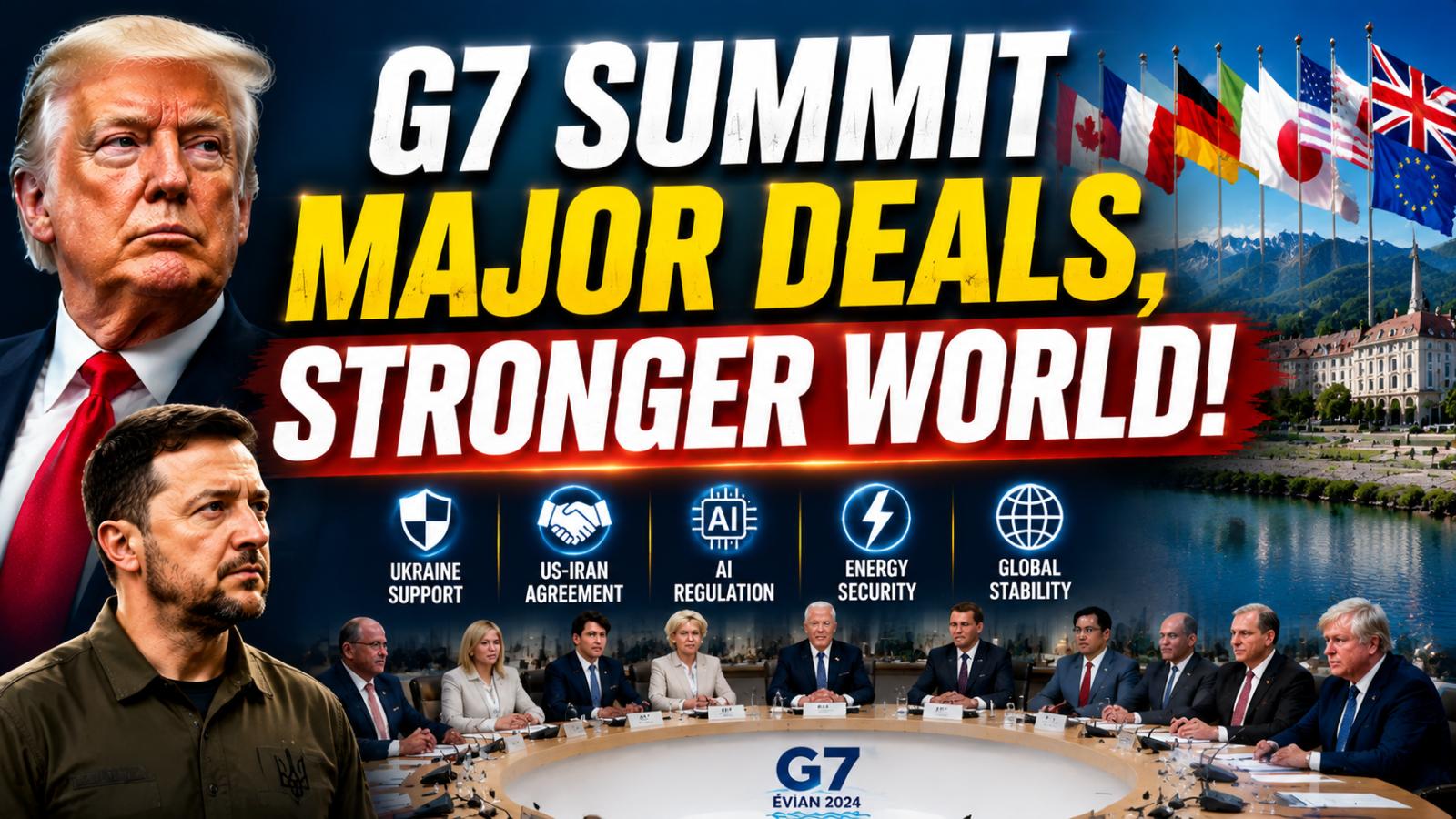
The three-day G7 summit in Évian, France brought together world leaders to address key global challenges including the Ukraine war, the US–Iran agreement, artificial intelligence governance, migration pressures, and economic stability. The meeting took place amid ongoing geopolitical tensions, particularly in West Asia, where differing views among allies continued to surface.
Stronger Western Support for Ukraine
A central outcome of the summit was renewed support for Ukraine. Leaders of the G7 nations reaffirmed their commitment to strengthening Ukraine’s defence capabilities by increasing air defence systems, interceptors, and long-range strike support. Additional economic sanctions targeting Russia’s fossil fuel revenues were also agreed upon in an effort to pressure Moscow’s war financing capacity.
Ukrainian President Volodymyr Zelensky attended the summit, where discussions included long-term military assistance and expanded production of defence systems within Ukraine. Leaders emphasized sustained coordination to counter Russian advances and support Ukraine’s defence infrastructure.
US–Iran Agreement Welcomed by G7
The summit also addressed the recently announced US–Iran agreement, which G7 leaders described as a potential breakthrough in preventing nuclear escalation and stabilising regional tensions. The joint statement highlighted concerns over Iran’s nuclear ambitions and ballistic missile programme, while expressing readiness to support implementation of the agreement.
The declaration reflected a shift in diplomatic tone, acknowledging the agreement as an opportunity for reducing regional risks and improving global security conditions.
Energy Security and Strait of Hormuz Stability
Energy security remained a major concern, with leaders stressing the importance of maintaining stable global energy markets. The G7 emphasised the need for the Strait of Hormuz to remain open for free and safe maritime transit without additional charges, highlighting its importance to global trade and energy supply chains.
Leaders also called for resilient and diversified supply chains to reduce dependency risks and protect against economic disruptions caused by geopolitical tensions.
AI Regulation and Technology Governance
Artificial intelligence emerged as another major focus, with G7 leaders calling for responsible development and deployment of AI technologies. The summit urged technology companies to ensure safe, secure, and age-appropriate digital environments.
French President Emmanuel Macron stressed the importance of stronger international coordination on AI regulation, warning that fragmented policies could weaken democratic oversight and increase technological risks.
Migration, Crime, and Global Cooperation
Migration and organised crime were also discussed, with leaders calling for stronger international cooperation to combat human trafficking and migrant smuggling networks. The G7 emphasised the need to protect national borders while ensuring humane treatment of vulnerable populations affected by illegal migration routes.
The leaders also agreed to intensify cooperation against drug trafficking, highlighting the importance of disrupting transnational criminal networks through coordinated enforcement strategies.
Supply Chains and Global Economic Risks
The summit further addressed global supply chain vulnerabilities and economic coercion concerns. Leaders expressed worries about non-market policies and trade distortions affecting critical minerals and strategic industries.
The G7 reiterated the importance of resilient supply chains for global economic stability, warning against practices that could create dependency risks or disrupt international markets.