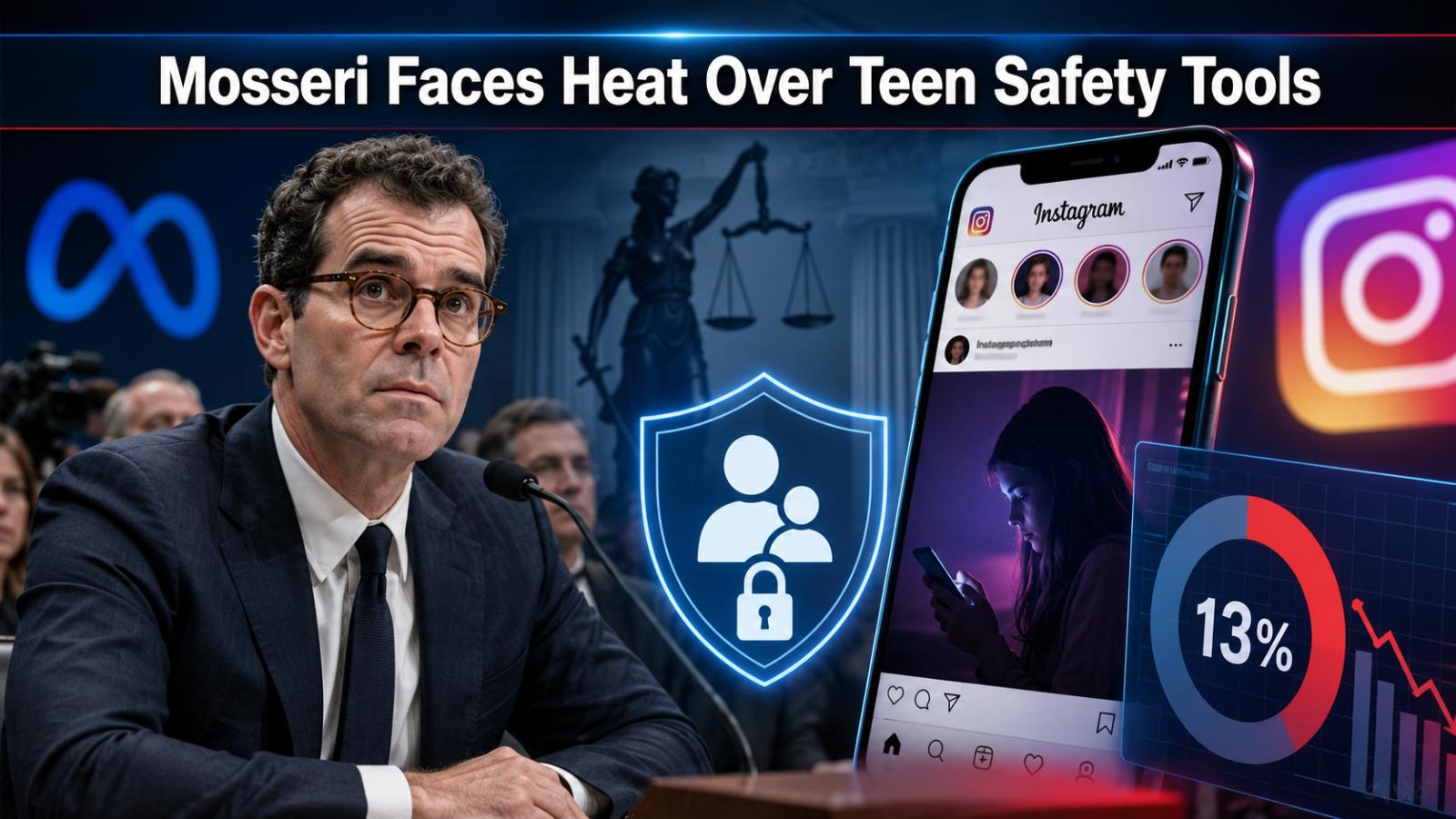
Meta teen safety trial testimony put Instagram’s Take a Break and Quiet Mode tools under scrutiny after internal data showed low early adoption. Adam Mosseri defended Meta’s safety record as 29 states pursue claims over youth engagement, privacy and public disclosures.
Take a Break adoption draws courtroom scrutiny
Instagram head Adam Mosseri testified in federal court in Oakland on August 25 as states challenged how Meta promoted tools designed to help teenagers reduce time on the platform. Internal documents presented at trial showed that Take a Break reached an early adoption rate of about 1.8%, while Quiet Mode reached 8.7%.
Mosseri acknowledged that relatively few teenagers initially used Take a Break before similar protections were later incorporated into Instagram’s Teen Accounts and enabled more broadly by default. He rejected the idea that Meta intentionally delayed safety improvements, arguing that usage increased substantially after the company changed how the protections were presented.
Mosseri testimony revisits 90 percent claim
State lawyers also questioned a December 2021 Meta post written by Mosseri shortly before congressional testimony on youth safety. The post said early tests showed that more than 90% of teenagers who set Take a Break reminders kept them switched on. Meta’s own wording makes clear that the figure referred to teens who had already activated the reminders, rather than 90% of all teenage Instagram users.
The distinction has become important in court because the states argue that Meta publicly emphasized favorable retention figures without giving comparable attention to the much smaller share of users who adopted the feature in the first place.
Mosseri defended the company’s communications and said businesses do not normally publish every internal metric connected to a product launch.
Quiet Mode raises default-setting questions
Former and current Meta employees have also been questioned about whether safety tools would have reached more young users if they had been enabled automatically.
Instagram product design director Francesco Fogu acknowledged that adoption would generally be lower when users had to find and activate a feature themselves. Former employees have separately testified that internal discussions sometimes weighed safety changes against possible effects on engagement.
Meta disputes the states’ broader portrayal of those decisions and says Instagram has introduced extensive safeguards for teenagers, including Teen Accounts, parental supervision tools, stricter messaging settings and limits on sensitive content.
Meta teen trial carries major financial stakes
The proceeding is part of litigation brought by 29 states. California, Colorado, Kentucky and New Jersey are pursuing consumer-protection claims at the current trial, while all 29 states allege Meta violated federal child privacy law by collecting or using data involving children under 13 without proper parental consent.
The states have indicated that potential civil penalties could approach $200 billion, although that figure represents what plaintiffs may seek rather than an amount already awarded. Judge Yvonne Gonzalez Rogers will make the ultimate legal findings, using the jury’s verdict as guidance.
Zuckerberg testimony could widen the focus
Mosseri’s testimony is expected to continue as the trial examines whether Meta’s safety messaging matched what company executives knew internally about youth use and engagement.
Meta CEO Mark Zuckerberg is also expected to testify, potentially shifting attention from individual product tools toward senior management decisions and the company’s broader youth-safety strategy.
The central issue is therefore bigger than whether one feature attracted only 1.8% of teenagers. The court is being asked to decide whether Meta’s design choices and public representations amounted to unlawful conduct, or whether the states are selectively interpreting normal product-development decisions.