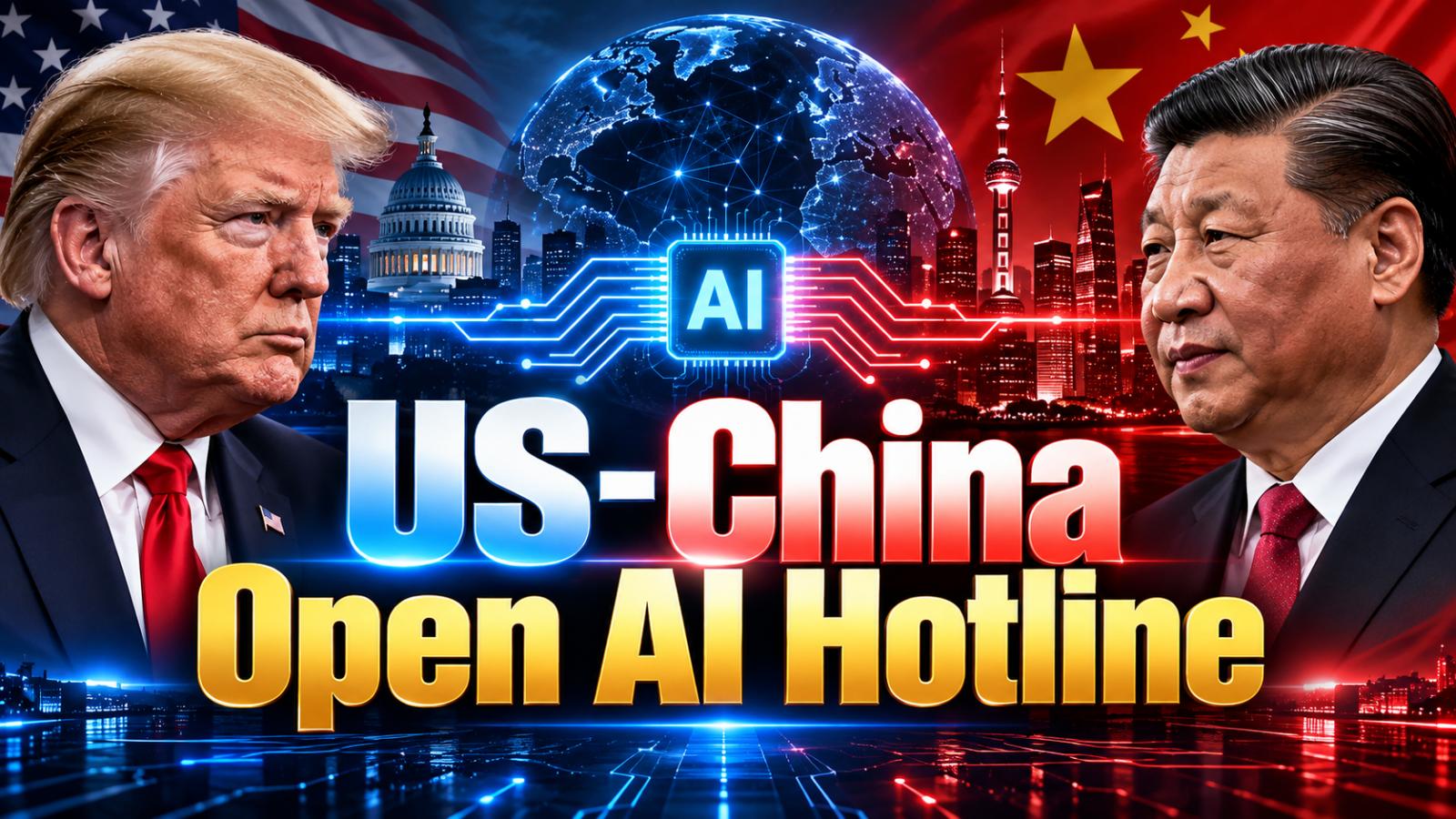
The US-China AI hotline marks a rare area of cooperation between the world’s two leading AI powers. Washington and Beijing agreed during Xi Jinping’s September visit to create a formal AI dialogue and a bilateral channel for serious incidents, with the next round of talks scheduled for November.
AI dialogue
The White House said the United States and China established a “U.S.-China Super Intelligence Dialogue” to exchange views on the risks and benefits of advanced AI systems. China described the same mechanism as a “China-U.S. AI Dialogue,” reflecting a difference in terminology rather than the underlying structure.
President Xi said both countries have strong AI capabilities and should continue discussing risks, benefits and misuse while keeping the technology under human control. President Donald Trump also backed continued cooperation on AI during the summit.
November talks
The next exchange is due in November 2026, giving the mechanism an early test. Both governments have officially confirmed that timetable.
A meaningful next step would be clearer procedures covering incidents with potential national-security consequences. Those could include failures involving autonomous systems, cyber operations or other advanced AI capabilities, although neither government has publicly adopted such categories.
The November meeting therefore matters less for symbolism than for whether officials begin turning the agreement into an operating framework.
AI safety
The pact is significant because Washington and Beijing remain fierce competitors in advanced chips, AI models and emerging technologies. Even so, both sides now formally acknowledge that some AI risks may require direct communication rather than strategic silence.
The agreement does not amount to shared AI regulation, nor does it reduce broader technology competition. Instead, it creates a limited mechanism aimed at preventing serious incidents from becoming geopolitical crises.
Private labs
One unresolved issue is how private AI developers fit into the system. Governments may operate the hotline, but many advanced AI systems are built by private companies or research organizations.
The public statements do not explain how incidents discovered inside those labs would reach government officials or whether developers would face reporting requirements. That reporting chain could become one of the most important questions in future talks.
For now, the US-China AI hotline is best viewed as an important first step rather than a finished safeguard. Its real value will depend on whether November produces clear trigger rules, named contacts and a process that connects governments with the organizations actually developing advanced AI systems.