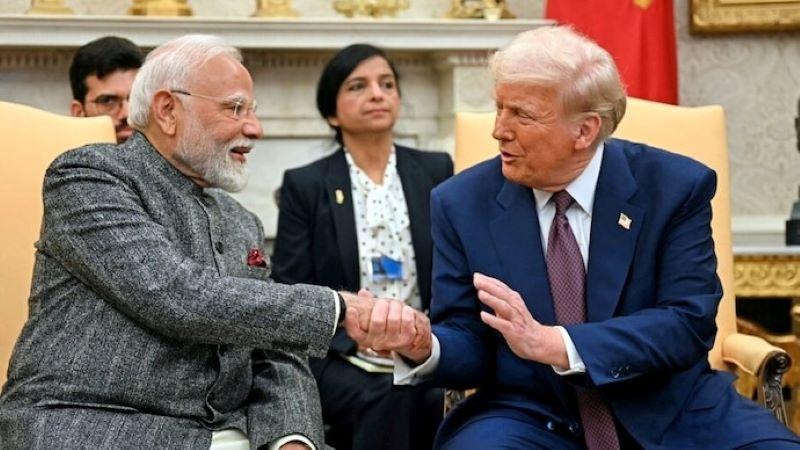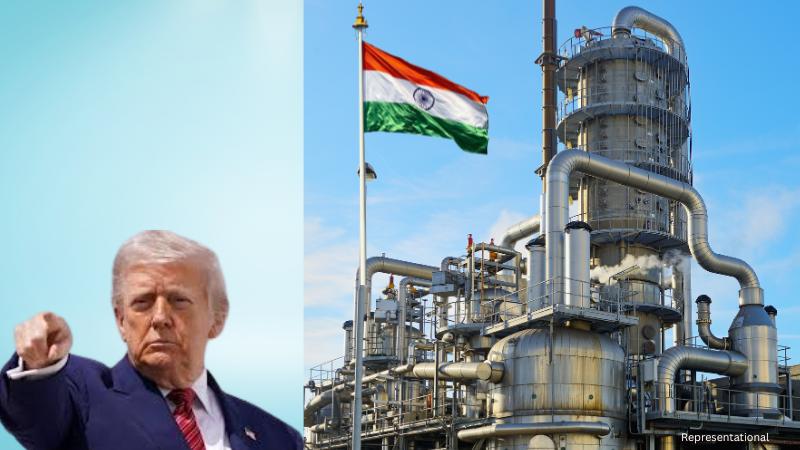
The imposition of tariffs on India by President Donald Trump has triggered widespread debate in policy circles, not only in India but also in the United States, where senior officials have issued contradictory statements about the rationale behind this decision. Trump recently announced a 50 per cent tariff on India as a punishment for purchasing Russian oil, but in a move that has raised eyebrows, he refrained from imposing any similar measures on China, a country that has been importing even larger volumes of Russian crude. This has led to growing speculation that the tariffs may not be rooted in a consistent policy framework, but rather in political motivations or even personal grievances.
Treasury Secretary Scott Bessent and Secretary of State Marco Rubio have both publicly explained the tariffs, but their explanations appear to contradict one another, leaving analysts and foreign policy observers puzzled. Bessent has argued that India is profiteering by buying discounted Russian crude oil, refining it into finished petroleum products like gasoline and diesel, and then reselling them in the global marketplace for significant profits. He claimed that India has earned around 16 billion dollars in what he described as “excess profits” from this practice, justifying Trump’s tariffs as a penalty for such arbitrage.
Rubio, however, has offered a very different explanation, suggesting that China was engaged in similar refining and reselling of Russian oil, yet no tariffs have been imposed on Beijing. His reasoning was that China’s refining activity plays a stabilizing role in the global oil market by ensuring that Russian supply continues to flow, which prevents drastic increases in fuel prices worldwide. By that logic, India should also be exempt from punitive tariffs since its purchases and refining activities have likewise helped stabilize oil markets in the wake of disruptions caused by sanctions on Moscow.
The contradiction becomes even starker when one considers that both China and India have been crucial in absorbing Russian oil supplies since the Ukraine war disrupted traditional markets. Their purchases have prevented dramatic spikes in global oil prices by keeping supply chains functioning. On one hand, Bessent’s logic would require tariffs to be placed on China just as on India. On the other, Rubio’s reasoning would require that India, like China, not be penalized at all. The clash of narratives within the Trump administration has highlighted an apparent absence of coherence in Washington’s approach.
Notably, China has consistently purchased more Russian oil than India, accounting for nearly half of all Russian exports, yet it has escaped any punitive trade measures from the Trump administration. This selective targeting of India has raised suspicions that the tariffs may be politically motivated. Observers point to Trump’s increasingly close alignment with China and his overtly adversarial posture toward India as evidence that the tariffs could be part of a broader strategy of economic and geopolitical pressure.
The confusion is deepened by comparisons with the previous Biden administration, which had taken a very different stance on India’s role in the global oil trade. At that time, Washington actively encouraged India to buy Russian crude and even refine it for resale. The rationale was that such purchases would prevent a massive price surge in the global oil market, which could have had devastating consequences for US gasoline prices. Analysts like Bob McNally emphasized that India had played a key role in the price cap sanction mechanism developed by the United States and its allies, which was designed to allow Russian oil to flow while limiting Moscow’s revenues.
Under Biden’s policy, India was seen as a stabilizing force, an indispensable partner in ensuring global energy security, and an important player in the sanctions regime that sought to balance punishment for Russia with protection of international consumers. Trump’s reversal of that understanding, coupled with his contradictory justifications, represents not only a shift in policy but also a potential undermining of hard-earned trust between Washington and New Delhi.
Additional concerns have been raised about the broader geopolitical consequences of this move. India, which had been strengthening its partnership with the United States on economic and security fronts, may view the tariffs as an act of hostility, especially when juxtaposed with Trump’s softer approach toward China. Critics argue that this could push India to deepen its economic ties with Russia and other non-Western partners, thereby weakening US influence in the Indo-Pacific region. Moreover, as India continues to play a critical role in balancing China’s dominance in Asia, alienating New Delhi could have long-term strategic costs for Washington.
The inconsistency in messaging from Bessent and Rubio reflects an internal lack of coordination within the Trump administration. If Bessent’s claims about profiteering are to be taken seriously, then tariffs should logically extend to China as well, given its even larger role in refining and reselling Russian oil. If Rubio’s argument about the stabilizing effect of refining is valid, then tariffs on India make little sense. The absence of a clear and unified explanation raises doubts about whether this decision is grounded in strategic policymaking or whether it represents a more ad hoc and politically motivated maneuver.
As the global energy market continues to adjust to shifting supply chains and sanctions, India’s role remains crucial in ensuring stability. Its purchases of Russian oil have helped absorb the shock of sanctions and kept fuel affordable for many nations. Yet Trump’s tariffs risk penalizing a key partner for performing exactly the role that the United States once encouraged. Unless the administration can present a coherent rationale for this policy, the perception will grow that the tariffs are less about economics and more about political maneuvering.
In the end, the tariffs on India highlight a deeper problem of inconsistent policy in Washington. Without clarity, predictability, and consistency, trade decisions risk undermining both America’s global credibility and its strategic relationships. As the debate continues, the contradictory statements from top US officials only add to the impression that the decision to penalize India has less to do with global oil markets and more to do with shifting political winds in the Trump White House.