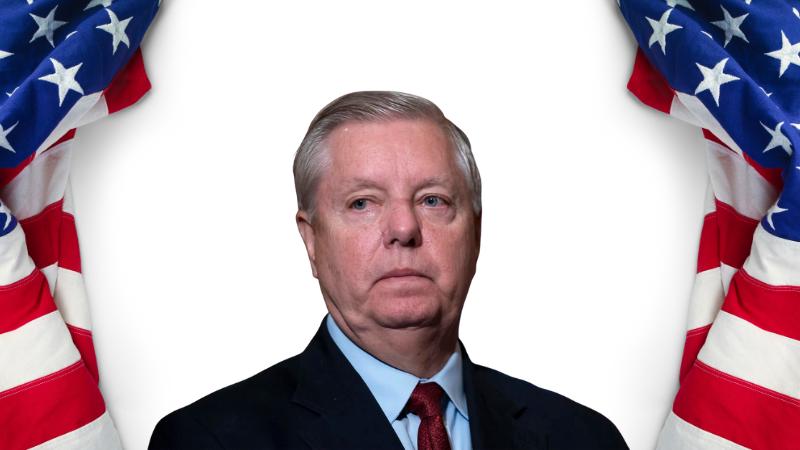
Following the narrative established during the Trump administration, South Carolina Senator Lindsey Graham has drawn a connection between US tariffs, the ongoing Russia-Ukraine conflict, and India’s role in the global energy market. On Wednesday, Graham responded sharply to reports of a deadly Russian strike in Kyiv that killed at least 23 people. His message on X directly addressed India, China, and Brazil for their continued purchase of Russian crude. He asked, “India, China, Brazil and others who prop up Putin’s war machine by buying cheap Russian oil: How do you feel right now that your purchases have resulted in innocent civilians, including children, being killed? India is experiencing the cost of supporting Putin. To the rest, you will soon too.”
Graham has consistently emphasized the link between Russia’s hydrocarbon revenues and its ability to continue military operations in Ukraine. In prior remarks on NBC, he stated, “Without oil and gas revenue, Russia collapses… the whole goal is to crush its customers – India, China, Brazil.” His comments are in line with Trump-era trade measures, which imposed a steep 50 percent tariff on Indian exports to the United States. This latest increase follows an earlier 25 percent duty imposed earlier in the year, with the additional 25 percent specifically targeting Indian purchases of Russian oil. According to estimates cited by AP, India anticipates that these tariffs will affect nearly $48.2 billion worth of goods. Indian officials have expressed concern that the new duties could make shipments uncompetitive in the US market, risking job losses and slowed economic growth.
The Russian strike in Kyiv also caused damage to the European Union’s diplomatic mission. Ukrainian President Volodymyr Zelenskyy described the attack as “another massive assault against our cities and communities,” while rescue operations continued to recover civilians from apartment block debris.
Graham has a history of targeting India through both executive and legislative measures. Earlier this year, he introduced a sanctions bill in the US Senate aimed at penalizing not only Russia but also nations that continue to purchase its oil and key commodities. Speaking to Fox News in July, he explained, “Trump is going to impose tariffs on people that buy Russian oil – China, India, and Brazil.” He highlighted that these three markets account for a significant share of Moscow’s crude exports, sustaining Russia’s military campaign.
The April bill proposes tariffs of up to 500 percent on imports from countries purchasing Russian oil. In addition, it includes sanctions on Russia itself, such as financial restrictions, visa bans, and property freezes targeting Kremlin officials and institutions. Graham explained, “Big breakthrough here. So what does this bill do? If you’re buying products from Russia and you’re not helping Ukraine, then there’s a 500 percent tariff on your products coming into the United States. India and China buy 70 percent of Putin’s oil. They keep his war machine going.”
The draft legislation also empowers the US president to respond to any refusal by Russia to negotiate a peace agreement with Ukraine, violations of an agreement once reached, initiation of another military offensive, or efforts to undermine Ukraine’s government. It also restricts rerouting US-origin energy products to Russia, closing potential loopholes. Graham has emphasized bipartisan backing for the measure, stating, “My bill has 84 co-sponsors. It would allow the president to put tariffs on China, India, and other countries to stop them from supporting Vladimir Putin’s war machine and get him to the table. For the first time yesterday … the president told me I was playing golf with him. He says, ‘It’s time to move your bill.’”
Although the bill currently requires multiple levels of congressional approval, Graham remains confident about its progress and expects Trump to streamline its provisions, consistent with his preference for a more unilateral executive approach.
Lindsey Olin Graham’s political and professional career is grounded in law and military service. Born on July 9, 1955, in Central, South Carolina, he pursued law before joining the US Air Force in 1982 as part of the Judge Advocate General’s Corps. He served until 1988 as both a defense attorney and chief prosecutor in Europe. Continuing in the Air Force Reserve during his congressional years, he attained the rank of colonel and was awarded the Bronze Star Medal in 2014 for meritorious service. His military career bolstered his reputation as a strong defense advocate, even though he did not see direct combat.
Graham transitioned to politics in the early 1990s, serving in the South Carolina House of Representatives from 1993 to 1995, followed by representation of South Carolina’s 3rd congressional district in the US House of Representatives from 1995 to 2003. In 2002, he won the Senate seat he holds today and was re-elected in 2008, 2014, and 2020, becoming one of the most prominent Republican lawmakers from the South.
Throughout his career, Graham has positioned himself as a defense hawk, advocating strong military action and robust foreign engagement. While he initially partnered with Democrats on issues like campaign finance reform and judicial nominations, in recent years he has aligned with Republican hardliners on national security and defense matters. His advocacy for tough measures against Russia fits this broader approach to foreign policy.
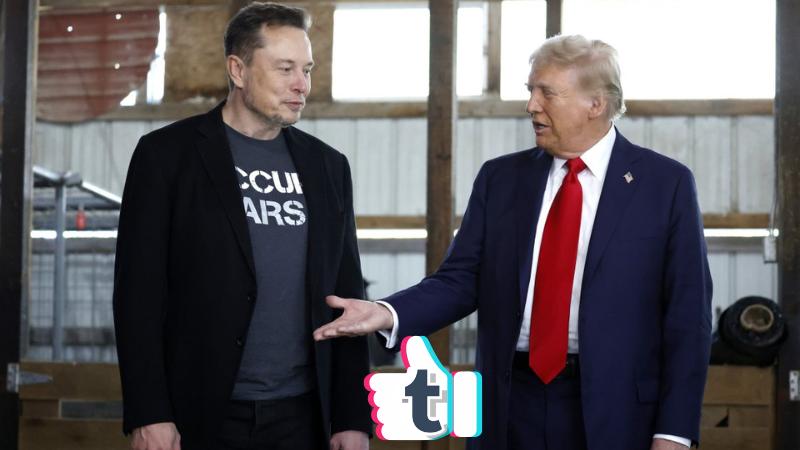
One of the most notable aspects of Graham’s career is his evolving relationship with Donald Trump. In 2016, he was among Trump’s most vocal critics, calling him a “jackass” for insulting John McCain and repeatedly condemning his rhetoric and approach. Graham even backed independent candidate Evan McMullin in the general election. By 2017, following private meetings with Trump, Graham began to warm to him, later offering public support and joining him for golf games. By 2018, he was campaigning for Trump’s re-election and, in 2019, warned Republicans not to undermine the president. During Trump’s 2024 campaign, Graham actively campaigned for him, and after Trump’s electoral victory, he described it as “the biggest comeback in American history.”
Through his career trajectory and current legislative initiatives, Lindsey Graham continues to merge his defense-focused political ideology with pragmatic support for trade and foreign policy measures aimed at curbing Russian aggression, while holding countries like India, China, and Brazil accountable for sustaining the Russian energy market.