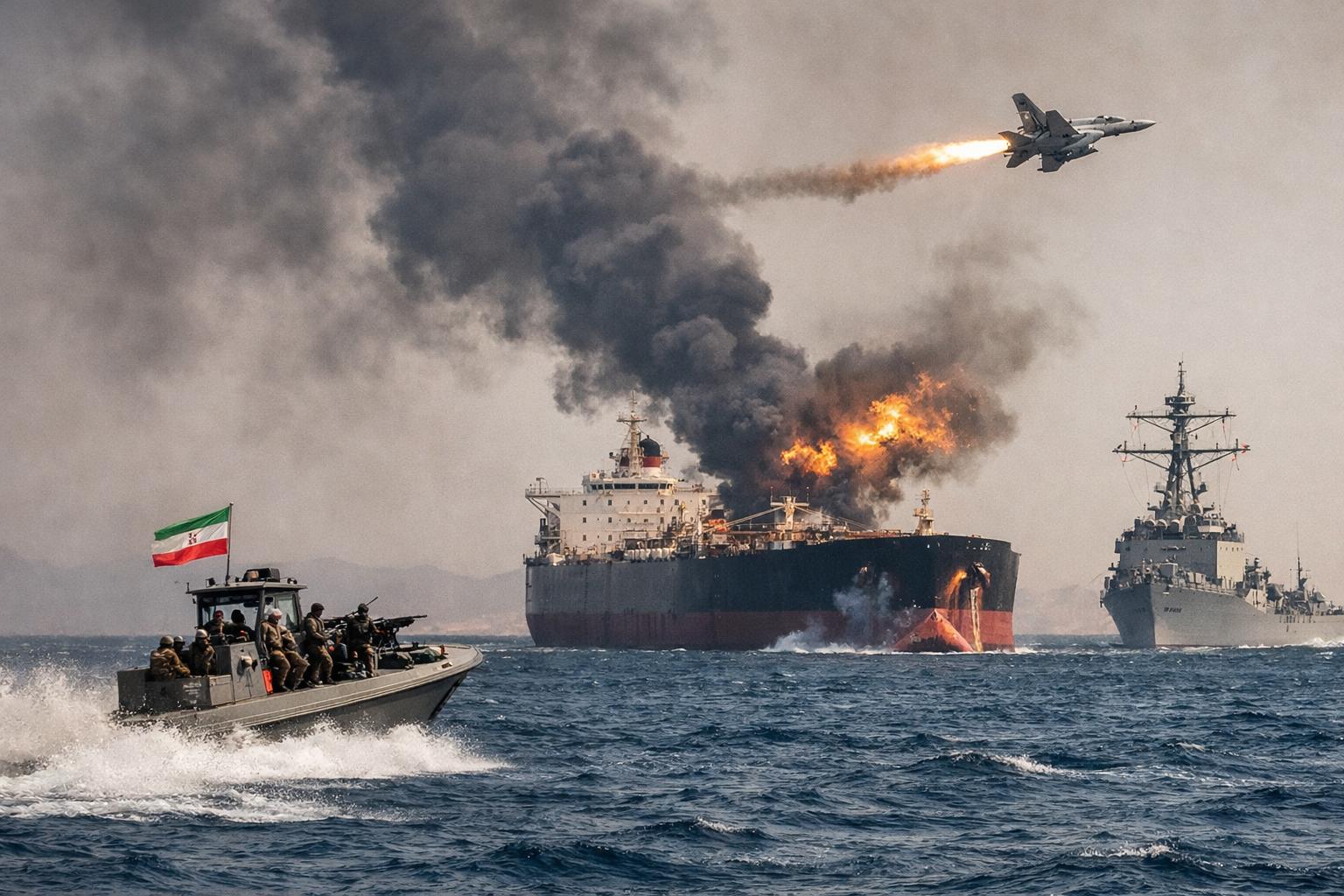
The ongoing conflict involving the United States, Israel and Iran has triggered what the International Energy Agency (IEA) describes as the largest disruption in the history of the global oil market, as tensions intensify around the Strait of Hormuz, one of the world’s most critical energy transit routes. In a report released on Thursday, the agency said oil and petroleum product flows through the strategic waterway have plunged sharply, raising serious concerns about global energy security and the stability of international oil supply.
The Strait of Hormuz normally carries close to one-fifth of the world’s oil supply, with roughly 20 million barrels moving through the corridor each day. According to the IEA, that flow has now fallen dramatically to only minimal levels amid escalating hostilities and rising risks to tanker traffic. The report noted that oil prices have fluctuated significantly since the conflict intensified, reflecting uncertainty across global energy markets and growing fears of a prolonged supply shock.
Rising energy costs have become a major concern for the United States administration since military operations began earlier this year. Officials have indicated that naval escorts could be provided for commercial oil tankers navigating the Strait of Hormuz, along with political risk insurance designed to reassure shipping companies and energy traders. Authorities have also taken steps to secure alternative oil supplies, including easing certain restrictions related to India’s purchases of Russian crude in an effort to stabilize the global oil market.
Despite these measures, the IEA warned that the global oil supply could decline by as much as eight million barrels per day in March as the crisis deepens. Direct damage to energy infrastructure across the region has further intensified the disruption, limiting production and export capacity at a time when shipping routes remain under threat. With millions of barrels of crude and refined products currently unable to reach global markets, both producers and consumers are facing mounting economic pressure.
In response to the escalating supply shock, IEA member countries agreed to release approximately 400 million barrels of oil from emergency reserves in an attempt to stabilize supply and ease pressure on energy prices worldwide. Meanwhile, United States Central Command has reportedly carried out strikes against Iranian vessels suspected of laying naval mines in the Strait of Hormuz, highlighting the growing security risks in the region’s vital shipping corridor.
President Donald Trump appeared to downplay the economic consequences of the disruption, noting that the United States remains the world’s largest oil producer and could benefit financially from higher oil prices. However, he emphasized that preventing Iran from obtaining nuclear weapons remains a central objective, arguing that the broader security implications of the conflict outweigh short-term market concerns.