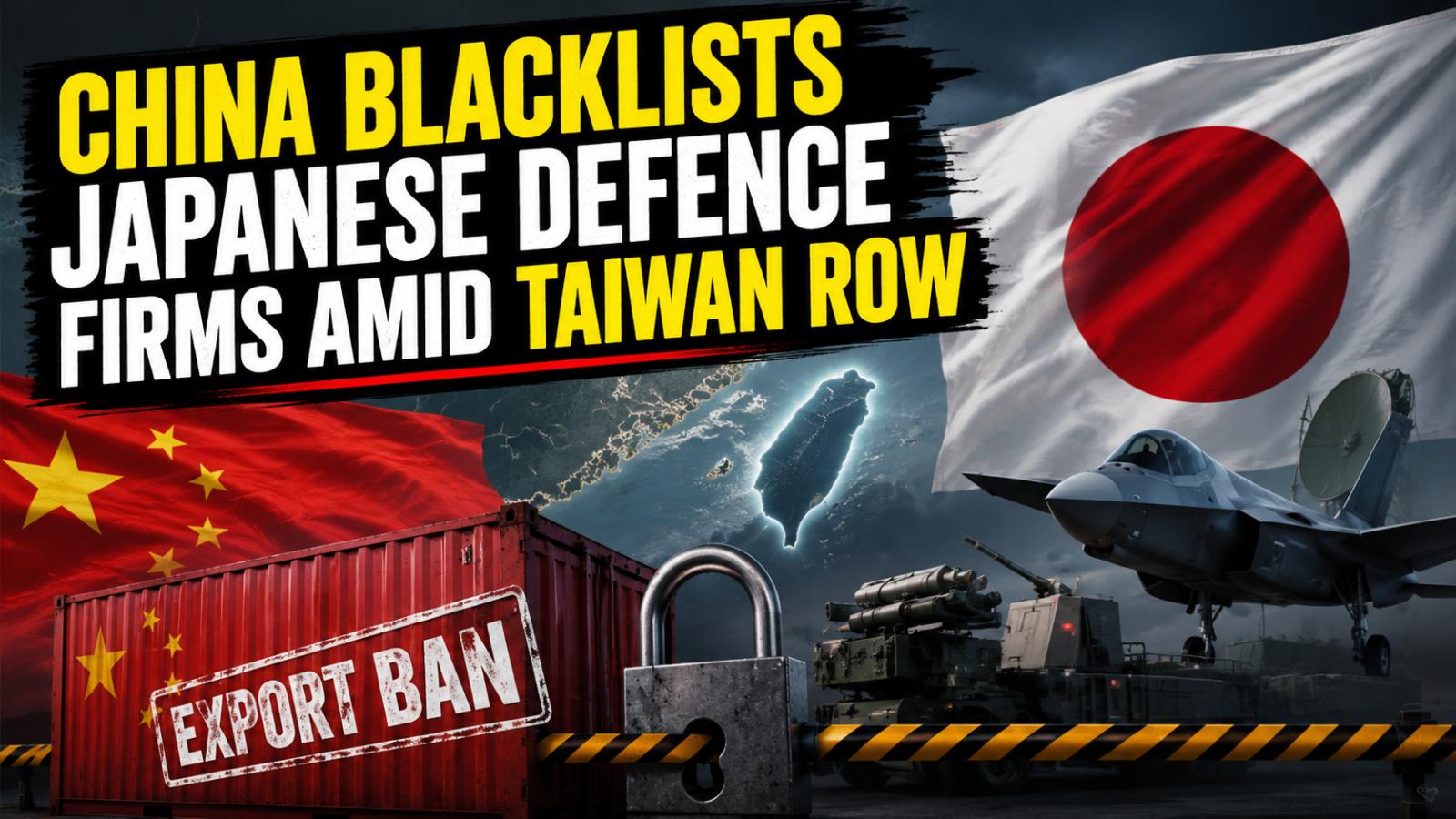
China has added 20 Japanese defence-linked and technology entities to its export control blacklist, marking a fresh escalation in the already tense relationship between Beijing and Tokyo. The decision blocks the listed organisations from receiving Chinese dual-use goods, materials and technologies without official approval.
Beijing said the move was linked to national security, non-proliferation commitments and concerns over supplies that could support Japan’s military capabilities. The decision comes at a sensitive time, with Taiwan-related tensions continuing to shape China’s relations with several countries in the region.
Why China has taken this step
The latest restrictions are aimed at companies, research institutions and suppliers connected to Japan’s defence and security ecosystem. These include firms involved in advanced technology, engineering, aerospace-related systems and military support services.
Among the names listed are Mitsubishi Electric Defence and Space Technologies Corporation and Japan’s National Institute for Defence Studies. China’s commerce authorities said these organisations may be involved in activities that could strengthen Japan’s defence sector, which Beijing views with growing concern.
The blacklist does not mean all trade between China and Japan will stop. However, it creates tighter controls on sensitive exports and adds another layer of pressure on companies dealing with defence-related supply chains.
What dual-use export controls mean
Dual-use items are products or technologies that can serve both civilian and military purposes. These may include advanced electronics, aircraft components, sensors, laser systems, navigation equipment and materials used in missile or radar technology.
Because such products can be used in weapons systems or military upgrades, governments often regulate their export. By placing Japanese entities on the blacklist, China can restrict access to key materials and technologies that may be important for defence production or research.
Rare earths remain a key pressure point
China’s influence in rare earth processing gives it significant leverage in technology and defence supply chains. Rare earth minerals are used in electric vehicles, smartphones, wind turbines, radar systems, fighter jets and missile guidance systems.
Japan depends on stable access to these materials for several high-tech industries. Any delay or restriction in supply can create uncertainty for manufacturers, especially those working in sensitive sectors. This is why China’s export control decisions are closely watched by governments and companies across Asia.
Taiwan tensions deepen Beijing-Tokyo divide
The move also reflects the worsening political climate between China and Japan over Taiwan. Beijing considers Taiwan part of its territory and strongly opposes any foreign military support for the island. Japan, meanwhile, has become more vocal about regional security risks as tensions in the Taiwan Strait continue to rise.
Recent Japanese comments about a possible response in the event of a Taiwan crisis angered Beijing and added to the diplomatic strain. China’s latest blacklist appears to be both a trade control measure and a political signal to Tokyo.
What happens next
China has said normal business activity with Japan should not be affected, as long as companies follow export control rules. But the decision shows how quickly political disputes can move into trade, technology and defence supply chains.
For Japan, the challenge will be to reduce dependence on Chinese-controlled materials and strengthen alternative supply networks. For China, the blacklist gives Beijing another tool to push back against countries it believes are supporting military activity near Taiwan. The dispute is unlikely to end quickly, especially as security concerns in East Asia continue to grow.