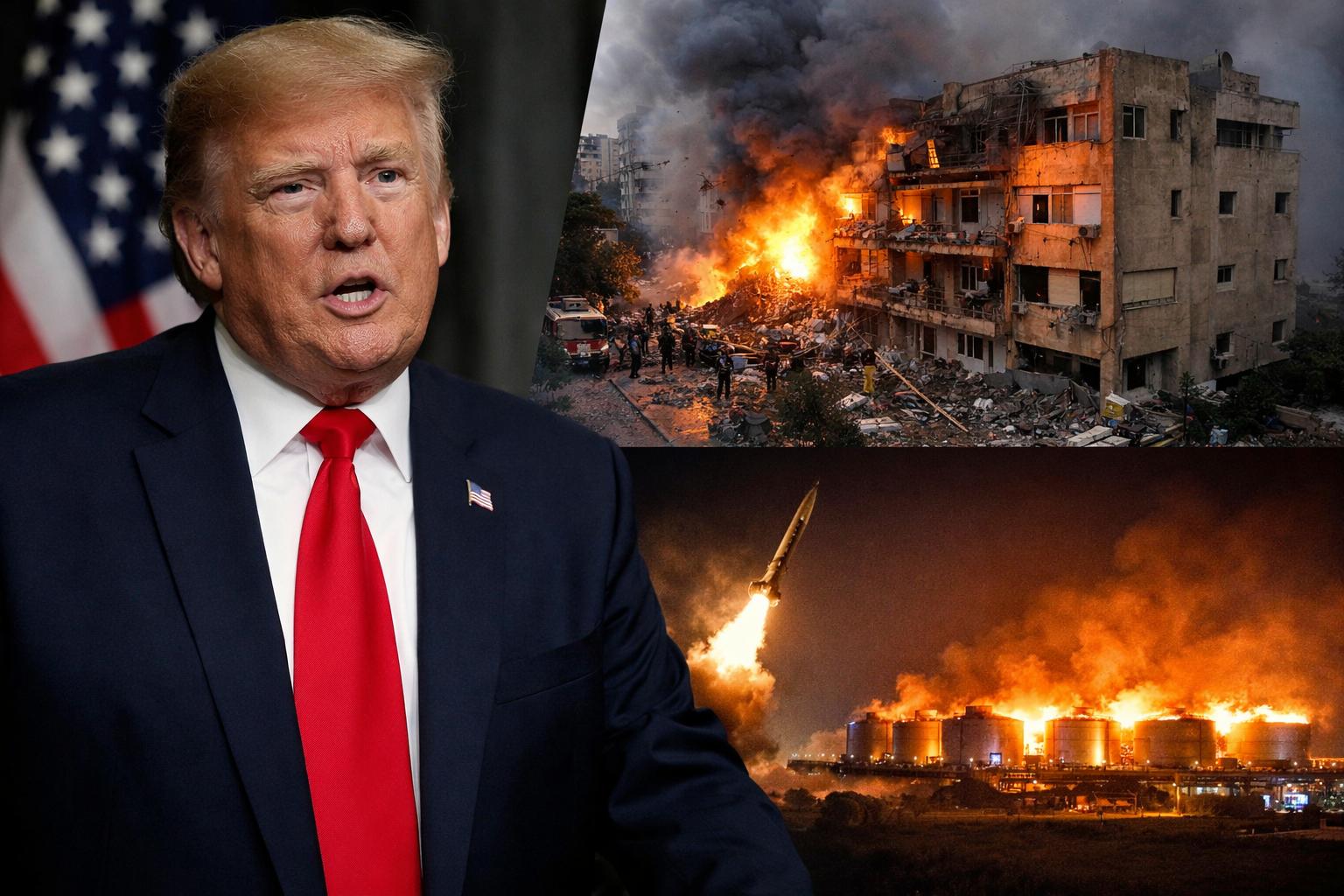
Escalating tensions across the Middle East intensified after US President Donald Trump said Iran’s response to a proposed ceasefire was “substantial” but ultimately “not good enough,” signaling continued diplomatic strain as military exchanges widened across the region.
The remarks came as at least 34 people, including six children, were reported killed in coordinated US-Israeli strikes across Iran. The attacks mark a significant escalation in the ongoing conflict, raising concerns about civilian safety and the potential for broader regional instability.
Tehran has issued warnings of retaliation following a deadline set by Washington to reopen the Strait of Hormuz by Tuesday. While no specific date or time for the deadline was publicly detailed, US officials indicated that failure to comply could trigger further strikes targeting Iranian infrastructure, including power plants and bridges. The Strait of Hormuz remains a critical global oil transit route, and any disruption could have far-reaching economic consequences.
In Israel, the conflict also took a deadly turn when an Iranian missile struck a residential building in the northern city of Haifa, killing at least four people, according to medical officials. The attack underscores the expanding geographic scope of the confrontation, with civilian areas increasingly affected.
Iranian strikes have extended beyond Israel, with reported attacks on key infrastructure across the Gulf. Facilities linked to power generation and water desalination in Kuwait were hit, while an oil installation in Bahrain was also targeted. These developments highlight the growing risk to essential services and energy supply chains in the region.
As both sides continue to exchange strikes, diplomatic efforts appear strained, and the possibility of a broader regional conflict remains a significant concern for international observers.