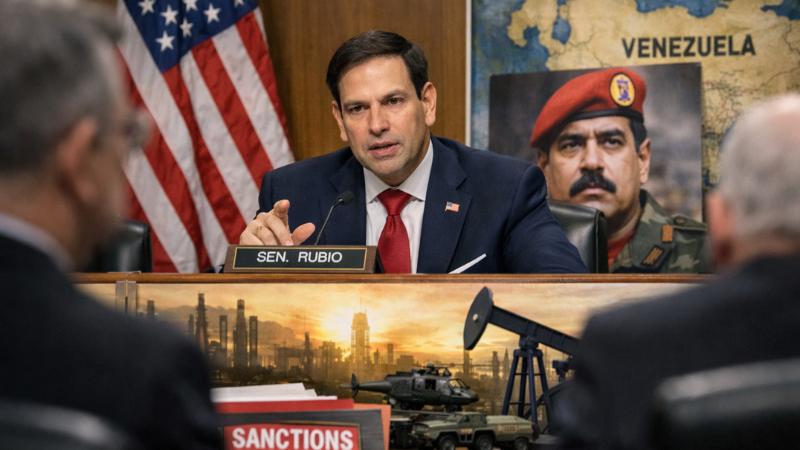
United States Secretary of State Marco Rubio testified before the Senate Foreign Relations Committee on Wednesday, marking his first public appearance since the capture of Venezuelan leader Nicolás Maduro earlier this month. Rubio outlined the administration’s approach toward Venezuela, defended the operation that led to Maduro’s detention, and emphasized the strategic concerns the United States has regarding the region. His testimony came amid scrutiny from senators on both sides of the aisle, with lawmakers questioning the legality, implications, and broader consequences of the operation.
Rubio framed his remarks around the idea that Maduro had repeatedly blocked progress and that previous diplomatic efforts had failed, making decisive action necessary. He told senators that “you couldn’t make a deal with this guy,” highlighting the difficulty U.S. negotiators faced before the operation. According to Rubio, Maduro’s repeated refusals to negotiate meant that alternative measures were required to address the threat he posed to regional security. Rubio emphasized that the actions taken were calculated and focused on neutralizing risks without escalating into a broader conflict.
He also sought to reassure lawmakers that the United States’ goal was not occupation but law enforcement and guidance toward stability and governance reforms in Venezuela. Rubio stressed that no U.S. troops remain deployed inside Venezuela, and the capture operation was targeted to enforce laws and counter illicit activity rather than signal military conquest. He added that U.S. efforts are intended to support a transition toward a responsible, transparent government capable of reforming the energy sector and curbing corruption.
Rubio addressed the management of Venezuelan oil, explaining that revenue from sanctioned oil continues to be monitored by the United States. While oil sales are allowed into global markets, the funds are held in accounts under U.S. oversight for public use within Venezuela, including maintaining essential services and managing diminishing storage capacity. Rubio argued that this approach is intended to prevent funds from being diverted by entrenched political elites and to ensure that the country’s wealth benefits its citizens during the transition process.
On broader strategic concerns, Rubio warned that the United States remains ready to take further measures if the interim leadership in Venezuela fails to comply with expectations. While clarifying that the U.S. is not at war with Venezuela, he stressed that future actions, including targeted military or law enforcement measures, may be considered if other diplomatic tools fail. Rubio framed these actions as preventive and aimed at safeguarding U.S. personnel and regional stability.
He highlighted early signs of progress, noting the release of political prisoners and steps to open the energy sector, suggesting that momentum toward change was building in the weeks following Maduro’s capture. Rubio emphasized that although substantial challenges remain—including economic hardship, political uncertainty, and governance reforms—positive developments were occurring more rapidly than anticipated.
During questioning, senators pressed Rubio on various aspects of the strategy, including the legality of the operation, oversight of oil revenues, and the potential humanitarian impact. Some lawmakers expressed concern about lack of congressional notification prior to the capture, while others focused on ensuring that U.S. policy helps Venezuela transition toward democratic governance. The hearing reflected both support and caution regarding U.S. engagement in the region and the balance between assertive action and diplomatic efforts.
Rubio’s testimony highlighted the administration’s commitment to continuing pressure on Venezuela’s interim leadership while keeping open the possibility of cooperation if conditions improve. He emphasized that the U.S. aims to balance military, economic, and diplomatic tools to help Venezuela move toward stability. The hearing offered insight into how policymakers are navigating a highly complex situation, seeking to protect U.S. interests and encourage reforms in a country long affected by political turmoil and crisis.
Rubio framed his remarks around the idea that Maduro had repeatedly blocked progress and that previous diplomatic efforts had failed, making decisive action necessary. He told senators that “you couldn’t make a deal with this guy,” highlighting the difficulty U.S. negotiators faced before the operation. According to Rubio, Maduro’s repeated refusals to negotiate meant that alternative measures were required to address the threat he posed to regional security. Rubio emphasized that the actions taken were calculated and focused on neutralizing risks without escalating into a broader conflict.
He also sought to reassure lawmakers that the United States’ goal was not occupation but law enforcement and guidance toward stability and governance reforms in Venezuela. Rubio stressed that no U.S. troops remain deployed inside Venezuela, and the capture operation was targeted to enforce laws and counter illicit activity rather than signal military conquest. He added that U.S. efforts are intended to support a transition toward a responsible, transparent government capable of reforming the energy sector and curbing corruption.
Rubio addressed the management of Venezuelan oil, explaining that revenue from sanctioned oil continues to be monitored by the United States. While oil sales are allowed into global markets, the funds are held in accounts under U.S. oversight for public use within Venezuela, including maintaining essential services and managing diminishing storage capacity. Rubio argued that this approach is intended to prevent funds from being diverted by entrenched political elites and to ensure that the country’s wealth benefits its citizens during the transition process.
On broader strategic concerns, Rubio warned that the United States remains ready to take further measures if the interim leadership in Venezuela fails to comply with expectations. While clarifying that the U.S. is not at war with Venezuela, he stressed that future actions, including targeted military or law enforcement measures, may be considered if other diplomatic tools fail. Rubio framed these actions as preventive and aimed at safeguarding U.S. personnel and regional stability.
He highlighted early signs of progress, noting the release of political prisoners and steps to open the energy sector, suggesting that momentum toward change was building in the weeks following Maduro’s capture. Rubio emphasized that although substantial challenges remain—including economic hardship, political uncertainty, and governance reforms—positive developments were occurring more rapidly than anticipated.
During questioning, senators pressed Rubio on various aspects of the strategy, including the legality of the operation, oversight of oil revenues, and the potential humanitarian impact. Some lawmakers expressed concern about lack of congressional notification prior to the capture, while others focused on ensuring that U.S. policy helps Venezuela transition toward democratic governance. The hearing reflected both support and caution regarding U.S. engagement in the region and the balance between assertive action and diplomatic efforts.
Rubio’s testimony highlighted the administration’s commitment to continuing pressure on Venezuela’s interim leadership while keeping open the possibility of cooperation if conditions improve. He emphasized that the U.S. aims to balance military, economic, and diplomatic tools to help Venezuela move toward stability. The hearing offered insight into how policymakers are navigating a highly complex situation, seeking to protect U.S. interests and encourage reforms in a country long affected by political turmoil and crisis.