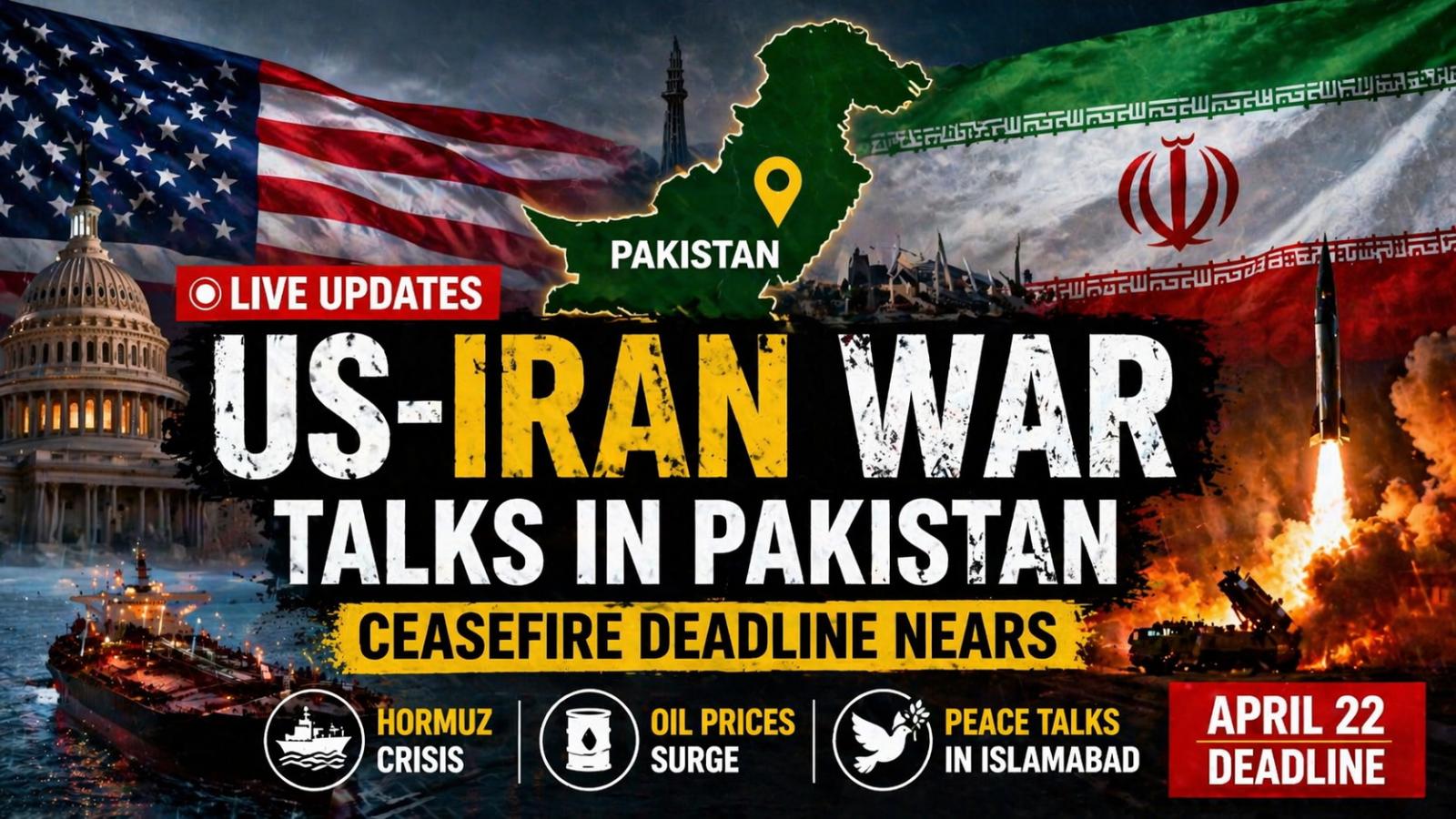
The US Iran war talks in Pakistan are drawing global attention as uncertainty continues over Tehran’s participation in upcoming peace negotiations. With the ceasefire deadline just days away, rising tensions are keeping the world on edge.
What happened and why it matters
On Monday, April 20, 2026, reports suggested that both the United States and Iran had signaled willingness to participate in a fresh round of peace talks in Islamabad. Pakistani mediators indicated that top negotiators from both sides could arrive as early as Wednesday, April 22, 2026. However, confusion remains. US Vice President JD Vance has not yet departed for Pakistan, despite earlier statements suggesting the delegation was on its way. At the same time, Iran has not formally confirmed its participation, with officials stating that Tehran is still reviewing the proposal. This uncertainty comes at a critical time, as the ceasefire between the two nations is set to expire soon.
Why this matters globally
The situation has major implications for global stability, particularly due to tensions around the Strait of Hormuz. This key shipping route handles a significant portion of the world’s oil supply, and disruptions have already impacted global energy markets. Oil prices have begun to rise amid fears of escalation, with experts warning that prolonged conflict could lead to further economic instability. Countries dependent on imported energy may face increased fuel costs and inflation. Additionally, any breakdown in talks could trigger renewed military action, affecting not just the Middle East but global geopolitical dynamics.
Key details and background
The current situation follows weeks of escalating tensions between the United States and Iran. The conflict has included naval blockades, shipping disruptions, and threats from both sides. President Donald Trump has maintained that the US blockade on Iranian ports will continue until a peace deal is reached. He also warned that failure to secure an agreement could lead to renewed military strikes. Meanwhile, Iranian officials have pushed back, stating that restrictions on their oil exports come with consequences for global markets. Tehran has also hinted at possible strategic moves if pressure continues. Pakistan has emerged as a key mediator in the crisis, working to bring both sides to the negotiating table. Officials in Islamabad have expressed confidence that Iran will eventually agree to participate in the talks.
What happens next
Looking ahead, the next few days are expected to be decisive. The ceasefire deadline is set to end on April 22, 2026, and without progress in negotiations, tensions could escalate rapidly. If talks proceed successfully, there is hope for extending the ceasefire and reducing hostilities. However, if either side withdraws or fails to compromise, the region could see renewed conflict. Diplomatic efforts are continuing, but the outcome remains uncertain as both nations hold firm on key issues.
Expert insight / unique angle
From a broader perspective, this crisis highlights the fragile balance between diplomacy and military pressure in global politics. The use of economic sanctions, naval blockades, and strategic threats shows how modern conflicts are fought not just on battlefields but through control of resources and trade routes. The Strait of Hormuz has once again become a focal point of global tension, underlining its importance in international energy security. In conclusion, the US Iran war talks in Pakistan represent a critical moment in the ongoing conflict. With the ceasefire deadline approaching and uncertainty over participation, the world is closely watching the next steps. Whether diplomacy succeeds or tensions escalate, the outcome will have lasting effects on global stability and energy markets.