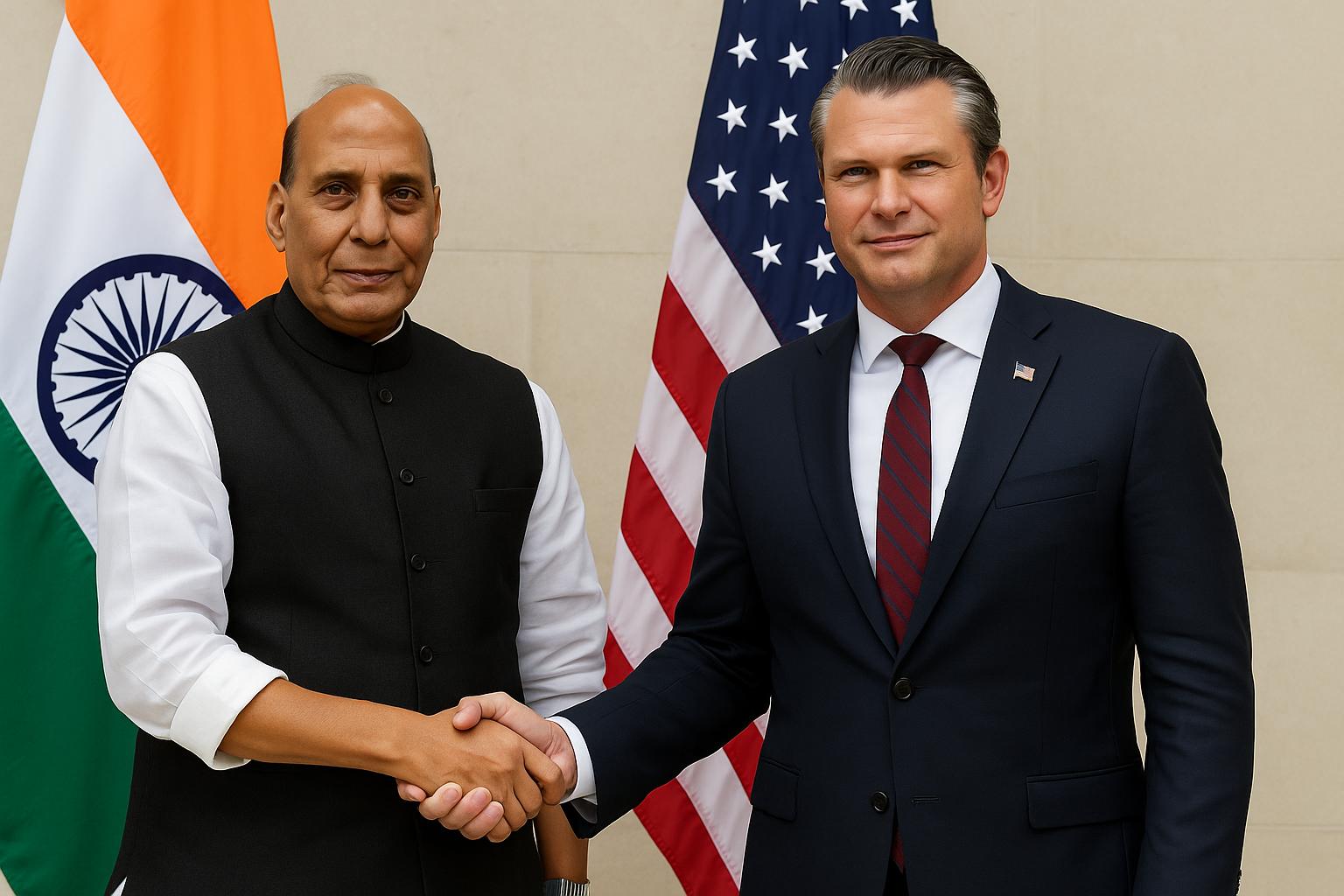
In a landmark step toward strengthening bilateral defence ties, India and the United States on Friday signed a 10-year defence framework agreement aimed at deepening strategic cooperation and expanding technological collaboration between the two nations. The agreement was formalised during a meeting between India’s Defence Minister Rajnath Singh and US Secretary of Defence Pete Hegseth in Kuala Lumpur. The new framework, extending over a decade, underscores both countries’ commitment to promoting regional stability and maintaining a balance of power in the Indo-Pacific.
The announcement was confirmed by Hegseth, who stated that the pact would advance the US–India defence partnership, describing it as a cornerstone for peace, deterrence, and shared strategic interests. The US Defence Secretary noted that the two countries are set to enhance coordination, information sharing, and defence technology cooperation under the new agreement. His statement highlighted that bilateral defence relations between the two nations have reached an unprecedented level of mutual trust and operational synergy.
The agreement arrives at a time when geopolitical tensions continue to rise across the Indo-Pacific region, driven by China’s assertive territorial ambitions and expanding influence in maritime corridors. The newly signed framework seeks to create a more resilient regional security architecture by increasing defence interoperability and ensuring joint preparedness for emerging challenges. It is also expected to facilitate a long-term roadmap for military engagement, training, and capacity building between the Indian and American armed forces.
At the heart of the India–US Defence Framework Agreement are three key pillars: strategic logistics, joint production, and technology transfer. These elements aim to enhance India’s access to advanced defence systems while simultaneously encouraging domestic production and innovation. The agreement enables both nations to use each other’s bases and logistical facilities, thereby improving the reach and efficiency of joint military operations. It also lays the foundation for collaboration in areas such as artificial intelligence, cyber defence, unmanned aerial systems, and next-generation weapon development.
Beyond the operational aspects, the framework signals a deeper political and strategic alignment between the two democracies. Analysts view it as part of a broader strategy to counterbalance China’s military and economic influence, particularly in the South China Sea and the Indian Ocean. The agreement reinforces India’s role as a major defence and security partner for the United States and further integrates New Delhi into the network of allies supporting a free and open Indo-Pacific region.
The deal also includes provisions for joint research and co-development projects aimed at enhancing defence exports and industrial innovation. By promoting shared expertise in technology, manufacturing, and supply chains, the pact is expected to accelerate India’s defence modernisation programme and reduce dependence on external suppliers. Moreover, increased cooperation in data exchange, satellite-based surveillance, and maritime domain awareness will help both countries respond swiftly to regional security threats.
For India, the agreement represents a major opportunity to strengthen its self-reliance in defence manufacturing, aligning with the government’s “Atmanirbhar Bharat” vision. It also opens new avenues for collaboration in advanced systems such as stealth technologies, AI-driven warfare, and autonomous vehicles. For the United States, it reinforces strategic partnerships across Asia, ensuring continued engagement with a like-minded partner committed to maintaining global stability and rules-based order.
This meeting marked the first in-person interaction between Rajnath Singh and Pete Hegseth. Their discussions in Kuala Lumpur were part of a broader diplomatic engagement following a series of high-level visits between the two countries. Singh had earlier planned to visit Washington, but the trip was postponed due to trade-related tensions. However, the signing of this agreement signals a renewed spirit of cooperation and an effort by both governments to move beyond short-term disagreements and focus on shared long-term strategic goals.
With this decade-long framework now in place, India and the United States are poised to usher in a new era of defence collaboration. The pact is expected to enhance military readiness, strengthen maritime cooperation, and foster innovation-driven partnerships in defence technology. As both nations continue to face complex security challenges in a rapidly changing world, the agreement stands as a strong symbol of trust, partnership, and shared vision for peace and stability across the Indo-Pacific region.