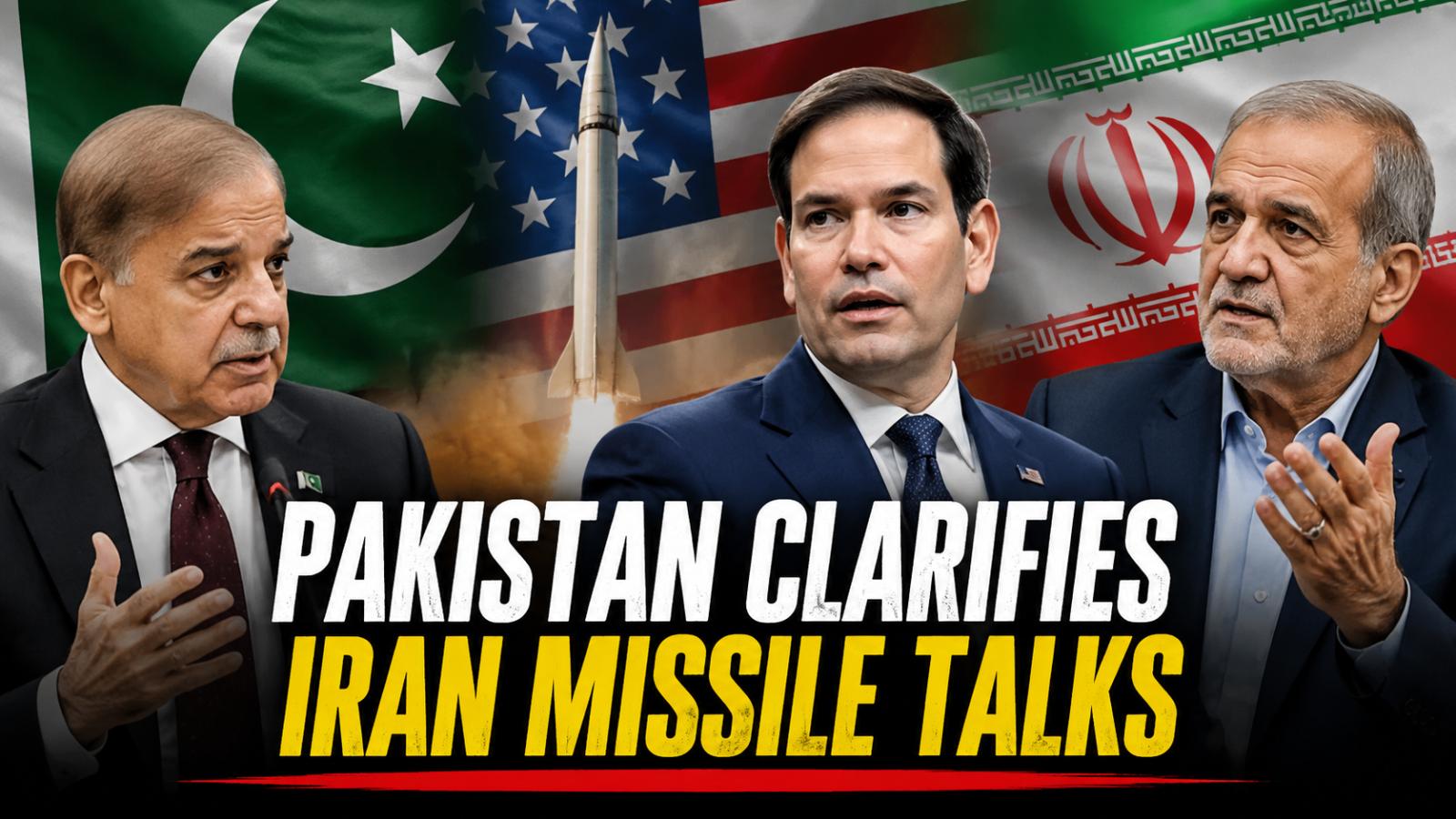
Confusion over alleged discussions involving Iran’s missile capabilities in US–Iran diplomatic engagement was addressed by Pakistan after multiple conflicting interpretations surfaced from international officials. Prime Minister Shehbaz Sharif clarified that no such subject was included in any current structured understanding between Washington and Tehran, pushing back against circulating claims that had gained attention in diplomatic circles.
Sharif emphasizes limited scope of regional discussions
Speaking during diplomatic interactions with Iranian leadership, Sharif stressed that recent conversations were centered on regional stability, economic cooperation, and de-escalation efforts rather than military capabilities. He noted that misreporting or overinterpretation of diplomatic signals risks distorting sensitive negotiations that are still in early phases. Pakistan positioned itself as a facilitator of dialogue rather than a party shaping defense-related agendas.
US signals suggest broader negotiation agenda ahead
From the US side, Secretary of State Marco Rubio indicated that issues such as Iran’s missile development and the role of regional armed groups may come into focus in later stages of engagement. However, he also acknowledged that current discussions remain preliminary and focused on building basic frameworks for communication rather than resolving core security disputes.
Iran defends deterrence posture amid external scrutiny
Iranian leadership, including President Masoud Pezeshkian, reiterated that its missile program is strictly defensive in nature and tied to national security requirements. Tehran argued that such capabilities are necessary for deterrence in a volatile regional environment. The statement reinforced Iran’s long-standing position that its defense infrastructure is not subject to external negotiation pressure at this stage.
Pakistan calls for restraint amid rising diplomatic friction
Pakistan urged all sides to avoid escalating rhetoric based on incomplete or unverified interpretations of diplomatic conversations. Sharif reiterated that regional stability depends on measured communication and responsible reporting, warning that misrepresentation of sensitive discussions could slow down already fragile diplomatic progress in the Middle East.