On Tuesday, the dollar experienced its steepest single-day drop since April, when prior economic announcements triggered notable market reactions. The U.S. dollar index, which tracks the greenback against a basket of major international currencies, has lost 2.2% so far this year and declined more than 9% in the previous year. Analysts describe the currency as being in a bear market, signaling a sustained period of weakness that could have implications for both domestic and global markets.
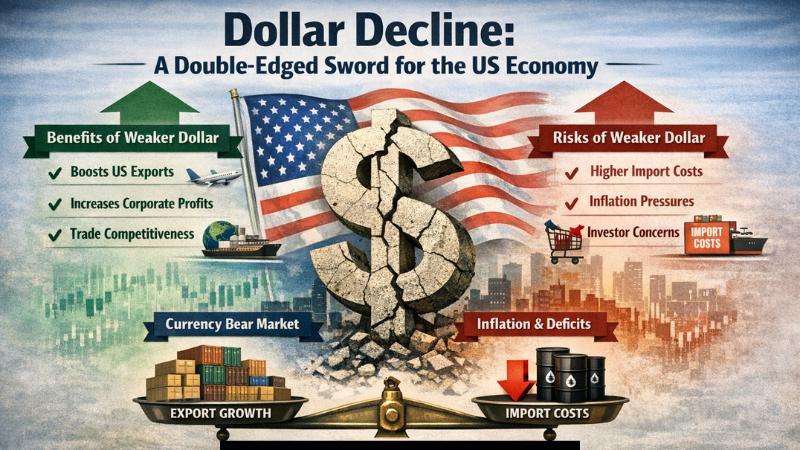
A weaker dollar often benefits the domestic economy by making U.S. goods more competitive internationally. American exporters can sell products at lower effective prices abroad, potentially boosting trade revenues. Additionally, multinational companies see the value of their foreign earnings rise when converted into dollars. These factors are often cited as reasons why a moderately weaker currency can support economic growth and enhance the performance of export-oriented sectors.
However, there are notable downsides. A weaker dollar increases the cost of imported goods and materials, potentially driving inflation higher and reducing consumers’ purchasing power. Investor confidence may also be affected, as a declining currency can be interpreted as a sign of economic vulnerability. Confidence in financial markets is particularly critical given the ongoing challenges of persistent inflation, high deficits, and the sale of treasury securities both domestically and internationally.
Economists emphasize that the benefits of a weaker dollar must be carefully balanced against these risks. While it can provide short-term boosts to trade and corporate earnings, the long-term health of the economy depends on maintaining investor trust, controlling inflation, and managing fiscal obligations. Currency weakness alone cannot resolve structural economic challenges, and policymakers must consider its broader implications on market stability and economic growth.
President Trump has long advocated for a weaker dollar as a tool to enhance U.S. trade competitiveness while criticizing nations that intervene in currency markets to devalue their own currencies. He has argued that a moderately weaker dollar is preferable to extreme depreciation, highlighting the nuanced role of exchange rates in shaping economic outcomes. The dollar’s movement reflects the delicate balance between boosting exports and avoiding negative repercussions for domestic markets.
Market observers are closely monitoring the currency’s trajectory, recognizing the dual impact of its decline. While exporters and multinational corporations benefit from improved competitiveness, domestic consumers face higher import costs and potential inflation pressures. This interplay underscores the complexity of currency management and the importance of maintaining confidence in U.S. financial markets.
As the dollar continues to fluctuate, policymakers face the challenge of leveraging its benefits while mitigating risks. Sustaining market confidence, managing fiscal deficits, and monitoring inflation will be crucial in ensuring that the dollar’s decline contributes positively to economic growth rather than creating new vulnerabilities.