Explosion kills 14 IRGC members in northwestern Iran
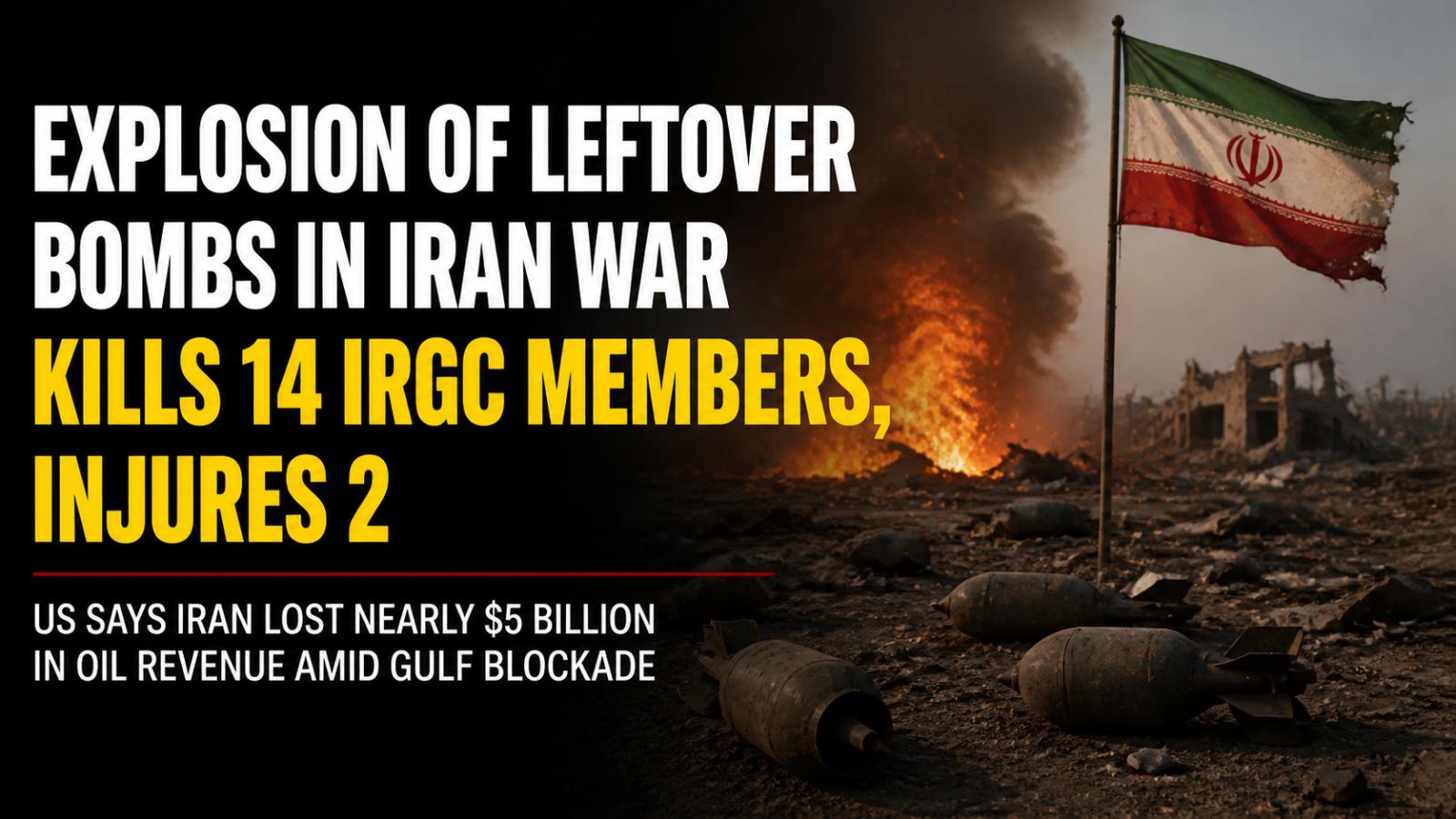
On Friday, May 1, 14 members of Iran's Islamic Revolutionary Guard Corps (IRGC) were killed in an explosion caused by leftover bombs from the ongoing war. The explosion took place in Zanjan Province, a region in northwestern Iran. This incident marks the largest number of casualties for the IRGC since the US-Iran ceasefire agreement on April 7. In addition, two other members of the IRGC were injured in the blast.
Cause of the explosion: cluster bombs and air mines
The deadly explosion was caused by unexploded ordnance left in the area following the conflict, which included cluster bombs and air mines dropped during the war. The personnel involved in the explosion were part of a specialized team responsible for clearing unexploded munitions from the area. The Fars News Agency reported that around 1,200 hectares of agricultural land have been contaminated by these leftover explosives, posing ongoing risks to the local population.
The continuing dangers of unexploded ordnance
The explosion in Zanjan highlights the long-term dangers posed by unexploded munitions and the risks faced by personnel involved in the clearance efforts. These operations are crucial in minimizing the impact of war on local communities and preventing further casualties. However, incidents like this serve as a stark reminder of the persistent dangers in regions affected by conflict.
US blockade: Economic pressure on Iran
In parallel to the human toll, Iran’s economy continues to struggle under the weight of the US blockade in the Gulf of Oman. According to a US Defense Department report released on April 1, Iran has lost nearly $5 billion in oil revenue due to the blockade. The blockade is a key part of President Trump's strategy to increase economic pressure on Iran in hopes of pushing the country into negotiations aimed at resolving the war.
Oil tankers trapped in the Gulf
Since the blockade began on April 13, the US military has intercepted and redirected over 40 vessels attempting to move Iranian oil through the region. As of now, 31 tankers carrying an estimated 53 million barrels of Iranian crude oil are stuck in the Gulf, valued at approximately $4.8 billion. Two tankers have already been seized by US forces. With storage capacity on land reaching its limits, Iran has reportedly started using older tankers as floating storage units for its oil.
Human and economic costs continue to rise
The explosion that killed the IRGC personnel serves as a reminder of the ongoing volatility and human cost of the conflict. Simultaneously, Iran's economy is under severe strain from the blockade, further escalating tensions between the US and Iran. As both sides continue to face off over military, economic, and political pressures, the prospect of a peaceful resolution remains uncertain, with diplomatic talks continuing to stall.
The incident and the ongoing blockade highlight the complexity of the situation in the region, as Iran continues to grapple with both military losses and economic hardship, while the international community watches closely for signs of de-escalation or further confrontation.