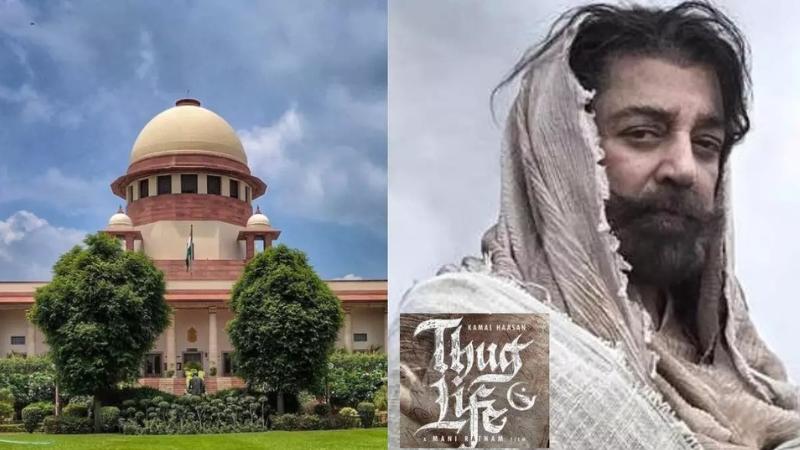
The Supreme Court on Thursday strongly reprimanded the Karnataka government over its failure to ensure the release of actor Kamal Haasan's film Thug Life, which was pulled from cinemas amid threats by pro-Kannada groups. The film, originally scheduled to release in the state on June 5, became entangled in controversy after Haasan made a comment suggesting the Kannada language "was born out of Tamil" a statement that enraged several local groups and political voices.
Hearing a petition filed by Mahesh Reddy, the top court ruled that it is the state’s "duty to protect constitutional rights" and demanded a concrete action plan from Karnataka to ensure law and order during the film’s screening. The court emphasized that public outrage cannot override fundamental rights and that artists should not be silenced over opinions, however controversial.
The Karnataka government responded by assuring “full protection and security” for theatres willing to screen the film. Police have issued notices to the pro-Kannada groups that threatened disruptions, warning against any unlawful activity. The government also admitted that the Karnataka Film Chamber of Commerce (KFCC) had acted "under pressure" when it previously objected to the release.
The court also defended Haasan’s right to speech and said there was no need for an apology, rejecting the demands from protesters. It made clear that mob sentiment or threats cannot dictate creative expression. “Just because of an opinion, should a movie... a stand-up comedy be stopped? We cannot allow this,” the bench remarked.
While Kamal Haasan expressed satisfaction with the Supreme Court’s stand and sought to end the matter, the original petitioner argued against closing the case. Advocate A Velan requested that the court issue clear legal guidelines and pursue criminal charges against those who had issued threats.
Kamal Haasan had earlier moved the Karnataka High Court for relief, but the High Court had urged him to apologise, calling him “not an ordinary man”. Refusing to apologise, Haasan withdrew the film from the state temporarily, stating his comment was misunderstood and reiterating his respect for the Kannada language. His team also made it clear there would be “no apology at gunpoint”.
The Supreme Court has since taken control of the case, transferring it from the Karnataka High Court and making it clear that a CBFC-certified film cannot be blocked by "mobs and vigilante groups". The matter is seen as a critical test for freedom of expression in cinema and may set precedent for future censorship-related conflicts in India.