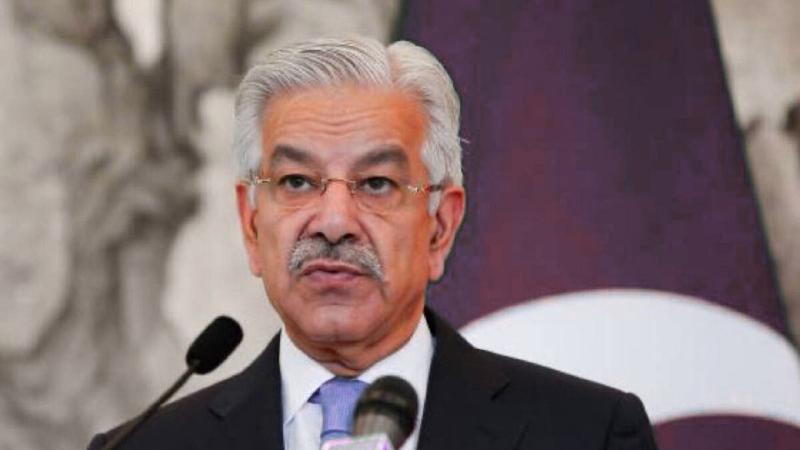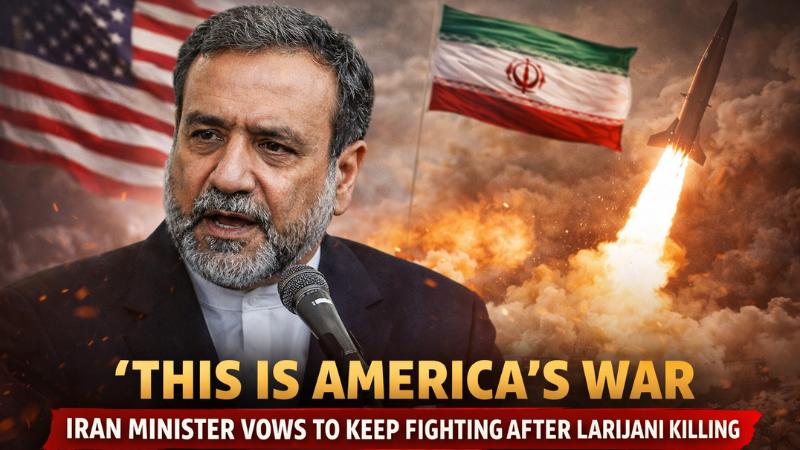
Iran has vowed to continue its fight against the United States and Israel following the killing of Ali Larijani, one of Iran's most influential political figures, in an Israeli airstrike. Iranian foreign minister Syed Abbas Araghchi made a bold statement, declaring that Iran’s political and economic structure would remain intact despite the loss of Larijani, the head of the Supreme National Security Council, who was killed alongside his family members and bodyguards near Tehran.
In an interview with Al Jazeera, Araghchi emphasized that Iran’s fight would continue, regardless of individual losses, citing the example of the late Supreme Leader Ayatollah Ali Khamenei, who was also targeted by a US-Israeli strike in February 2026. He remarked, "Even the (Supreme) Leader was martyred, yet the system continued its work."
Araghchi also held the US responsible for the ongoing conflict in the Middle East, stressing that Washington must be held accountable for the human and economic toll. Despite the mounting tensions, he reaffirmed that Iran's position against the development of nuclear weapons, as expressed by the late Khamenei, remains unchanged, though he added that Iran’s new Supreme Leader, Mojtaba Khamenei, has yet to provide his stance on the matter.
On the issue of the Strait of Hormuz, a vital energy passage for global oil and gas, Araghchi called for a new protocol to ensure safe passage through the strait post-war, in order to safeguard both Iranian and regional interests. He also warned that Iran would not allow oil to reach the US, Israel, and their partners, further escalating tensions in the region.
As the conflict continues, Iran insists that the war can only end if the country is compensated for the damages incurred since February 28, 2026. This stance, combined with the growing geopolitical stakes, signals a turbulent road ahead for the Middle East, with the US and Israel at the heart of the ongoing tensions.