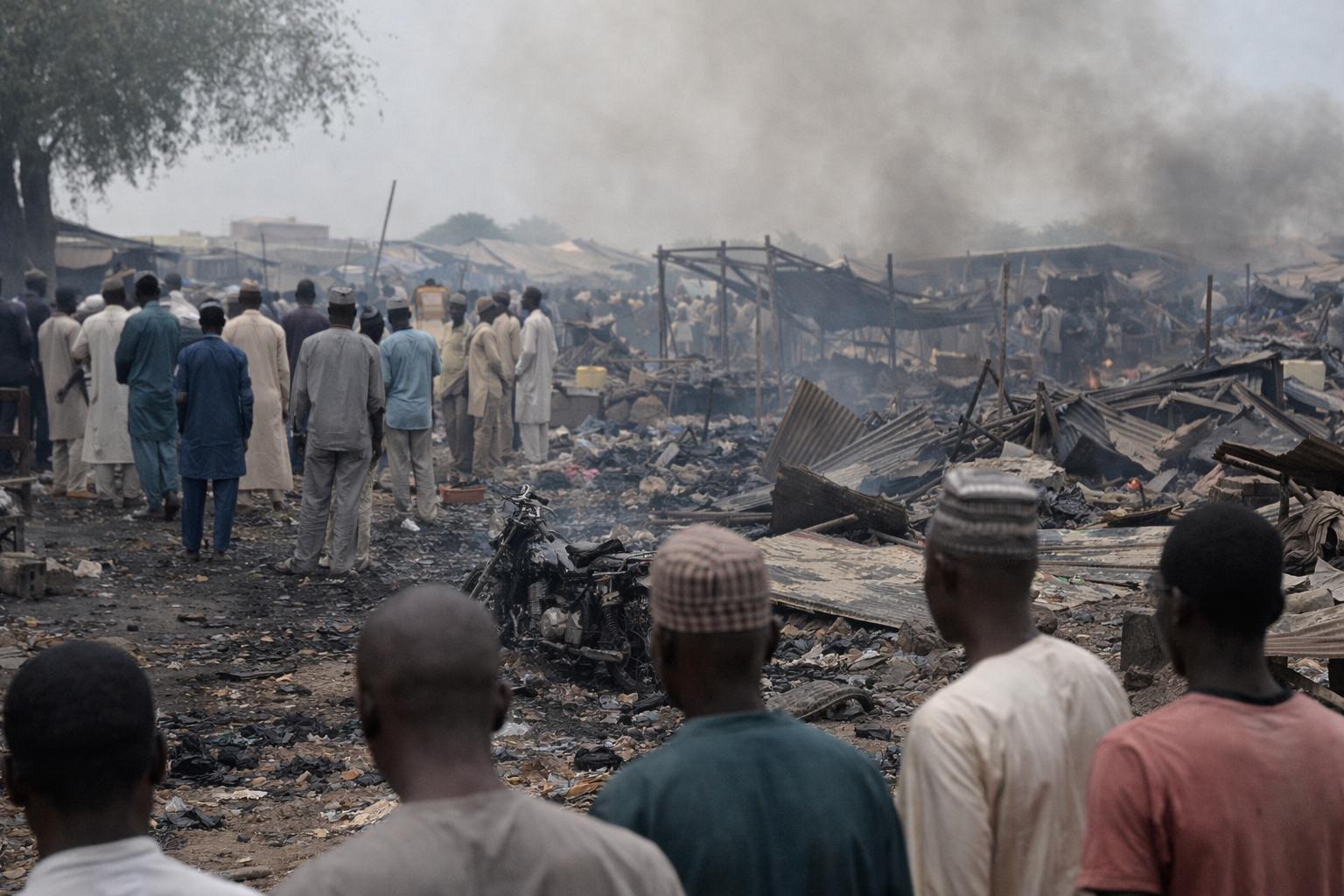
A military air strike in northeastern Nigeria has killed more than 100 civilians after a targeted operation against suspected insurgents struck a crowded marketplace. The incident occurred at approximately 2:46 PM WAT on Saturday, April 11, 2026, in Yobe State near the border with Borno, a region long affected by extremist violence.
Authorities confirmed that the strike, carried out by the Nigerian Air Force, was intended to hit a stronghold linked to Boko Haram militants. However, officials acknowledged that the operation went wrong, resulting in significant civilian casualties at the Jilli weekly market. While early estimates placed the death toll above 100, some reports indicated that as many as 200 people may have been killed.
Amnesty International said it verified the deaths through survivor accounts and hospital sources. The organization’s Nigeria director stated that witnesses and medical personnel confirmed the scale of the casualties, highlighting the devastating impact on local communities.
Security sources indicated that intelligence had suggested militant fighters were gathering near the market, allegedly planning an operation. Based on that information, the air strike was carried out. A local civilian security group member said the intelligence was considered credible at the time, though it ultimately led to unintended consequences.
The military described the mission as a successful strike against a “terrorist enclave and logistics hub,” reporting that several militants were killed. However, it did not directly address the civilian toll or confirm whether the strike misfired.
Emergency response teams were deployed by the Yobe State Emergency Management Agency, which confirmed casualties and ongoing rescue efforts. Residents were urged to remain calm as authorities continued medical and recovery operations.
The region has faced persistent instability for over a decade, with armed groups such as Islamic State West Africa Province operating across northeastern Nigeria. The latest incident underscores the challenges faced by security forces in conducting operations in densely populated areas while combating insurgent threats.
Authorities confirmed that the strike, carried out by the Nigerian Air Force, was intended to hit a stronghold linked to Boko Haram militants. However, officials acknowledged that the operation went wrong, resulting in significant civilian casualties at the Jilli weekly market. While early estimates placed the death toll above 100, some reports indicated that as many as 200 people may have been killed.
Amnesty International said it verified the deaths through survivor accounts and hospital sources. The organization’s Nigeria director stated that witnesses and medical personnel confirmed the scale of the casualties, highlighting the devastating impact on local communities.
Security sources indicated that intelligence had suggested militant fighters were gathering near the market, allegedly planning an operation. Based on that information, the air strike was carried out. A local civilian security group member said the intelligence was considered credible at the time, though it ultimately led to unintended consequences.
The military described the mission as a successful strike against a “terrorist enclave and logistics hub,” reporting that several militants were killed. However, it did not directly address the civilian toll or confirm whether the strike misfired.
Emergency response teams were deployed by the Yobe State Emergency Management Agency, which confirmed casualties and ongoing rescue efforts. Residents were urged to remain calm as authorities continued medical and recovery operations.
The region has faced persistent instability for over a decade, with armed groups such as Islamic State West Africa Province operating across northeastern Nigeria. The latest incident underscores the challenges faced by security forces in conducting operations in densely populated areas while combating insurgent threats.