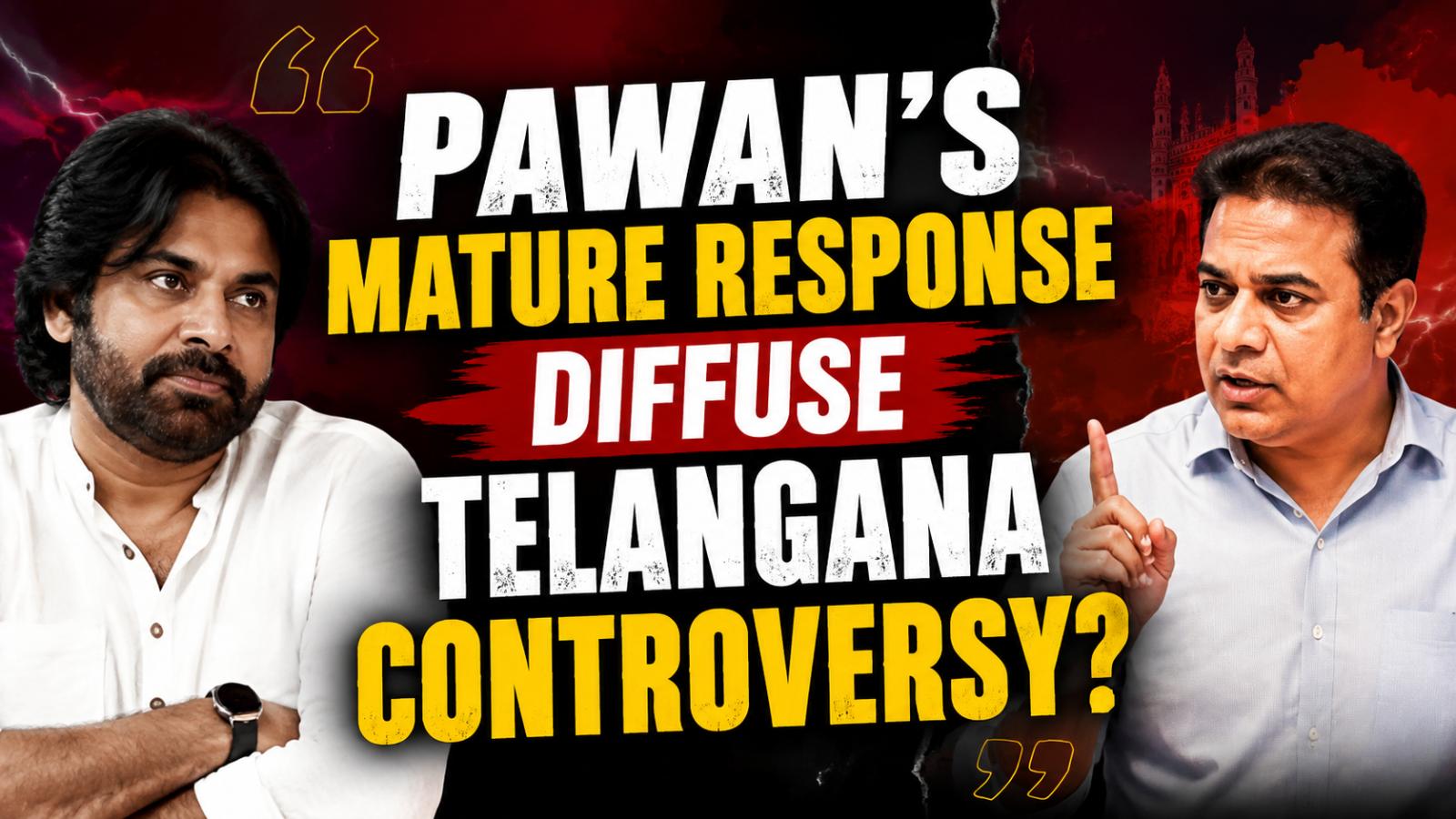
The ongoing political friction between Andhra Pradesh Deputy Chief Minister Pawan Kalyan and Telangana leaders over the past week took a significant turn on Wednesday when BRS working president KTR addressed the controversy for the first time. Pawan Kalyan’s response to the situation has been widely interpreted as a strategic move to de-escalate regional tensions.
While KTR welcomed Pawan Kalyan’s announcement to contest in Telangana elections, he firmly stated that outsiders should not interfere in the state’s internal matters. Many anticipated a sharp rebuttal from Pawan Kalyan, given his outspoken reputation, but instead, he opted for a measured response, which has been credited with reducing the risk of a larger political fallout.
In his statement, Pawan Kalyan emphasized that Telangana belongs to the sons of the state and that his objections were not about outsiders contesting elections but rather against the narrative promoted by some politicians suggesting restrictions on political participation. He highlighted the example of Gaddar, who never advocated barring anyone from Telangana, underscoring his point about fair political inclusion.
Speaking about KTR personally, Pawan Kalyan described him as a brotherly figure and expressed confidence that KTR would not speak ill of him. He clarified that no Andhra leader intends to contest elections in Telangana and questioned why the issue had escalated unnecessarily. He acknowledged the storm-like exaggeration of the controversy and emphasized his goal of ending regional animosity rather than fueling it.
The tactical restraint displayed by Pawan Kalyan was evident in his decision not to respond in kind to KTR’s diplomatic remarks during a press meet. This approach, whether deliberate or inadvertent, effectively defused the situation. By choosing to target only Congress leaders attempting to twist his statements, Pawan ensured that the controversy did not gain further traction. His avoidance of directly criticizing Telangana Chief Minister A. Revanth Reddy also reflected a strategic choice to prevent inflaming public sentiment.
This development demonstrates a conscious effort to maintain harmony between Andhra Pradesh and Telangana at a sensitive political juncture. Observers note that Pawan Kalyan’s choice to temper his rhetoric could serve as a model for political dialogue, emphasizing collaboration over confrontation. It remains to be seen how this measured stance will influence upcoming elections and whether it will pave the way for a more constructive political discourse in the region.
By navigating the controversy with caution and avoiding unnecessary escalation, Pawan Kalyan has not only protected his public image but also mitigated the risk of deepening regional divides. His measured response sends a clear message that political disagreements can be addressed without resorting to inflammatory rhetoric, highlighting the importance of strategic communication in contemporary Indian politics.