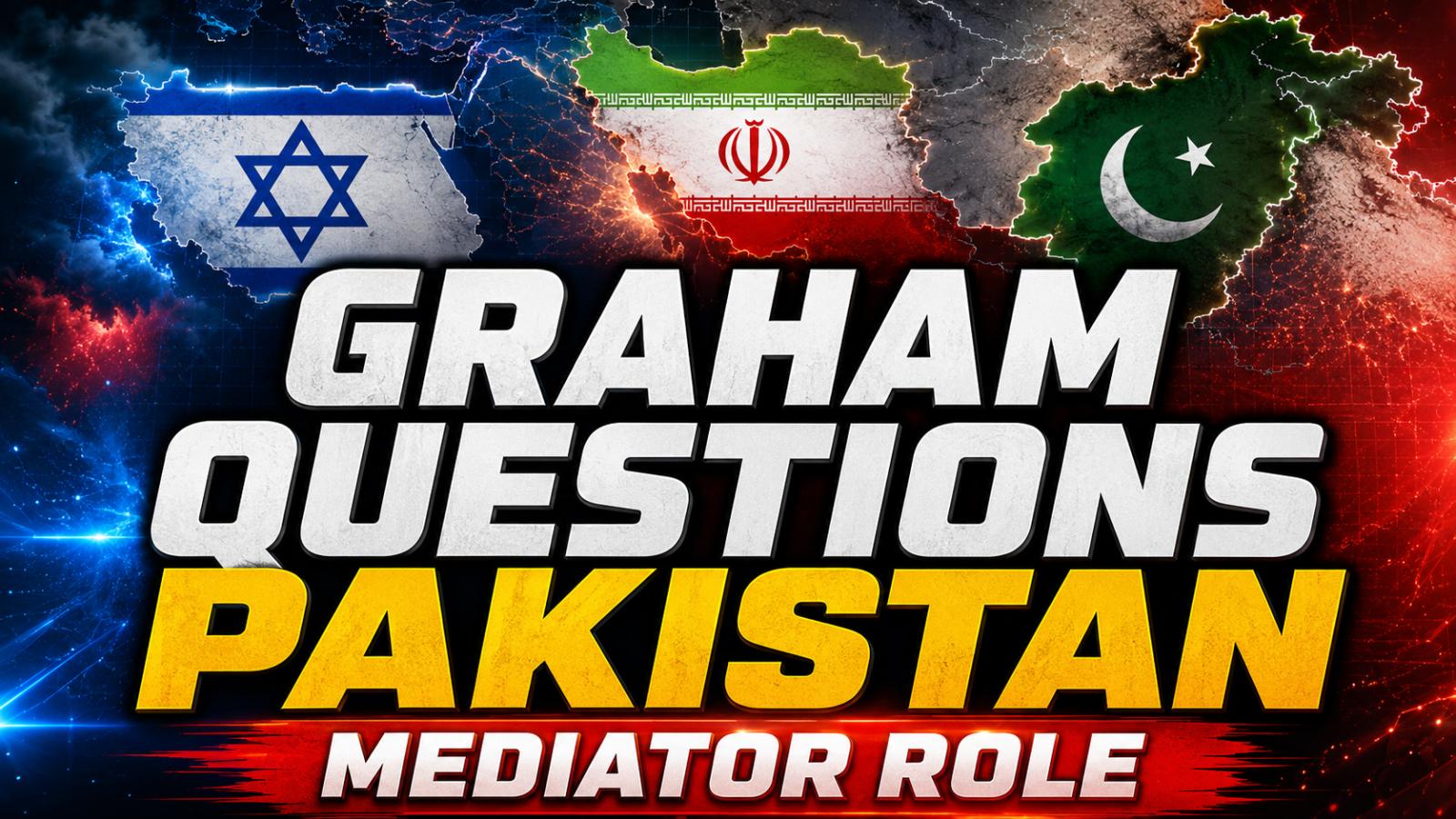
Graham Questions Pakistan’s Role In Iran-Israel Diplomacy
US Senator Lindsey Graham has raised doubts over Pakistan’s credibility as a mediator in the Iran-Israel crisis, arguing that Islamabad’s position toward Israel and its ties with Tehran make its role diplomatically difficult. In a post on X, the Republican senator said Pakistan’s involvement had become “more than problematic,” citing what he described as long-standing hostility toward Israel and reports alleging that Iranian military aircraft were being kept on Pakistani air bases.
Lindsey Graham Questions Pakistan’s Role In Iran-Israel Crisis
Graham also referred to past remarks attributed to Pakistan’s defence minister about the Abraham Accords, the normalization framework between Israel and several Muslim-majority countries. According to Graham, the comments reflected a continued lack of trust in Israel and raised questions about whether Pakistan could act as a neutral bridge in a crisis involving Iran, Israel and the United States. He urged Islamabad to respond to President Donald Trump’s call for more Muslim-majority nations to consider joining the accords.
Graham Challenges Pakistan’s Credibility As Middle East Mediator
The remarks come as Washington is attempting to manage diplomatic tracks involving Iran, Israel and broader regional recognition of Israel. Trump has recently pushed for an expansion of the Abraham Accords, with attention on countries that have not recognized Israel. Graham, a close Republican voice on foreign policy, has supported linking any future Iran arrangement to wider regional normalization efforts.
Pakistan Faces US Scrutiny Over Iran-Israel Mediation Role
Pakistan has historically refused to recognize Israel, saying normalization should be tied to the creation of an independent Palestinian state. Islamabad has also criticized Israeli military actions in Gaza while maintaining diplomatic engagement with Iran during regional tensions. Graham’s comments may increase scrutiny of Pakistan’s attempt to present itself as a mediator, especially as the United States weighs whether any country involved in the process can be viewed as impartial by all sides.