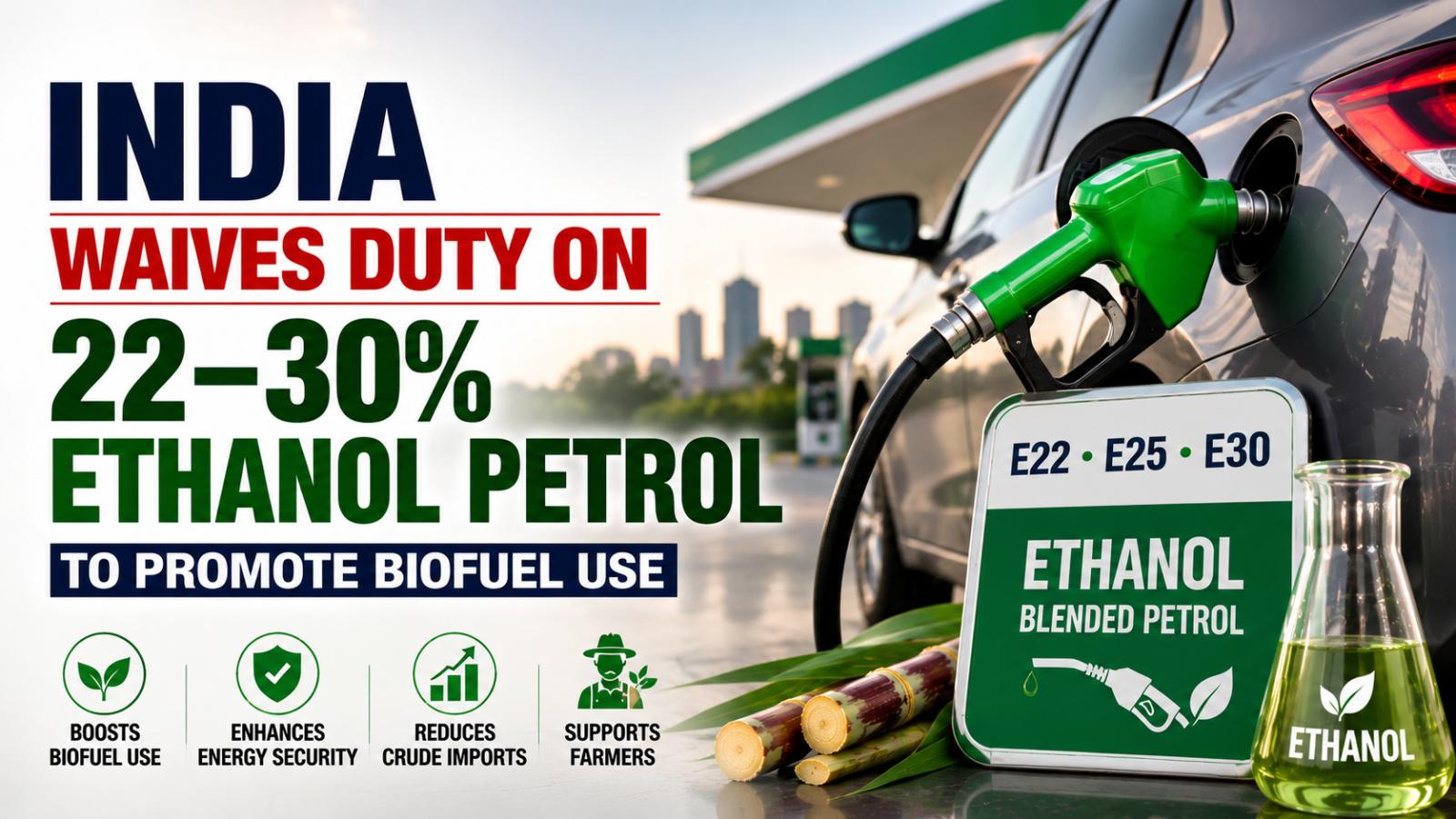
India has removed central excise duty on petrol blended with 22% to 30% ethanol, marking a major policy step in its long-term biofuel and energy transition strategy. The exemption applies to higher ethanol petrol blends commonly known as E22, E25 and E30. By removing the tax burden on these fuel mixes, the government aims to encourage wider production and adoption of ethanol-rich petrol, support domestic biofuel manufacturing and reduce India’s dependence on imported crude oil.
Push For Biofuels And Energy Security
The move is part of India’s broader effort to diversify its fuel mix and strengthen energy security through locally produced renewable fuels. Ethanol used in India is mainly produced from sugarcane and other agricultural feedstocks, creating an additional market for farmers and local producers. With global crude oil prices often remaining unpredictable, expanding ethanol blending can help reduce import pressure, improve economic resilience and support the country’s cleaner fuel goals.
Limited Immediate Impact On Pump Prices
Although the excise duty exemption is significant, it may not immediately change petrol prices for most consumers. Regular petrol sold at retail stations usually contains lower ethanol levels and will continue to follow existing pricing rules. Wider availability of E22, E25 and E30 petrol will depend on blending infrastructure, logistics, fuel supply networks and vehicle compatibility. Many vehicles currently on Indian roads are not approved to run on petrol blends above 20%, which means adoption of higher ethanol fuels may take time.
Long-Term Benefits For Fuel Markets
The policy sends a clear signal to fuel companies, investors and automakers that higher ethanol petrol is a priority area for India’s energy sector. If infrastructure expands and compatible vehicles become more common, E22, E25 and E30 fuels could gradually become available at more retail outlets. Over time, this could help India reduce crude oil imports, promote cleaner transport fuels, support rural economies linked to ethanol production and create a stronger domestic biofuel ecosystem.