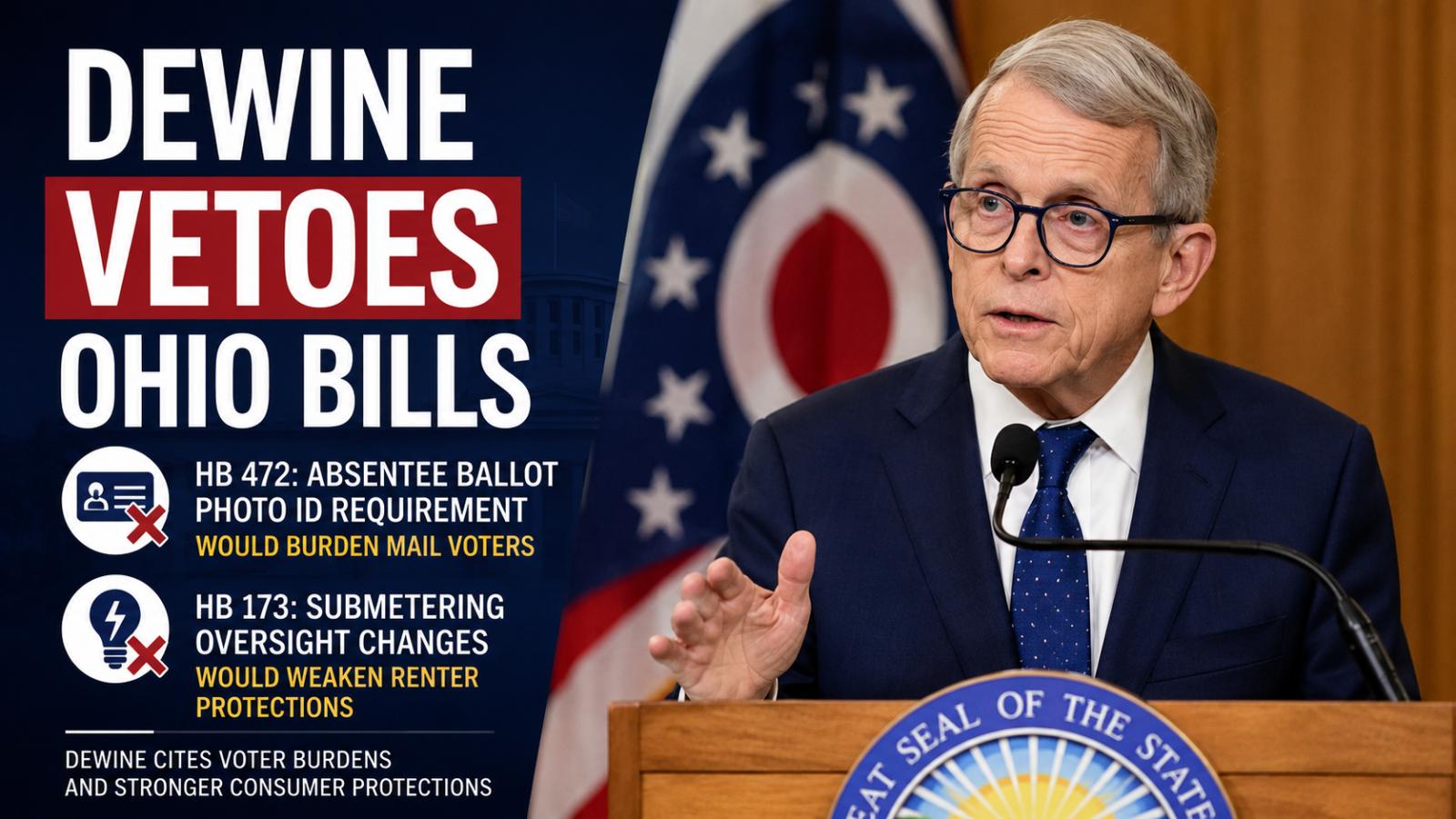
Ohio Gov. Mike DeWine vetoed the Ohio absentee ballot ID bill and a separate electric submetering measure on Wednesday night, June 24, 2026, blocking changes that would have affected mail voters and renters across the state.
The Republican governor announced the vetoes in Columbus after the Ohio General Assembly ended its latest work period. No additional legislative sessions were scheduled until after the November election.
Why DeWine vetoed the Ohio absentee ballot ID bill
House Bill 472 would have required most Ohioans voting by mail to provide photo identification. In his veto message, DeWine said the requirement would place a significant burden on absentee voters without meaningfully improving election security or discouraging fraud.
DeWine said Ohio already offers broad voting access while administering elections effectively. He concluded that the bill’s limited benefit did not justify the additional requirement for residents casting absentee ballots.
HB 173 raised concerns over renter utility protections
DeWine also vetoed House Bill 173, which focused on companies that buy electricity from major utilities and resell it to tenants through submetering arrangements. Such companies may charge renters more than the underlying utility rate, while tenants can have fewer options to dispute prices or seek assistance.
The Ohio Supreme Court ruled that a company purchasing and reselling electricity for profit qualifies as a public utility subject to oversight by the Public Utilities Commission of Ohio. HB 173 would have removed qualifying submetering companies from the public utility definition while retaining some commission supervision and creating separate consumer safeguards.
DeWine said those safeguards were weaker than protections available to customers of traditional electric utilities. He also raised concerns that submetering could limit tenants’ ability to choose an electricity supplier, access assistance programs and understand charges connected to shared building areas.
The two vetoes preserve Ohio’s existing absentee voting requirements and stronger utility protections for renters. Their broader significance will depend on whether lawmakers revisit either issue after the November election.