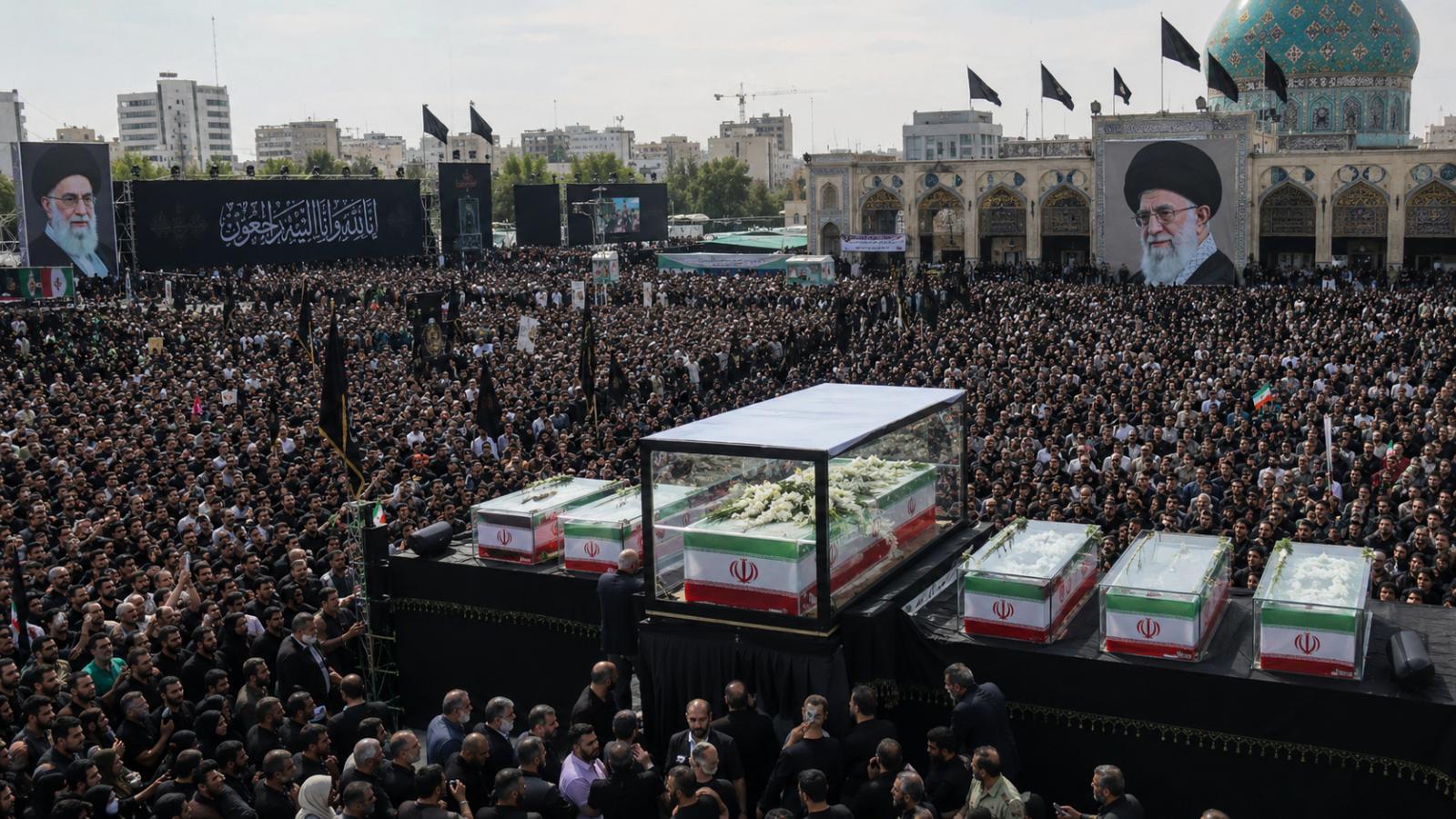
Huge crowds gathered in Tehran, Iran, at dawn local time on Saturday, July 4, 2026, as funeral ceremonies began for Ayatollah Ali Khamenei, the former Iranian supreme leader killed in late February during the U.S.-Israeli war.
The Khamenei funeral opened six days of public ceremonies expected to move through major Shiite religious centers in Iran and Iraq, including Qom, Karbala, Najaf and Mashhad.
Caskets displayed at Grand Mosalla mosque
Mourners gathered at the Grand Mosalla mosque in Tehran, where the caskets of Khamenei and several relatives killed with him were displayed under glass and draped with Iranian flags. His coffin was placed above the others on a stage as supporters wept and chanted during the ceremony.
The funeral comes at a tense moment for Iran after months of conflict involving the United States and Israel, earlier antigovernment unrest, and a June 2026 cease-fire that remains politically fragile.
Mojtaba Khamenei’s absence adds political pressure
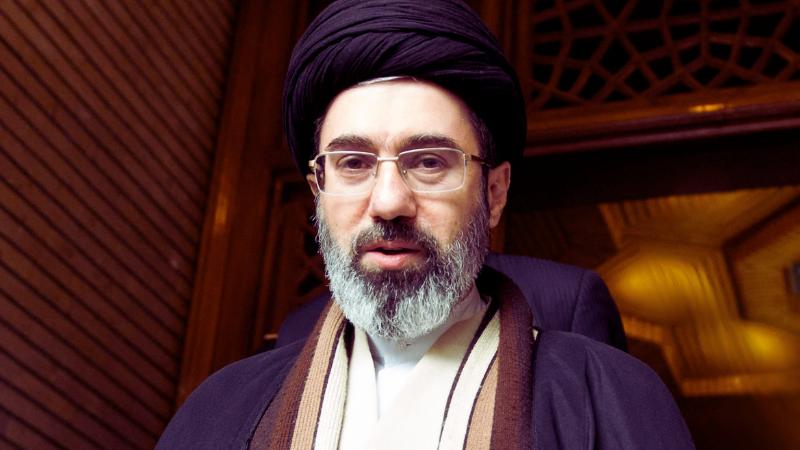
The ceremonies also drew attention to Mojtaba Khamenei, Ali Khamenei’s son and Iran’s new supreme leader. He has not appeared publicly since taking the role, and his expected absence from the funeral has fueled questions about security, succession and hard-line divisions inside the Islamic Republic.
Iranian authorities are presenting the funeral as a show of unity and resilience. But opposition voices and critics of the regime have described the ceremonies as propaganda at a time when many Iranians continue to face economic pressure, repression and uncertainty after the war.
Funeral procession to continue through Mashhad
A Tehran procession is scheduled for Monday, July 6, 2026. Khamenei’s body is then expected to be taken to Qom before ceremonies in Karbala and Najaf in Iraq. His remains are due to be buried in Mashhad on Thursday, July 9, 2026.
For Iran, the funeral is more than a state ceremony. It is a test of whether the Islamic Republic can project control after war, leadership change and unresolved pressure over the cease-fire and future talks involving the United States, Israel and regional mediators.