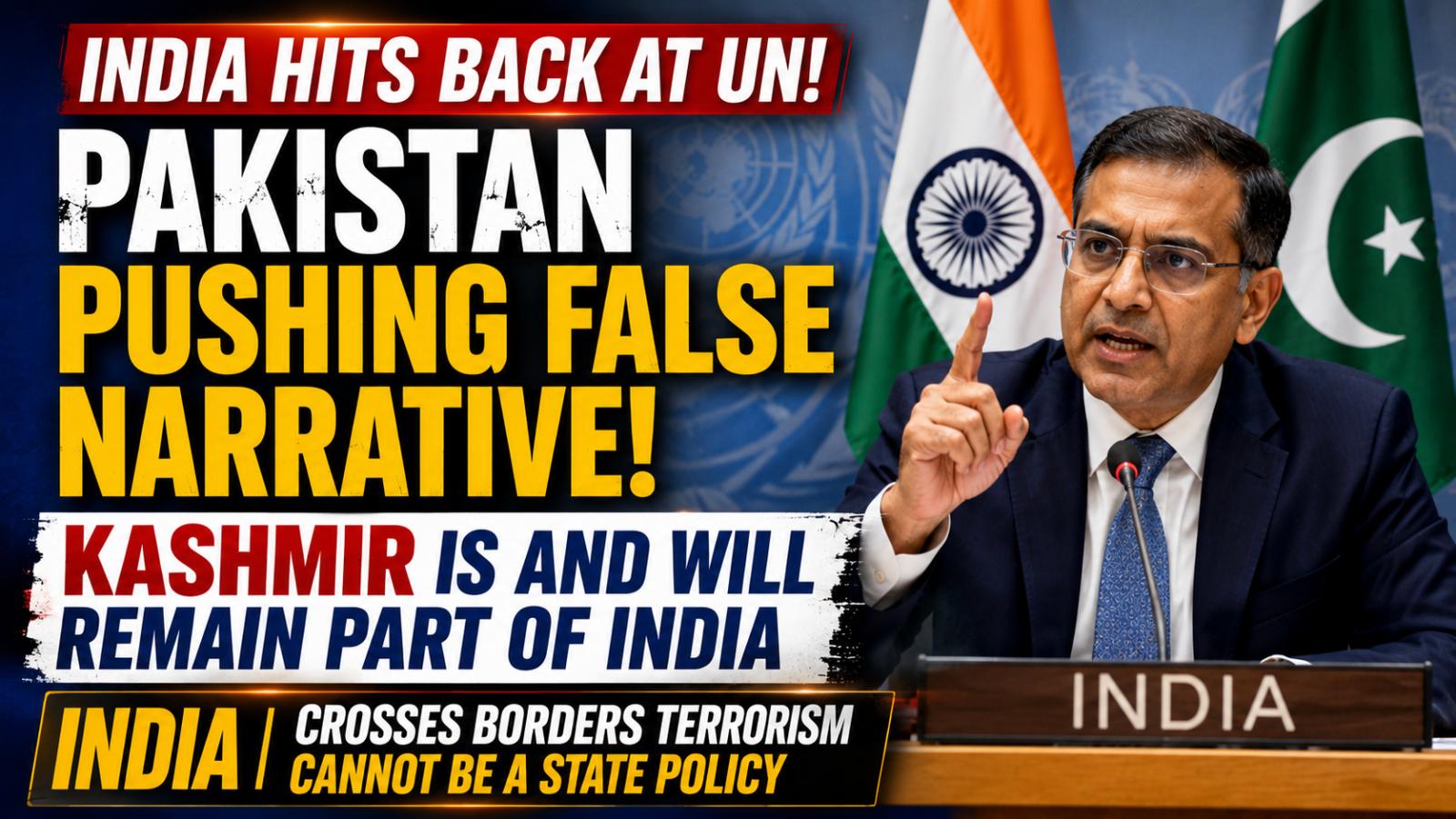
India rebukes Pakistan at the United Nations over cross-border terrorism, rejects Islamabad's statements on Jammu and Kashmir and reiterates that the Union Territory remains an integral part of India. The remarks also reaffirm New Delhi's position on the Indus Water Treaty and regional security.
India UN statement on Kashmir
India strongly criticised Pakistan during a high-level debate at the United Nations Security Council on Wednesday, July 22, accusing Islamabad of using cross-border terrorism as an instrument of state policy while attempting to promote what New Delhi described as a false narrative on Jammu and Kashmir.
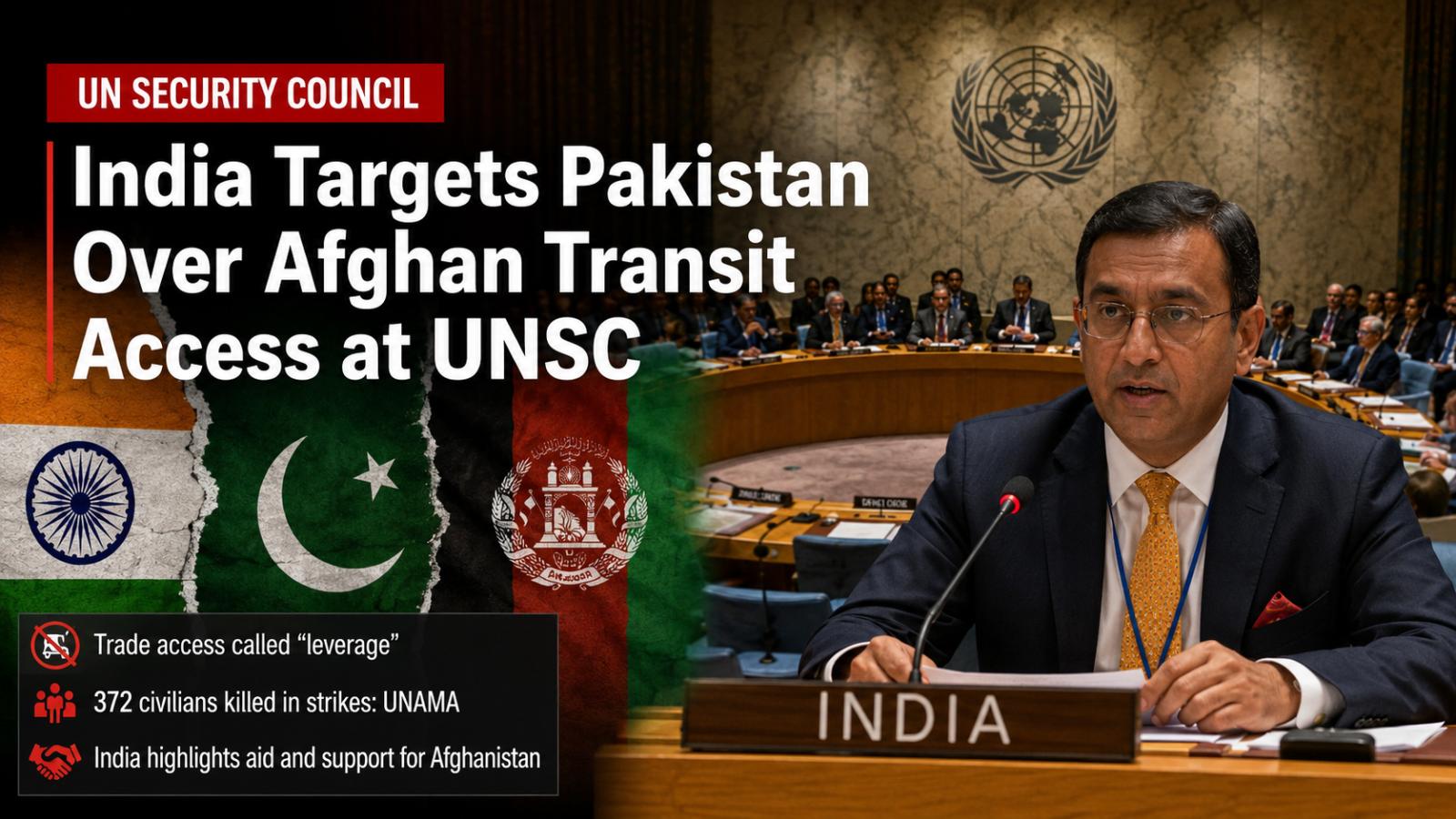
Speaking during the High-Level Open Debate on Natural Resources Governance: The Foundation of Peace, Security and Prosperity, India's Permanent Representative to the United Nations, Ambassador Parvathaneni Harish, said his delegation was compelled to respond after Pakistan raised issues unrelated to the theme of the meeting.
Harish stated that India had not intended to discuss bilateral matters during the session but argued that Pakistan had chosen to misuse the international forum. He said New Delhi could not allow what it considered inaccurate claims to go unanswered.
Pakistan false narrative at United Nations
Addressing the Security Council, Harish reaffirmed India's long-standing constitutional position on Jammu and Kashmir. He stated that the Union Territory "has always been, is, and will remain" an integral and inalienable part of India, describing this as both the constitutional and legal reality.
The ambassador accused Pakistan of deliberately ignoring that position while continuing to raise the issue in international forums. According to India's official position, Jammu and Kashmir is an internal matter, and New Delhi has consistently opposed third-party involvement.
Harish further argued that the only unresolved issue concerning Jammu and Kashmir is what India describes as Pakistan's illegal occupation of parts of Indian territory. He said Islamabad should address that matter rather than attempting to challenge India's sovereignty over the region.
Indus Water Treaty India position
The Indian envoy also addressed the Indus Water Treaty, reiterating that India's position remains unchanged. He stated that cooperation under the treaty depends on mutual trust and goodwill, conditions that New Delhi believes are undermined by continuing cross-border terrorism.
According to Harish, peaceful cooperation cannot fully function while terrorism is regularly employed as an instrument of state policy. His remarks reflected India's broader diplomatic position following recent tensions between the two neighbouring countries.
The Indus Water Treaty, signed in 1960 with the support of the World Bank, has remained one of the most significant agreements governing water-sharing between India and Pakistan. However, New Delhi has increasingly linked future cooperation to the overall security environment.
Cross-border terrorism state policy
India has repeatedly raised concerns about cross-border terrorism at international forums, maintaining that countries sponsoring or supporting such activities should be held accountable under international law. The latest statement at the United Nations continues that diplomatic approach while responding directly to Pakistan's remarks during the Security Council debate.
In his concluding comments, Harish urged Pakistan to focus on addressing its own domestic challenges instead of criticising India on international platforms. He said Islamabad would better serve its citizens by concentrating on internal governance and development rather than promoting allegations against New Delhi.
The exchange highlights the continuing diplomatic tensions between the two nuclear-armed neighbours, particularly over Jammu and Kashmir and cross-border security concerns. Although the latest remarks are unlikely to alter either country's long-standing positions, they demonstrate how bilateral disputes continue to surface during multilateral discussions at the United Nations.
India's intervention was based on official statements delivered by Ambassador Parvathaneni Harish during the United Nations Security Council's High-Level Open Debate, reflecting New Delhi's formal diplomatic position on Jammu and Kashmir, cross-border terrorism and the Indus Water Treaty.