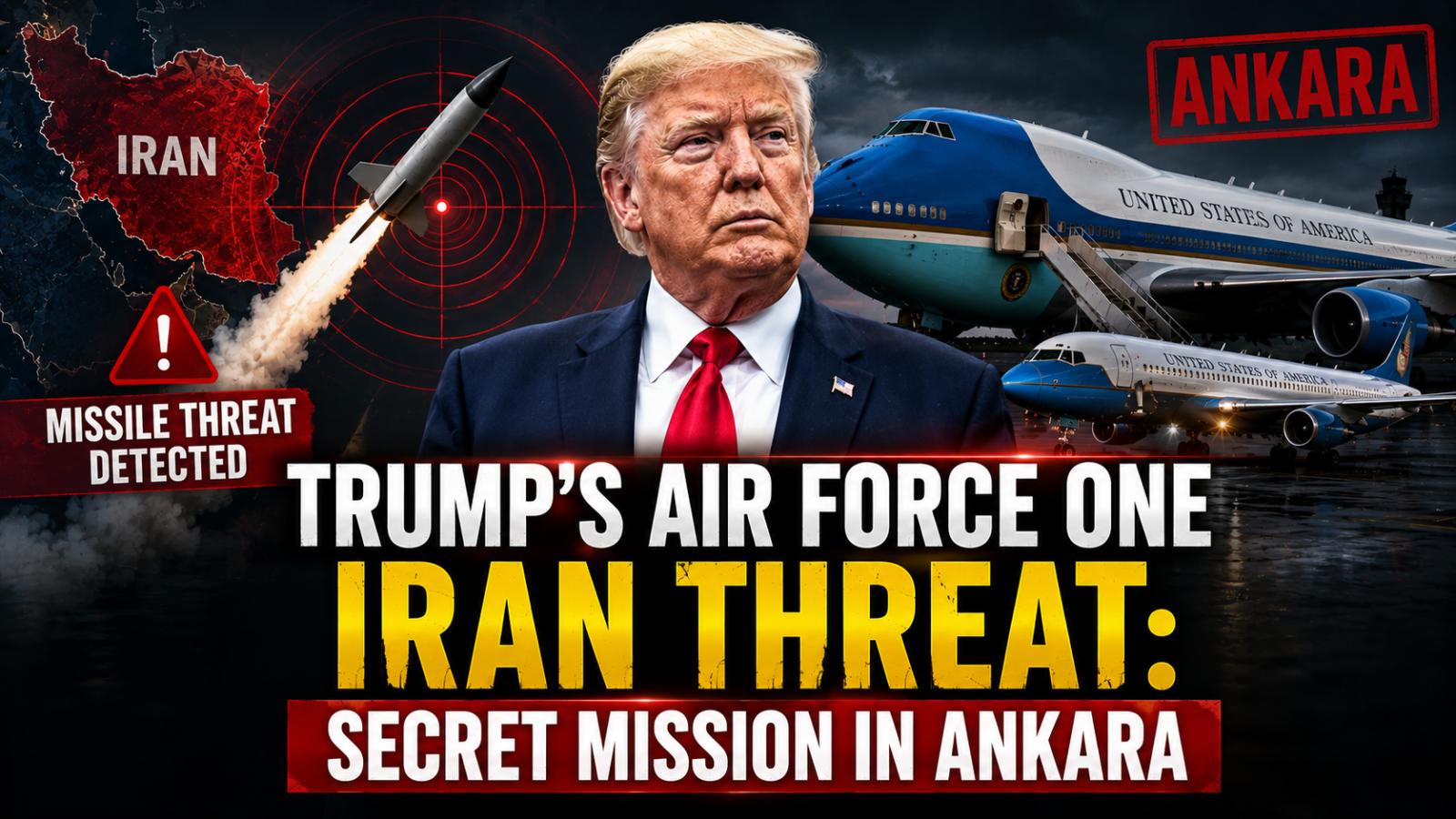
A reported Trump Air Force One Iran threat has drawn fresh scrutiny after US intelligence reportedly detected a credible risk to the president's aircraft while he was leaving Ankara following the NATO summit. Donald Trump has since confirmed that the Secret Service and military ordered him onto another aircraft because of a threat.
Ankara threat triggered extraordinary security response
The security operation unfolded on July 8 as Trump prepared to leave Turkey. Reporting based on US officials familiar with the intelligence says authorities believed the president could face an Iranian-linked assassination threat, prompting an unusual effort to conceal his actual movements.
Trump publicly boarded the older presidential Boeing 747 in front of television cameras. But he later confirmed that his security team wanted him to use another aircraft, saying he follows the recommendations of the Secret Service and military when they identify a threat.
Specific claims that Iranian operatives knew the building and floor where Trump was staying, or that intelligence identified a particular shoulder-fired surface-to-air missile near the summit, rely on reporting attributed to unnamed officials. Those details have not been publicly confirmed by the White House, Pentagon or Secret Service and should therefore be presented as reported intelligence rather than established fact.
C-32A switch turned Air Force One into decoy
After Trump boarded the legacy Air Force One, officials secretly moved him to a smaller Air Force C-32A, a modified Boeing 757 used for senior government travel. According to reporting on the operation, an airport catering truck was raised to the opposite side of the aircraft so Trump could leave without being seen.
Trump then travelled aboard the C-32A while journalists and some White House staff remained on the larger aircraft. The legacy plane subsequently operated in a way that helped preserve the impression that the president remained aboard, effectively serving as a decoy.
Defence Secretary Pete Hegseth reportedly boarded the smaller aircraft separately, helping make its departure appear routine. The operation illustrates the extraordinary precautions security officials were prepared to take when they believed Trump's movements had become vulnerable.
Secret Service precautions extended to press cabin
Journalists aboard the larger presidential aircraft were instructed to keep their window shades closed, according to accounts of the departure. Some members of the travelling press were not told that Trump had already left the aircraft.
That secrecy has since generated questions about transparency and whether people aboard the decoy aircraft were adequately informed about the potential danger. Democratic lawmakers have also sought additional information about the threat and the decision-making surrounding the operation.
Trump himself has played down the episode. Speaking after returning from Ohio, he said he receives many threats and did not ask security officials for extensive details before following their instructions.
Iran threat adds to wider US tensions
The incident occurred during a period of severe US-Iran tensions. Trump has publicly warned Tehran against attempting to assassinate him and previously said the United States would respond overwhelmingly if such an attack occurred.
The latest revelations therefore deepen an already serious security story, but the distinction between verified facts and intelligence-based reporting remains essential. Trump has confirmed that a threat prompted his aircraft change. The C-32A transfer and catering-truck operation have also been widely corroborated. The precise missile scenario and the extent of Iranian knowledge about Trump's location remain claims attributed to intelligence sources rather than details publicly verified by US agencies.
The episode shows how rapidly presidential travel can change when security officials believe a threat is credible, while also raising difficult questions about secrecy, press safety and the balance between protection and public accountability.