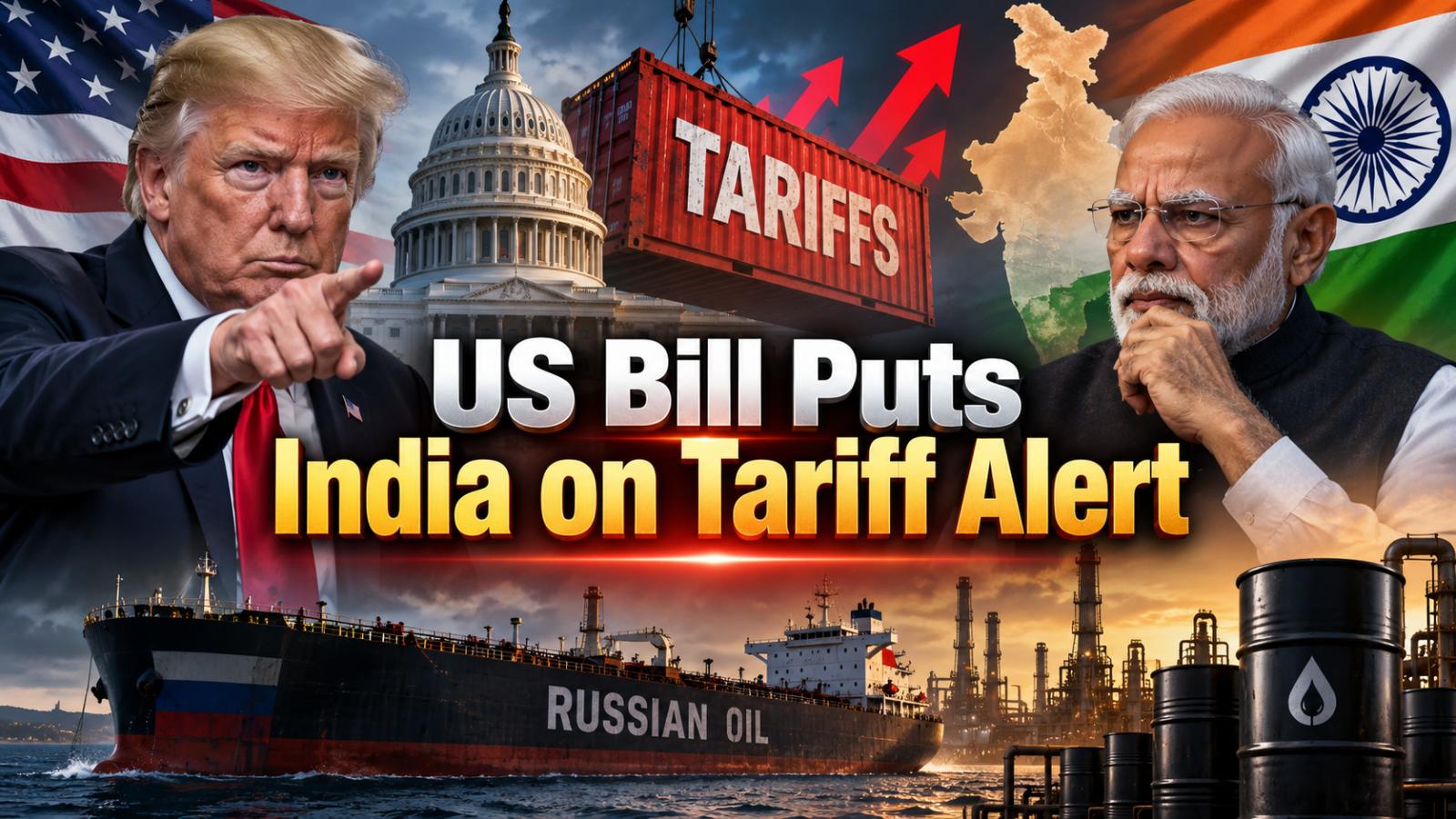
The Russia sanctions bill has raised fresh concerns for India and other major buyers of Russian energy, with the legislation giving President Donald Trump authority to impose tariffs of up to 100% under specified conditions. The move comes as India-Russia ties remain strong in energy and strategic cooperation.
Russia sanctions bill clears US House
The US House of Representatives has passed the Lindsey O. Graham Sanctioning Russia and Iran Act of 2026, moving legislation that could significantly expand Washington's economic pressure on Russia and countries that continue major energy trade with Moscow.
The House approved the measure on September 16 after an earlier procedural resolution advanced by a narrow 214-211 vote. The Senate had already passed the legislation on August 7. The measure now requires presidential action before becoming law.
The legislation targets Russian officials, financial institutions, energy interests and entities accused of helping Moscow evade sanctions. It also creates new secondary tariff authority aimed at countries that remain among Russia's largest energy buyers.
India tariff risk tied to Russian oil
The bill does not automatically impose a 100% tariff on India. Instead, it gives the US administration authority to levy duties ranging above zero and up to 100% on goods from countries that meet specific criteria.
Under the legislation, a country could become subject to secondary tariffs if it makes new purchases of Russian crude oil or natural gas after the law takes effect and ranks among the five largest importers of Russian energy during the relevant 12-month period. Countries identified among the top five facilitators of Russian oil sanctions evasion could also face tariffs.
These provisions put major Russian energy buyers such as India and China under greater scrutiny. However, the actual tariff rate would depend on determinations made by the US administration, and the legislation also contains provisions allowing tariffs to be adjusted, waived or terminated under certain conditions.
Trump tariff powers add pressure to trade ties
Supporters of the legislation argue that targeting countries buying large volumes of Russian energy could reduce Moscow's revenues and increase pressure over the war in Ukraine. Critics in Congress have raised concerns that giving the president broader tariff authority could increase import costs and ultimately affect American consumers.
For India, the measure adds another issue to an already sensitive trade relationship with Washington. Russian crude has become an important part of India's energy strategy in recent years, while New Delhi has consistently emphasized the importance of affordable and reliable energy supplies.
The legislation could therefore make Russian oil purchases an increasingly important factor in future India-US trade discussions, although the law itself does not predetermine how the administration would apply tariff powers to individual countries.
India-Russia ties remain strong after BRICS
The development comes shortly after Prime Minister Narendra Modi and Russian President Vladimir Putin met during the BRICS Summit in New Delhi.
According to the Prime Minister's Office, the two leaders reviewed cooperation in the economy, defence, energy, space, skill mobility and people-to-people relations. They also discussed conflicts in West Asia and the Black Sea region and their impact on maritime trade and Indian seafarers.
Modi reiterated India's position that dialogue and diplomacy should remain central to resolving conflicts and said India was willing to assist peace efforts. Both leaders also agreed to continue strengthening the India-Russia Special and Privileged Strategic Partnership.
The next question for New Delhi is therefore not whether a 100% tariff has already been imposed—it has not—but how Washington may use the new authority if the legislation becomes law, and how India balances Russian energy purchases with its expanding economic relationship with the United States.