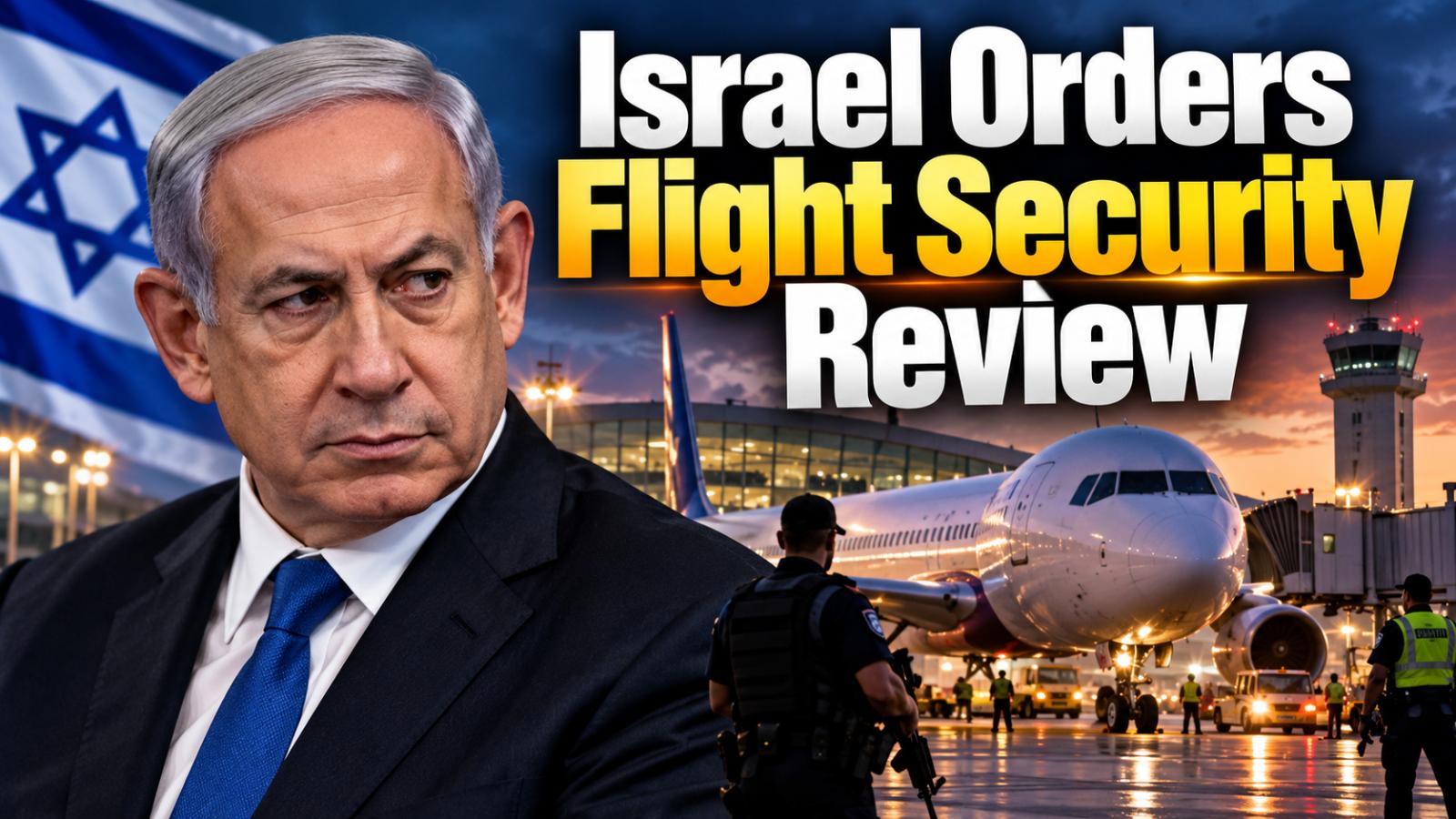
Israel has launched an Israel flight security review after the Flydubai attack on FZ1073 raised questions over cockpit security, crew vetting and foreign airlines flying to Ben Gurion Airport. Prime Minister Benjamin Netanyahu ordered a broader examination as investigations into the incident continue.
Flydubai Attack
Prime Minister Benjamin Netanyahu has instructed National Security Council chief Shmuel Ben-Ezra to appoint an examiner to conduct a comprehensive review of security arrangements covering foreign civilian flights to Israel.
The decision follows the September 30 incident aboard Flydubai Flight FZ1073 from Dubai to Tel Aviv. UAE authorities said the Omani co-pilot attacked the Indian captain with an emergency crash axe and attempted to take control of the aircraft. Passengers and crew eventually restrained the suspect, while the aircraft diverted safely to Tabuk in Saudi Arabia.
Cockpit Attack
The incident has intensified scrutiny of how foreign airline crews are vetted before operating flights to Israel. Israel applies extensive aviation-security procedures, but the episode highlighted the particular challenge posed by a threat originating from inside the cockpit rather than from a passenger.
Questions have also emerged over how an Omani national was assigned to an Israel-bound service, given that Oman and Israel do not have diplomatic relations. Reports indicate that Israeli authorities received information about the flight's crew before departure, adding to debate over whether existing screening procedures were adequate.
Ben Gurion Security
Netanyahu's review is expected to examine responsibility for security checks involving international carriers and their personnel. The move comes amid criticism over whether Israeli agencies and the Transportation Ministry had clearly divided responsibilities for screening foreign aviation staff.
The review itself will examine potential failures and recommend improvements, although it does not directly have authority to impose new regulations. Israeli officials have argued that examining any identified security gap is necessary to prevent a similar incident.
FZ1073 Probe
Investigators are continuing to examine the motive and background of the co-pilot, identified in reports as Hamam al-Hammami. UAE authorities have described the incident as an attempted terrorist attack, while an early Israeli assessment reportedly suggests he was likely acting alone.
Australian counterterrorism authorities are also examining the suspect's previous links to the country, where he reportedly studied about a decade ago. Investigators are still assessing whether he had connections to extremist networks or received assistance from others.
Aviation Safety
The FZ1073 incident has put insider threats at the centre of the aviation-security debate. Reinforced cockpit doors are designed to protect pilots from outside attackers, but an attack involving a flight crew member presents a different security challenge.
For Israel, the immediate priority is determining whether existing foreign-airline screening rules need to be strengthened. The wider investigation could lead to tighter crew checks, greater intelligence sharing and new requirements for foreign carriers operating routes to Ben Gurion Airport.