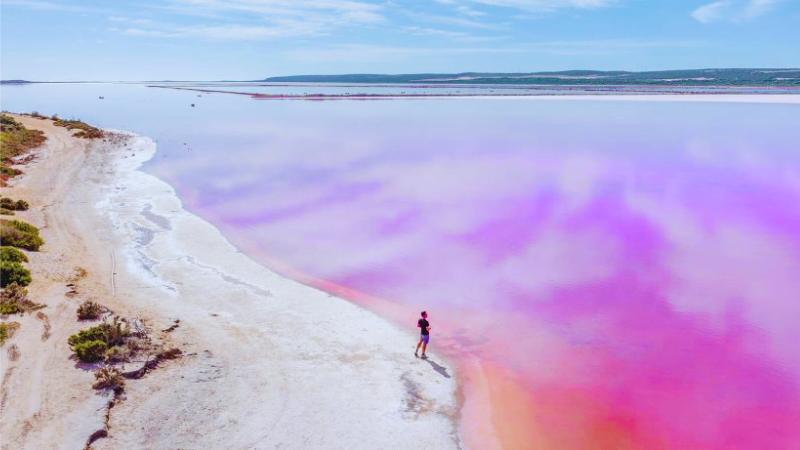
Lake Hillier is one of the world’s most fascinating natural wonders, renowned for its striking bubblegum-pink water. Located on Middle Island off the southern coast of Western Australia, the lake stands out vividly against the deep blue ocean and lush greenery that surround it.
The lake’s unique pink hue is the result of microscopic organisms that thrive in its highly saline environment. Salt-loving bacteria such as Salinibacter ruber produce red pigments, while microalgae like Dunaliella salina generate beta-carotene—the same pigment found in carrots. Together, these natural compounds blend to create the lake’s distinctive rosy color.
The extremely high salt concentration—far greater than that of seawater—provides ideal conditions for these microorganisms to survive. To cope with intense sunlight and ultraviolet radiation, they produce protective pigments, which also give the lake its vibrant appearance.
Unlike many other pink lakes around the world, Lake Hillier remains consistently pink throughout the year. However, the intensity of its color can vary depending on factors such as sunlight, salt levels, and water conditions. Remarkably, even when removed from the lake, the water retains its pink shade, making it a rare and intriguing phenomenon.
Beyond its visual appeal, Lake Hillier serves as an important site for scientific research, offering valuable insights into how life can thrive in extreme environments. It continues to attract tourists and researchers alike, all drawn by its unusual beauty and the science behind it.