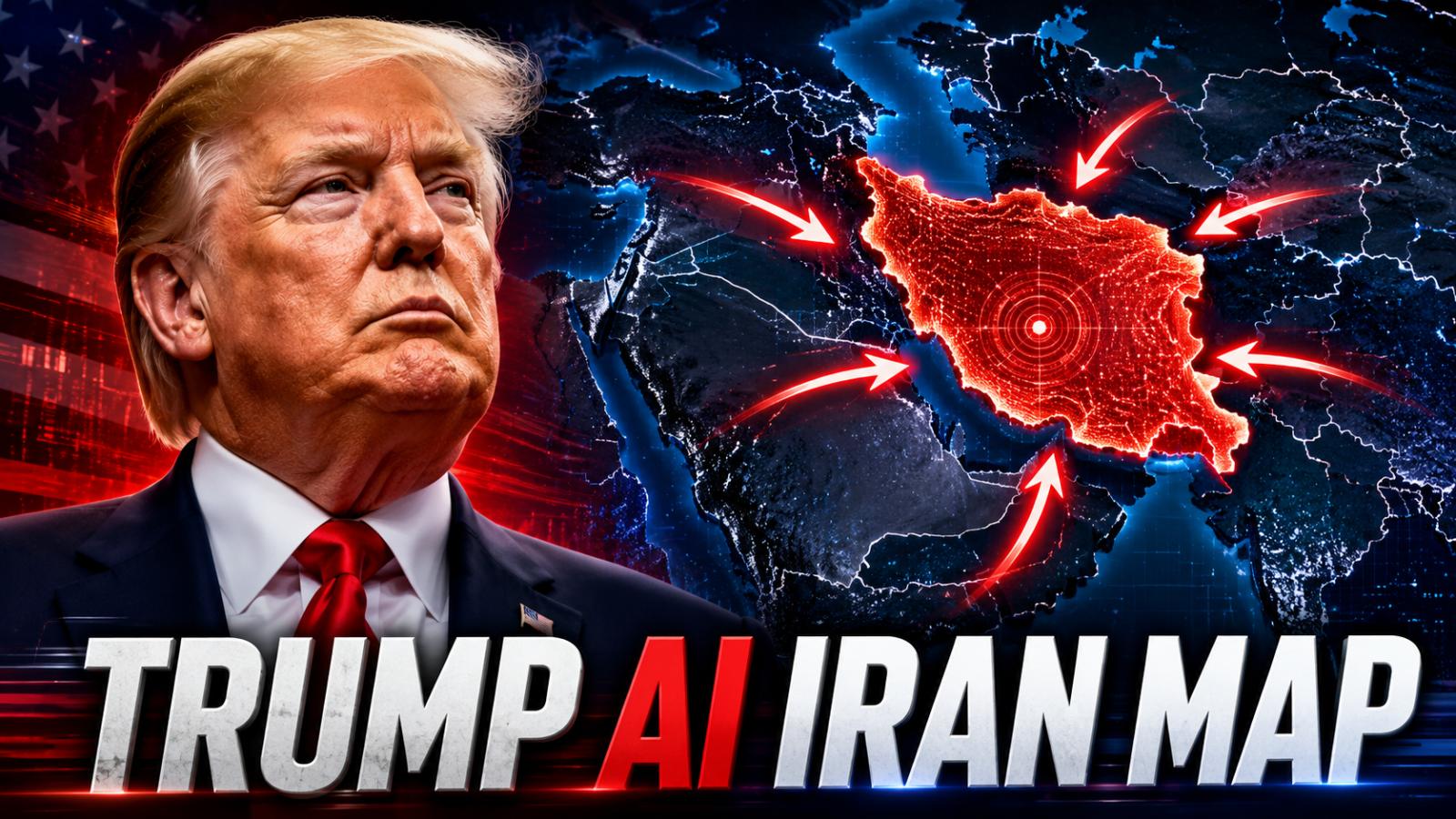
On May 17, 2026, US President Donald Trump posted a strong warning about Iran on Truth Social, saying that Iran needed to move fast toward an agreement and that time was running out. On May 18, 2026, another post featuring an AI-style map of West Asia gained attention because it showed arrows pointing toward Iran along with the American flag. The image quickly became a talking point because it appeared during a sensitive moment in US-Iran relations.
Why the Iran Map Became Controversial
The Trump AI Iran map was not an official military document, but its visual message was hard to ignore. A map, arrows, and a national flag can create a stronger emotional effect than a written statement. For many viewers, the image suggested pressure on Iran at a time when diplomatic talks were already under strain.
The controversy is not only about one image. It is about how political leaders now use digital visuals to shape public opinion. A single AI-generated or AI-style image can travel faster than a policy speech, especially when posted directly on social media.
The “Clock Is Ticking” Message
Trump’s Iran warning post used urgent language. His message suggested that Iran had limited time to respond to US demands. This made the map post look more serious because it followed a direct warning.
For ordinary readers, the combined message was clear: Trump wanted Iran to act quickly. But for diplomats, analysts, and foreign governments, such posts can raise bigger questions. Are these posts political pressure? Are they negotiation tactics? Or are they signals of possible military action?
That uncertainty is exactly why the post triggered debate.
AI Images and Modern Political Messaging
Trump’s AI political images show how social media has become a tool of foreign policy communication. Earlier, governments depended on formal statements, press conferences, and diplomatic channels. Now, a post on Truth Social can create global headlines within minutes.
This style of communication has advantages for political leaders. It is fast, direct, and highly shareable. But it also carries risks. AI images can blur the line between symbolic messaging and real policy. Some users may understand them as political drama, while others may treat them as signs of official action.
Venezuela, Greenland and Canada Posts Add to the Pattern
The Iran map was not the only post that raised questions. Trump has also shared or promoted provocative map-style messaging involving Venezuela, Greenland, and Canada. These posts attracted attention because they used national borders, flags, and territorial language in a dramatic way.
The “51st state” style references linked to Venezuela and Canada are especially sensitive because both are sovereign countries. Similarly, Greenland-related posts created debate because Greenland has strategic importance in the Arctic. These visuals may not represent official US policy, but they can still influence public discussion.
Why Symbolic Maps Matter?
Maps are powerful political tools. They can suggest control, threat, ownership, or influence without saying it directly. When maps are combined with AI visuals, flags, arrows, or dramatic captions, they become even more persuasive.
That is why Trump’s West Asia map post became more than just another social media image. It touched on military pressure, diplomacy, national security, and digital propaganda at the same time.
Are These Posts Official US Policy?
There is no automatic rule that a social media image becomes official government policy. A Truth Social post may reflect Trump’s political mood, messaging strategy, or pressure tactic, but it should not be treated as a formal government document unless confirmed through official channels.
This distinction matters. Without it, readers may confuse symbolic images with actual military decisions. In a tense region like West Asia, that confusion can increase fear and speculation.
Bigger Debate Over Social Media Diplomacy
Trump’s Truth Social AI images have reopened a larger debate: should major foreign policy signals be shared through social media visuals? Supporters may see this as strong leadership and direct communication. Critics may see it as risky, unclear, or provocative.
The Iran map shows how digital politics has changed. Political messages are no longer limited to speeches and official statements. Today, an AI-style image can become part of global diplomacy.