Mohsin Naqvi Biggest Scam Claim Fuels Pakistan Power Speculation
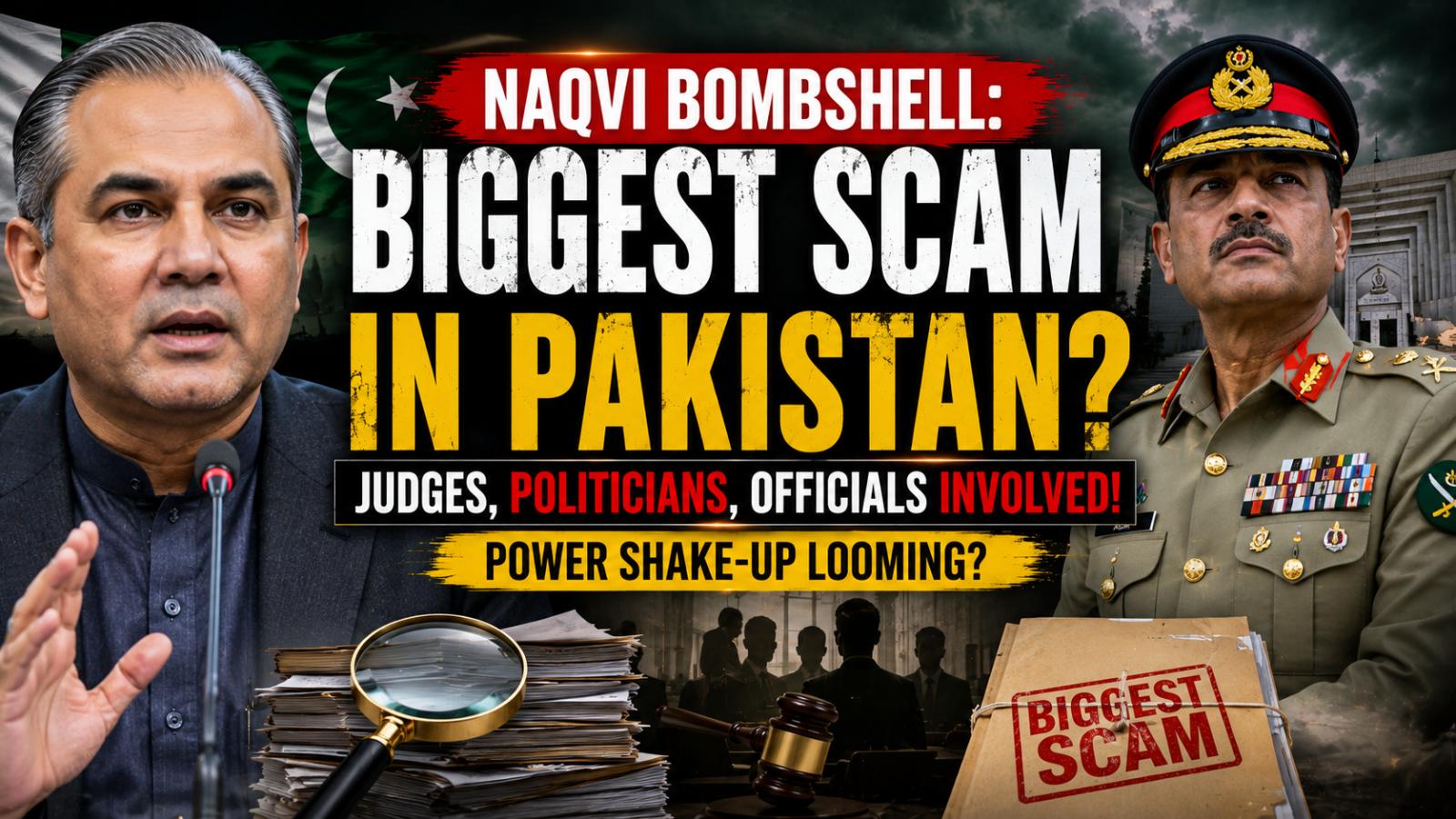
Mohsin Naqvi's biggest scam claim has added fresh political pressure in Pakistan after he alleged that judges, bureaucrats, politicians and bankers were involved in a decades-long corruption network. The remarks come days after his warning that Pakistan's governance system had collapsed, intensifying debate over reforms and the country's political direction.
Pakistan biggest scam allegation
Pakistan Interior Minister Mohsin Naqvi has claimed that authorities have uncovered what he described as the "biggest scam" in the country's history. Speaking to reporters in Lahore, Naqvi alleged that judges, bureaucrats, politicians and bankers were involved in a corruption network that operated for more than two decades.
Although he made sweeping allegations, Naqvi did not identify any individuals or present documentary evidence during his media interaction. His comments were linked to the One Constitution Avenue housing project, where the Islamabad High Court recently upheld the Capital Development Authority's decision to cancel the project's lease over alleged legal and financial violations.
Naqvi insisted that accountability would not stop with the property itself. He said every individual responsible for wrongdoing would face legal action and argued that the law should apply equally regardless of social or political status.
One Constitution Avenue inquiry
The controversy centres on One Constitution Avenue, a landmark real estate project in Islamabad originally approved as a luxury hotel before later being converted into residential and commercial units.
According to Naqvi, illegal approvals, financial irregularities and regulatory failures allowed the project to continue for more than 21 years. He alleged that bribes were paid throughout that period and described the case as unprecedented because of the range of institutions allegedly involved.
The Islamabad High Court recently upheld regulatory action taken by the Capital Development Authority, strengthening the government's legal position in the dispute. However, investigations into individual responsibility are continuing, and no court has yet established criminal liability for the people Naqvi referred to.
Pakistan governance crisis debate
Naqvi's latest remarks come only days after he argued at the Pakistan Economic Summit that the country's governance system had effectively collapsed and required major structural reforms.
He proposed creating new administrative units or provinces to improve governance, strengthen accountability and bring public services closer to citizens. Military spokespersons later echoed the need for administrative reforms, saying institutional restructuring could also improve national security.
Those statements were widely interpreted by political observers as criticism of Pakistan's civilian administrative structure rather than the military establishment itself. However, neither Naqvi nor the military officially linked the proposals to any planned political changes.
Asim Munir ally remains influential
Naqvi is widely regarded as one of Pakistan's most influential civilian figures and is considered close to Army Chief Field Marshal Asim Munir. Besides serving as interior minister, he also heads the Pakistan Cricket Board and has recently undertaken diplomatic assignments, including regional mediation efforts.
Because of that influence, his repeated public criticism of Pakistan's governance system has attracted considerable political attention. Analysts have suggested the remarks could reflect broader debates within Pakistan's power structure, although there is no official indication that a government reshuffle or leadership change is imminent.
Prime Minister Shehbaz Sharif's government has not publicly responded in detail to Naqvi's latest allegations, while opposition parties have demanded greater transparency regarding the investigation.