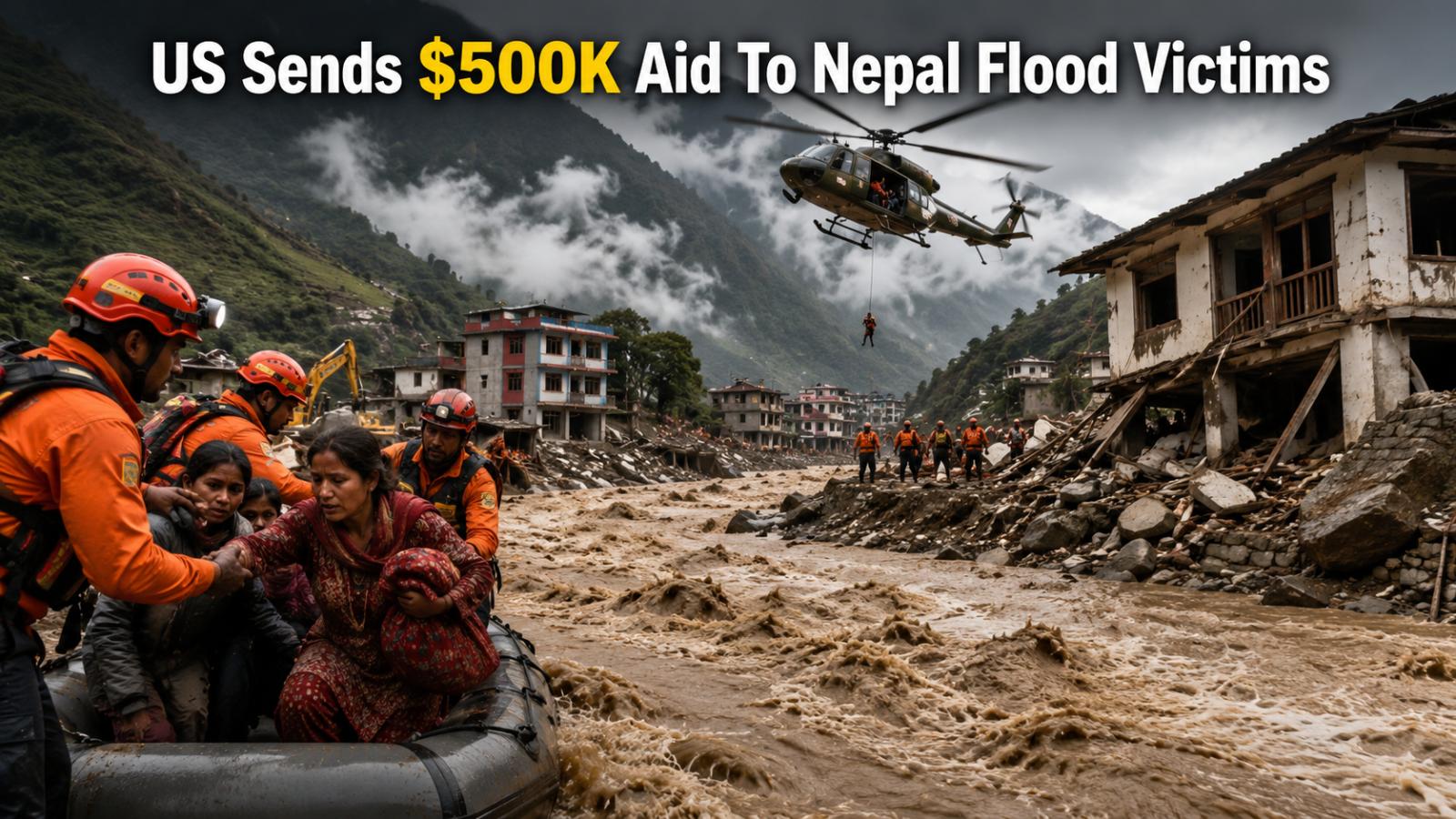
Nepal flood aid is expanding after catastrophic flash floods devastated Rasuwa and downstream districts, killing more than 150 people and leaving hundreds missing. The US has pledged $500,000 in emergency relief as India, China and the World Bank mobilize additional assistance.
US relief supports Nepal rescue effort
The US State Department announced $500,000 in immediate humanitarian assistance for Nepal and said a disaster response adviser would support rescue and relief operations. Washington also expressed condolences to families affected by the flooding along the Bhote Koshi river corridor.
The disaster struck Nepal’s northern Rasuwa district on August 26 before surging downstream into Nuwakot and Dhading. Rescue operations remain difficult because roads, bridges, electricity and communications were damaged, while some areas remain hard to reach by helicopter.
Rasuwa floods leave hundreds missing
Nepalese authorities reported at least 157 deaths by late Wednesday, while more than 400 people were listed as missing in some official counts. The Nepal Tourism Board separately said 403 tourists were unaccounted for, including 341 foreign nationals, although authorities cautioned that missing-person numbers were still being verified.
Foreign nationals from India, the United States, Australia, Canada and several other countries were among those reported missing. Nepal’s Prime Minister’s Office also said security personnel and other workers had disappeared during the flood, underlining the scale of the disaster.
Because communications remain disrupted, casualty and missing-person figures are likely to change as search teams reach isolated areas.
World Bank aid could reach Rs 25 billion
The World Bank has told Nepal that up to 25 billion Nepalese rupees could be mobilized from different sources for rescue, relief and reconstruction, according to Nepal’s Finance Ministry.
India has asked Kathmandu to provide a list of urgently needed relief materials and is preparing humanitarian supplies. China has also offered immediate cash assistance and asked Nepal to begin the formal process needed to transfer the funds.
The growing international response reflects concerns that the disaster will require more than short-term rescue work. Roads, bridges, settlements and other infrastructure were swept away, meaning reconstruction could continue long after emergency operations end.
Bhotekoshi flood may have followed glacial collapse
Initial assessments suggest the disaster began after a major ice-and-rock collapse or avalanche blocked a tributary feeding the Bhote Koshi river. Water and debris then built up before surging downstream toward Timure, Syaphrubesi and neighboring settlements.
Residents reportedly received little warning because there was no significant rainfall in the immediate area and flood-monitoring stations were overwhelmed or destroyed before they could transmit alerts. Nepalese hydrologists have since stressed the need for stronger real-time monitoring and faster cross-border warning systems in vulnerable Himalayan valleys.
Nepal flood aid shifts toward long-term recovery
The immediate priority remains finding survivors and restoring access to isolated communities. But the international response is already moving toward reconstruction, with Nepal declaring affected municipalities in Rasuwa, Nuwakot and Dhading disaster crisis areas to make emergency assistance easier to mobilize.
The disaster also highlights the growing vulnerability of Himalayan communities to sudden glacial and mountain hazards. As rescue teams continue searching for the missing, Nepal will need both immediate humanitarian support and long-term investment in monitoring, infrastructure and early-warning systems.