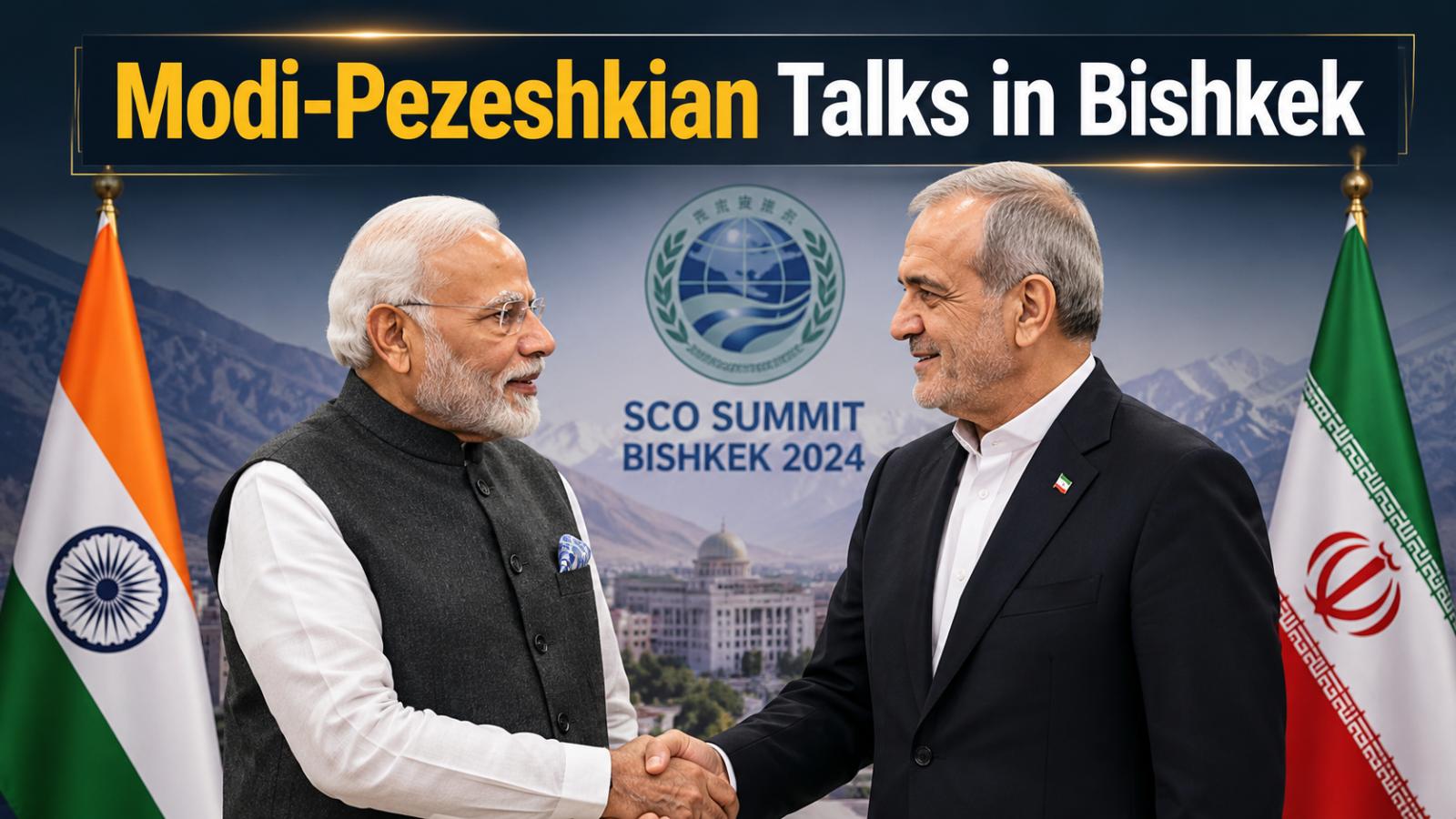
Prime Minister Narendra Modi met Iranian President Masoud Pezeshkian in Bishkek on August 31 on the sidelines of the Shanghai Cooperation Organisation Summit. The Modi Pezeshkian meeting focused on India-Iran ties, the West Asia conflict, maritime security, trade and the need for lasting regional peace.
India Iran Ties
The two leaders reviewed bilateral relations and discussed ways to strengthen their long-standing partnership. Modi said India wants to expand and diversify its trade basket with Iran while maintaining cooperation across multiple sectors.
The Bishkek meeting was significant because it was their first face-to-face interaction since the latest escalation in West Asia. Their previous in-person meeting took place at the BRICS Summit in Kazan in October 2024.
India and Iran maintain important links in trade, connectivity and regional diplomacy, making continued high-level engagement important despite wider geopolitical tensions.
West Asia Talks
A major part of the discussion focused on recent developments in the West Asia conflict. According to the Prime Minister’s Office, both leaders exchanged views on the evolving situation, while Modi expressed concern about the escalation of tensions.
He reiterated India’s position that disputes should be resolved through dialogue and diplomacy rather than prolonged military confrontation.
New Delhi has consistently argued that regional stability is essential for protecting civilians, maintaining economic activity and preventing further disruption to global trade.
Hormuz Security
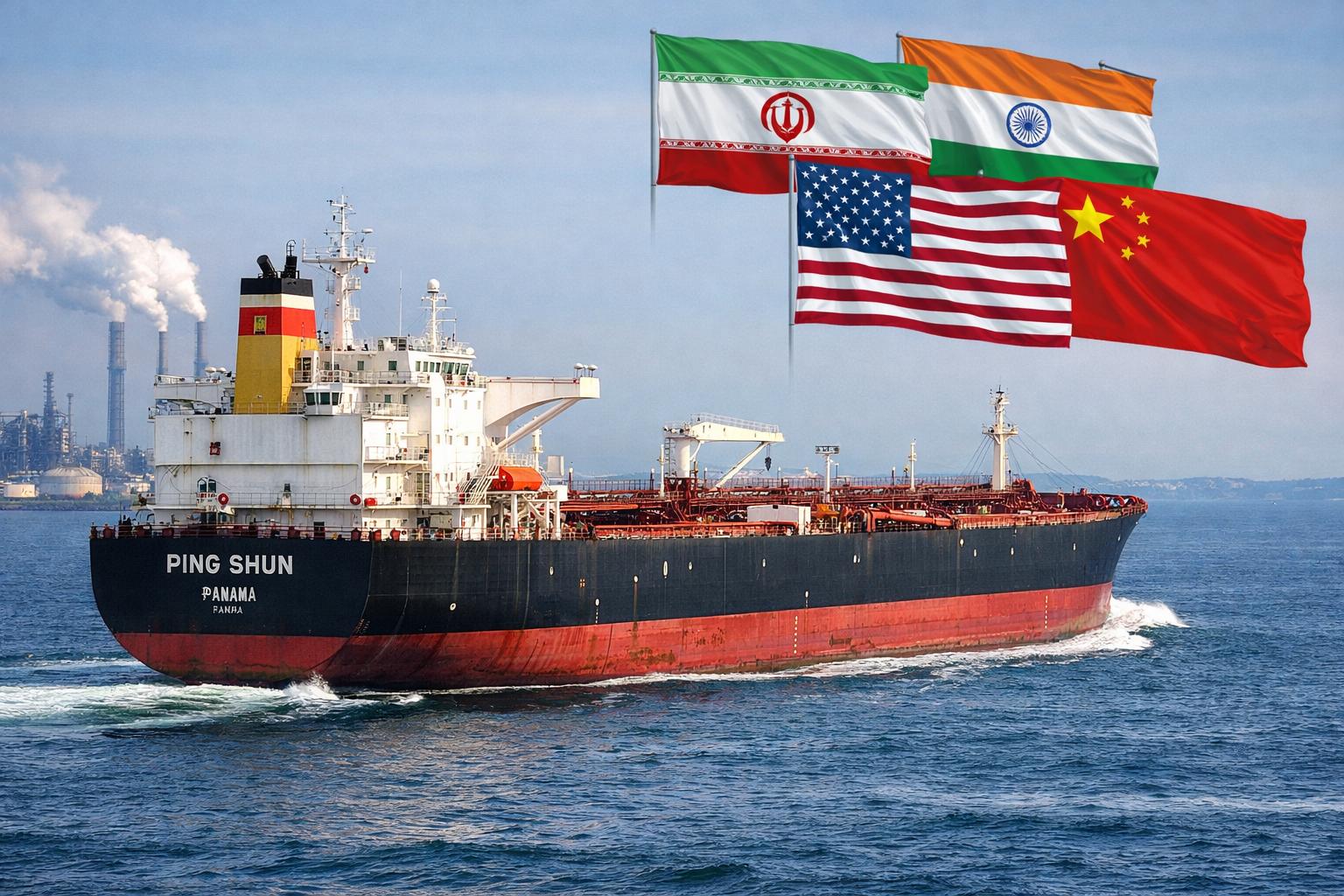
Freedom of navigation and commerce also featured prominently in the talks. Modi stressed that civilians, civilian infrastructure, commercial shipping and seafarers should not be harmed under any circumstances.
The Strait of Hormuz remains particularly important for India because a substantial share of its energy imports moves through Gulf shipping routes. Any prolonged disruption can increase freight costs, affect fuel supplies and create wider economic pressure.
For India, keeping shipping lanes open is therefore both a foreign-policy priority and a direct energy-security concern.
SCO Bishkek Cooperation
The meeting took place during the SCO Summit in Bishkek, where India, Iran, China, Russia, Pakistan and other members gathered for high-level regional discussions.
Modi reiterated India’s readiness to work closely with Iran in multilateral organisations including the SCO and BRICS. The two countries see these platforms as useful channels for discussing regional security, economic cooperation and connectivity.
The summit also gave New Delhi an opportunity to engage simultaneously with several major regional powers at a time of heightened geopolitical uncertainty.
BRICS Summit Ahead
The bilateral meeting also looked ahead to the upcoming BRICS Summit in India. Modi said he was looking forward to welcoming Pezeshkian to India for the gathering.
That upcoming visit could provide another opportunity for both countries to deepen cooperation on trade, connectivity and regional stability.
The Bishkek talks ultimately reflected India’s broader diplomatic approach: maintain strategic ties with Iran, protect energy and shipping interests, support multilateral engagement and continue pressing for dialogue as the preferred route to resolving the West Asia conflict.