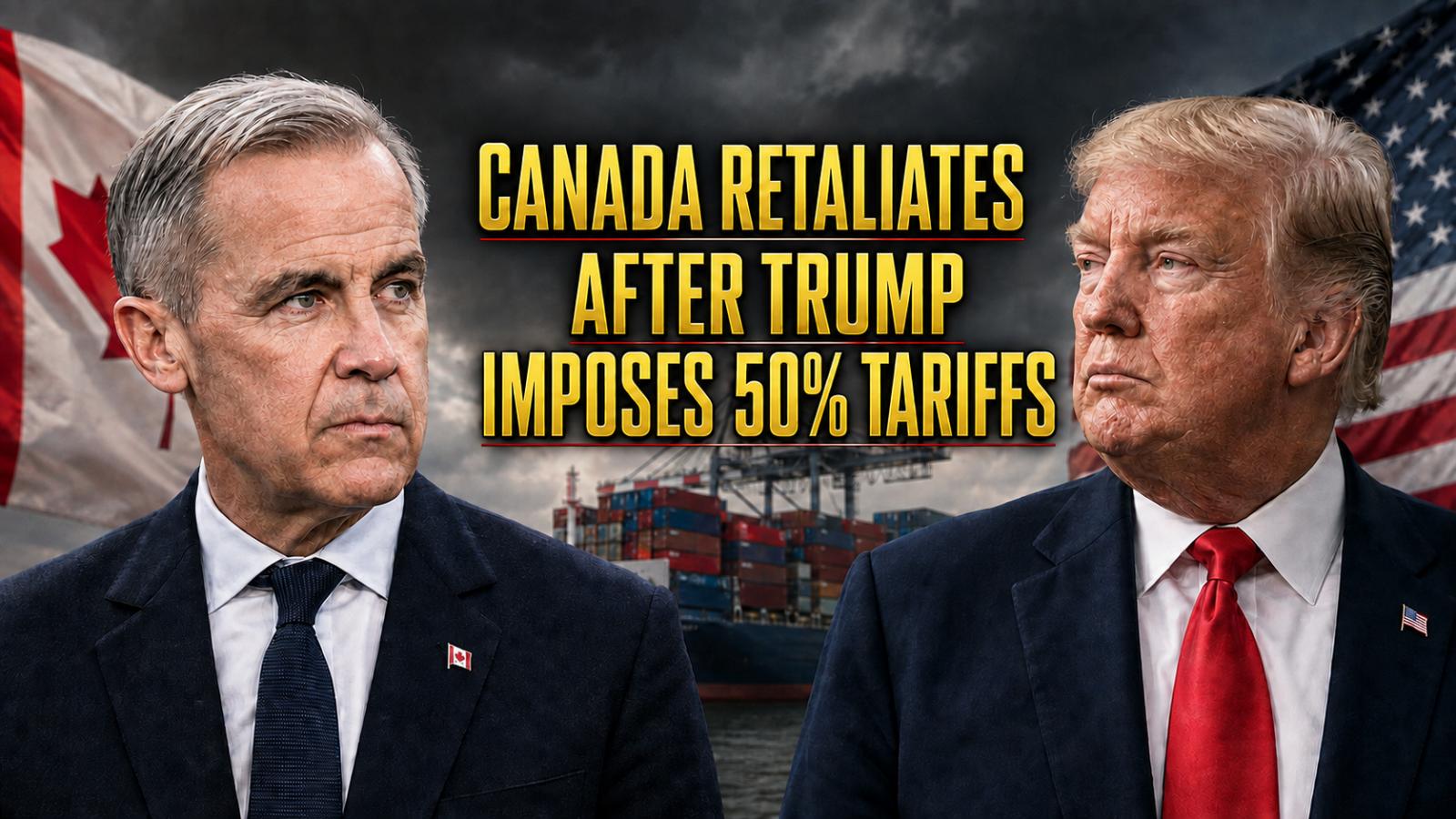
Trump Canada tariffs have pushed the US-Canada trade dispute into a sharper confrontation after negotiations collapsed and Washington imposed 50% duties on roughly $20 billion in Canadian imports. Ottawa is preparing counter-tariffs, while US officials warn Canada could face severe economic consequences.
Trump Canada tariffs follow failed trade talks
The Trump administration issued a sharp warning to Canada on Sunday, August 23, after Ottawa chose to retaliate against Washington in the escalating trade dispute. The latest tensions followed the breakdown of high-stakes negotiations late Friday.
The collapse of the talks triggered new US tariffs of 50% on roughly $20 billion worth of Canadian imports. Based on figures provided with the announcement, the affected goods account for approximately 5.5% of Canada’s total exports to the United States.
The dispute puts renewed pressure on one of the world’s most closely integrated trading relationships. Businesses on both sides of the border depend on cross-border supply chains, meaning tariffs can raise costs beyond the industries directly targeted.
Sean Duffy warns Canada against retaliation
US Transportation Secretary Sean Duffy defended Washington’s approach during an appearance on Fox News Sunday. He argued that Canada receives greater benefits from access to the American market than the United States receives from trade with Canada.
Duffy described Ottawa’s decision to challenge Trump in an economic confrontation as “foolish” and predicted that the consequences could eventually push Canadian Prime Minister Mark Carney back to negotiations.
“We’re great trading partners,” Duffy said, before arguing that Canada benefits more from bilateral commerce. His comments reflect the administration’s belief that the size of the US economy gives Washington greater leverage in a prolonged tariff fight.
Carney tariffs target US steel and dairy
Carney has taken a markedly different position. On Saturday, he said Canada had walked away from what he called a “bad deal” and announced plans for matching counter-tariffs beginning September 8.
The Canadian retaliation is expected to target US steel, dairy and other important industries. Carney defended the response by describing the US measures as an economic attack on Canada.
“You're at war when you get attacked. We got attacked,” Carney said while explaining Ottawa’s decision.
Canada’s approach could increase pressure on selected American industries, but it also carries economic risks at home. The United States remains the dominant destination for Canadian exports, leaving businesses that depend heavily on American customers particularly exposed to an extended dispute.
Trump attacks Canada over trade policies
Trump escalated the rhetoric early Sunday in a Truth Social post, accusing Ottawa of seeking the economic benefits associated with close integration with the United States without accepting corresponding obligations.
“Canada wants the benefits of being a state, without being one!!!” Trump wrote.
The president also renewed his criticism of Canada’s agricultural trade policies, an issue that has repeatedly surfaced in bilateral negotiations.
The next key date is September 8, when Canada’s planned counter-tariffs are scheduled to begin. A prolonged cycle of tariffs and retaliation could increase costs for manufacturers, exporters and consumers in both countries. The larger question is whether that economic pressure drives Washington and Ottawa back to negotiations or pushes the US-Canada trade confrontation into another round of escalation.