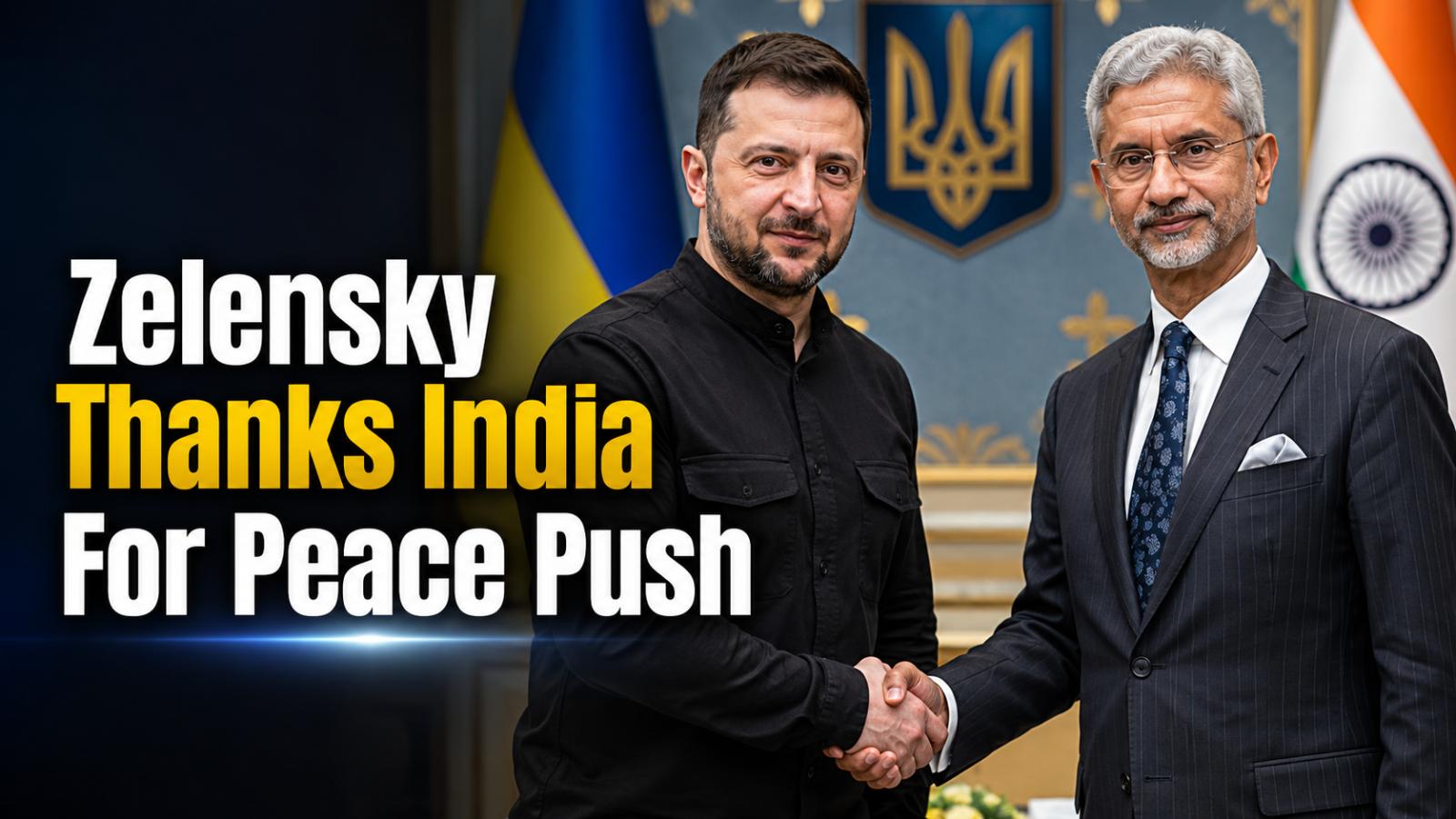
Ukrainian President Volodymyr Zelensky has thanked India for supporting efforts to end the Russia-Ukraine war after meeting External Affairs Minister S Jaishankar in Kyiv. Their talks covered possible paths to peace, Black Sea shipping security and wider India-Ukraine cooperation.
Zelensky thanks India for Ukraine peace efforts
Zelensky met Jaishankar in Kyiv on September 3 during what the Ukrainian presidency described as the first dedicated bilateral visit to Ukraine by an Indian External Affairs Minister. Jaishankar had previously visited the country in August 2024 as part of Prime Minister Narendra Modi’s delegation.
Following the meeting, Zelensky expressed appreciation for India’s position that the conflict should end and peace should be restored. He said the two sides discussed several important issues, including diplomatic efforts aimed at bringing the war to a conclusion.
Jaishankar also reiterated India’s longstanding position that solutions will not emerge from the battlefield. According to India’s public broadcaster Akashvani, he said New Delhi was willing to assist peace efforts “in any manner possible” and stressed that continuing war only brings more deaths and destruction.
Jaishankar and Zelensky discuss routes to peace
The talks focused on possible approaches to end the conflict through dialogue, diplomacy and negotiation. Jaishankar also met Ukrainian Foreign Minister Andrii Sybiha, who welcomed India’s engagement and described the country as an important global power.
Ukraine’s presidential office said discussions with Jaishankar included peace efforts, security concerns and bilateral cooperation. The visit comes at a time when international diplomatic activity around the war is increasing, with Kyiv also expecting further engagement with US representatives.
Zelensky separately raised concerns about Russian drone attacks and said Ukrainian forces had worked to ensure the safety of the visiting Indian delegation. His comments on the origin and development of the drones reflected Ukraine’s assessment of the attacks.
Black Sea shipping and grain routes discussed
Another key issue was security in the Black Sea. Zelensky said disruptions to Ukrainian ports and grain routes could affect countries that depend heavily on food shipments through maritime corridors.
Jaishankar similarly highlighted the broader impact of attacks on commercial shipping. He noted that disruptions can lead to shortages of fuel, fertiliser and food, particularly in countries across the Global South. India has repeatedly emphasized the importance of protecting civilian shipping and seafarers during conflicts.
The discussion gave the meeting a wider economic dimension, as both India and Ukraine remain concerned about how the war affects global food, energy and shipping networks.
India defends Russian oil purchases
Jaishankar also addressed questions over India’s continued purchase of Russian energy. He said New Delhi must secure affordable energy for a population of 1.4 billion and argued that India’s perspective should be respected just as India respects Ukraine’s concerns.
He rejected the idea that changing oil purchases alone could resolve the conflict, saying the war would ultimately be settled through dialogue, diplomacy and negotiation rather than decisions over oil, minerals, metals or fertilisers.
India has maintained relations with both Moscow and Kyiv while avoiding direct involvement in the conflict. Jaishankar’s visit highlights New Delhi’s effort to preserve that balance while positioning itself as a country willing to support diplomatic efforts aimed at ending the war.