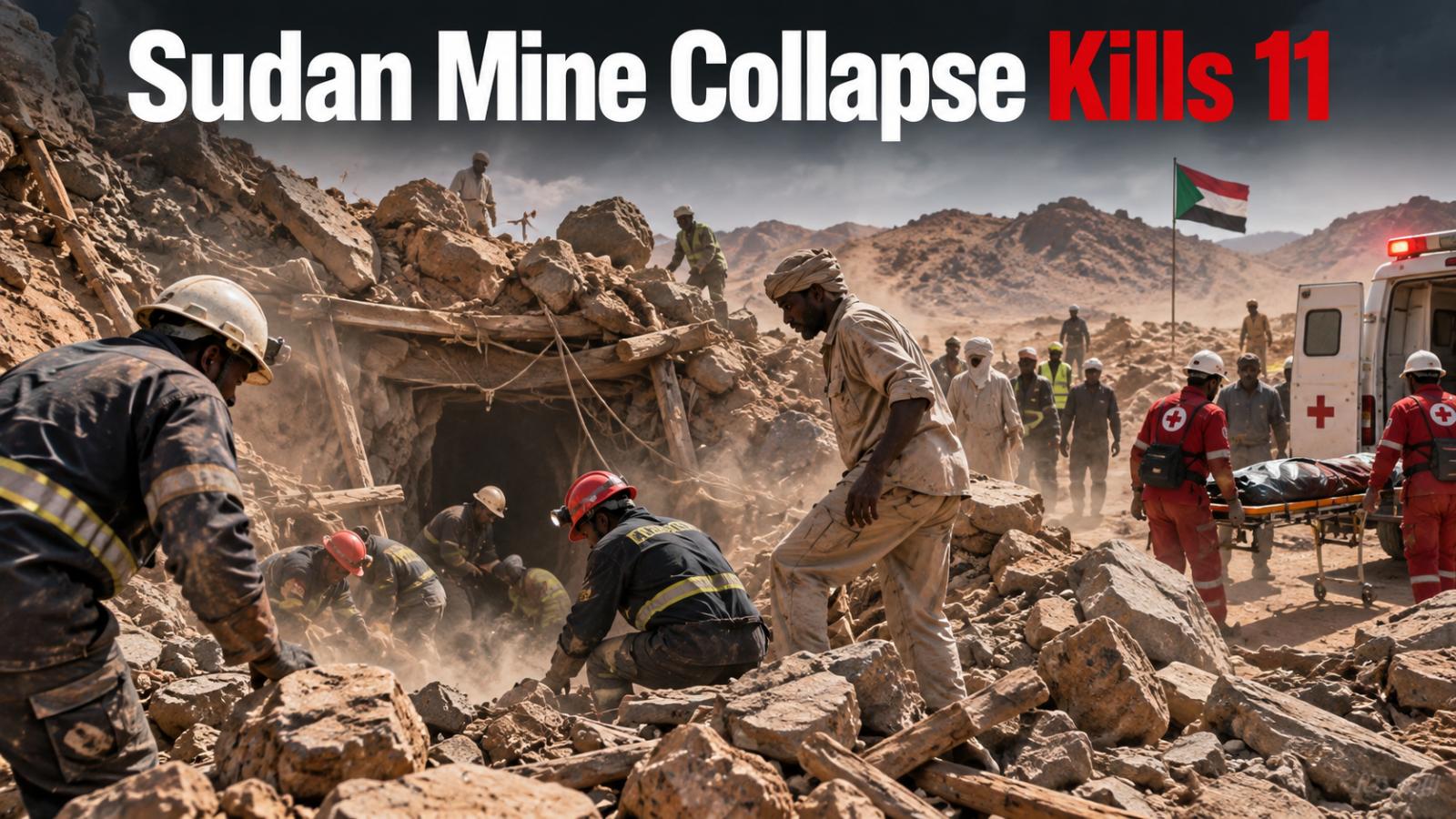
A Sudan mine collapse in Oni, Red Sea state, killed at least 11 miners and left dozens injured as rescue teams searched for people trapped under debris. The disaster is Sudan’s second major informal mine collapse within a week, renewing concern over mine safety and weak oversight.
Oni rescue continues after Red Sea mine collapse
The collapse began on Saturday night in Oni, a remote mining area in northeastern Sudan. Abdalhay Kharif Abakar, who worked in the area, said the shaft began giving way overnight, trapping miners below ground. By Sunday, an official from the state-owned Sudanese Mineral Resources Company said 11 bodies had been recovered and 30 people had been rescued. Search teams were still looking for others feared missing beneath the debris.
The company issued a statement expressing condolences over the deaths but did not publish a detailed casualty breakdown. Officials have not yet released a confirmed figure for how many miners remain unaccounted for, meaning the death toll could change as the rescue operation continues.
Informal mine safety remains a major concern
Sudan has thousands of small-scale and informal gold mines, many operating with limited safety controls. Fatal collapses are not uncommon because shafts can be poorly reinforced and emergency response equipment is often scarce, especially in remote areas.
The Oni incident comes only days after another major disaster at the al-Zara gold mine near Nuhud in West Kordofan. At least 82 people were reported dead there, while many others were still missing. That site lies in territory controlled by the paramilitary Rapid Support Forces.
The back-to-back disasters highlight how economic pressure and weak regulation continue to expose miners to serious risk. Gold remains one of Sudan’s most important natural resources, but much of the industry operates outside strong formal oversight.
Sudan gold sector strained by war
Sudan’s wider conflict has made mine safety and regulation even harder to enforce. Fighting between the Sudanese military and the Rapid Support Forces began in April 2023 and has disrupted government institutions, transport, healthcare and emergency services across large parts of the country.
Armed Conflict Location & Event Data estimates that at least 59,000 people have been killed in the conflict, while aid groups warn the real toll could be much higher because access to many areas remains limited.
Gold has also become tied to the economics of the conflict. Experts commissioned by the United Nations have reported that gold from areas controlled by armed groups has been smuggled out of Sudan and used to help finance military operations.
Repeated mine disasters increase pressure for reform
The latest Sudan mine collapse shows that the danger facing informal miners is not an isolated problem. Better shaft construction, routine inspections, emergency equipment and stronger enforcement could reduce the risk, but the ongoing war makes those improvements difficult to deliver.
For now, the immediate priority in Oni remains finding those still missing and treating the injured. The disaster also raises a wider question for Sudan: how long can a vital gold industry continue operating without stronger safety standards when repeated collapses are costing so many lives?