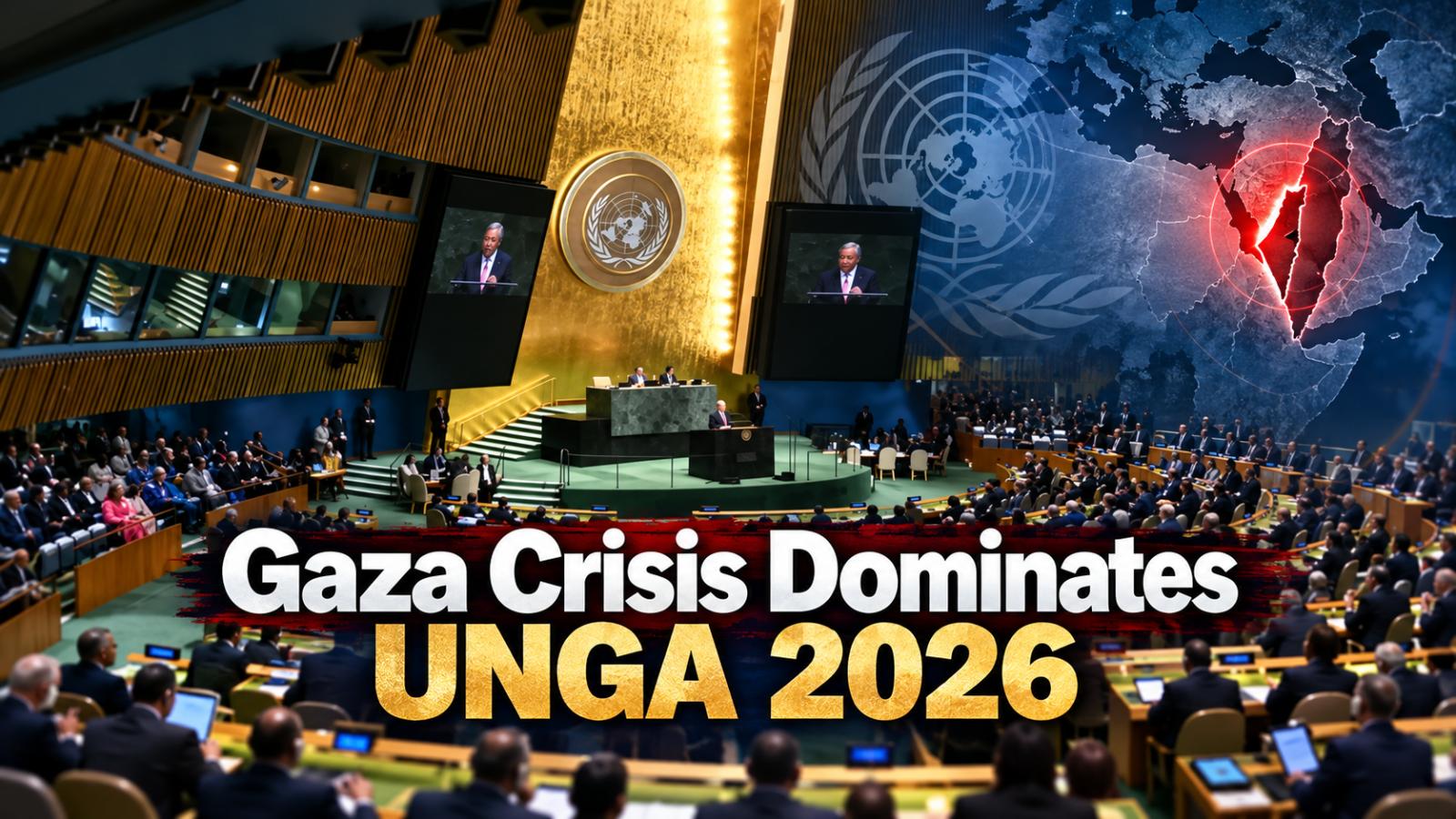
Gaza UNGA 2026 opened in New York with the humanitarian crisis in Gaza, violence and settlement expansion in the occupied West Bank, and wider Middle East instability featuring heavily in speeches by several world leaders. Their approaches differed, but diplomacy and international law remained recurring themes.
UN Gaza call highlights humanitarian crisis
UN Secretary-General António Guterres used the opening of the 81st General Assembly debate to warn that the world faces major tests involving peace, inequality, climate change and artificial intelligence. Turning to Gaza, he condemned Hamas's October 7 attacks while describing the scale of Palestinian deaths and destruction that followed as unprecedented during his tenure.
Guterres also warned that violence, displacement and Israeli settlement expansion in the occupied West Bank were undermining prospects for peace. He urged adherence to international law and said the international community must not allow the two-state solution to disappear.
Lula UN call stresses diplomacy and Palestinian statehood
Brazilian President Luiz Inácio Lula da Silva criticized the weakening of multilateral institutions and argued that diplomacy remains the only durable path through growing international conflicts.
According to the UN's account of his September 22 address, Lula said generations of Palestinians would carry the trauma of the Gaza conflict and criticized Israeli settlement expansion in the West Bank. He said those developments were making a two-state solution increasingly difficult to achieve.
King UN call links Gaza with West Bank developments
Jordan's King Abdullah II focused heavily on the Palestinian-Israeli conflict, arguing that Gaza and the West Bank should not be treated as separate crises. He accused the Israeli government of pursuing policies that make a viable Palestinian state increasingly difficult and called for stronger international accountability.
The king also warned about settler violence, displacement and expanding Israeli control in the West Bank. These were his characterizations of Israeli policy, presented during Jordan's official UN address. He reiterated Jordan's support for Palestinian statehood, UNRWA and a negotiated peace.
Turkey UN call challenges international system
Turkish President Recep Tayyip Erdogan also centered much of his address on Gaza and the West Bank. He sharply criticized Israel's conduct and argued that the international system had failed people caught in conflicts from Palestine to Sudan.
Erdogan also renewed his long-standing demand for reform of the UN Security Council, arguing that international law should apply equally to powerful and weaker states. The UN's official General Debate page records Gaza, West Bank violence and institutional reform among the central themes of his speech.
Trump UN call shifts attention toward Iran
US President Donald Trump struck a different emphasis, focusing heavily on Iran, American security and his administration's use of military and diplomatic power. The White House said Trump defended confronting Iran and repeated his position that Tehran must not obtain a nuclear weapon.
The contrast showed how the opening UNGA debate reflected several overlapping Middle East crises rather than a single diplomatic agenda. Gaza and the West Bank remained prominent for many speakers, while Iran, regional security and the credibility of international institutions also shaped the debate.