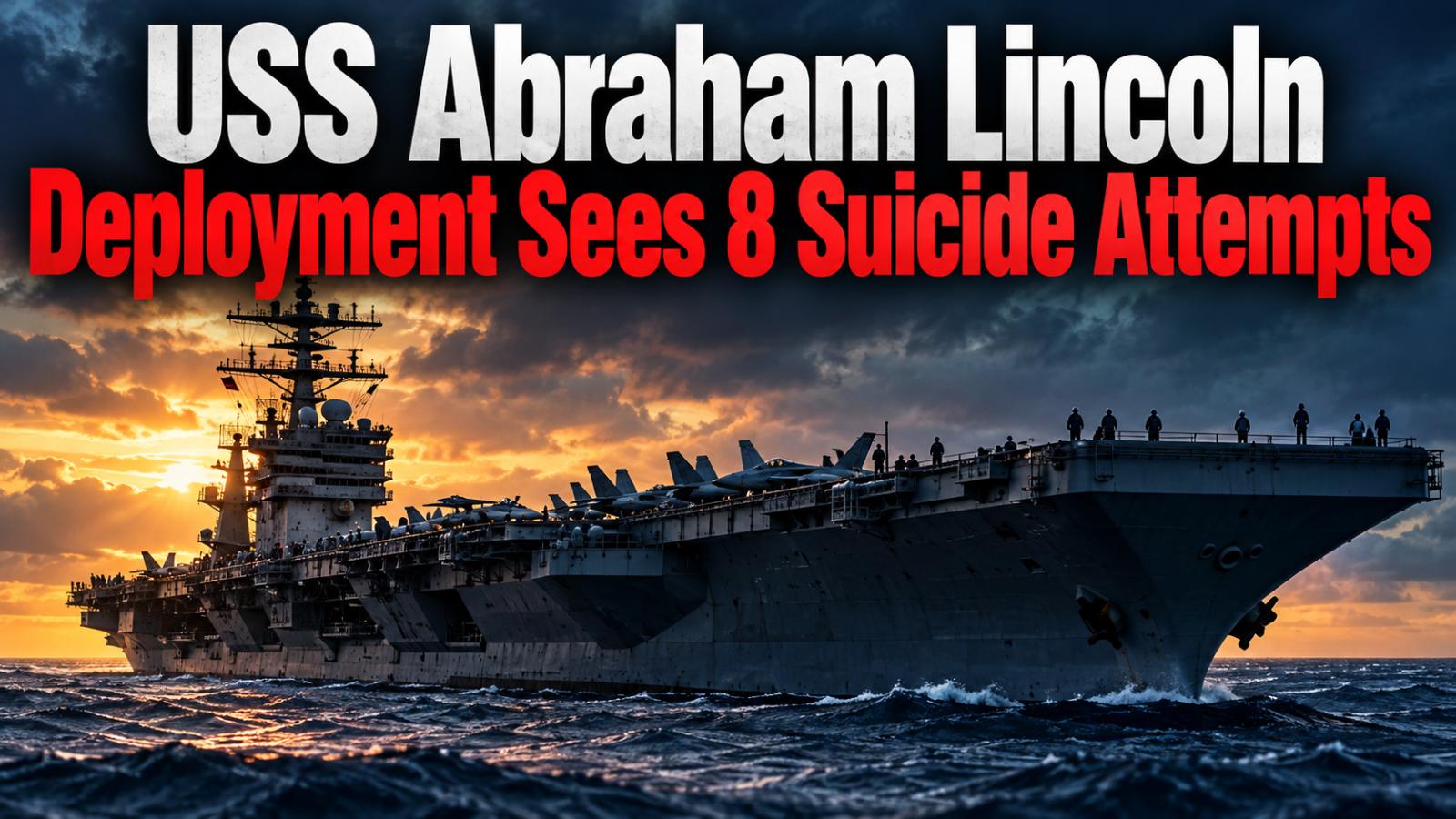
The USS Abraham Lincoln carrier strike group recorded eight suicide attempts during its prolonged deployment, Acting Navy Secretary Hung Cao has told Senator Kirsten Gillibrand. The disclosure has renewed scrutiny of Navy mental health support, crew welfare and the pressures created by an unusually long deployment that included combat operations connected to the Iran war.
Cao said the eight cases involved personnel from across the strike group, including the Lincoln crew, carrier air wing, destroyer squadron staff, escorting destroyers and embarked aviation squadrons. He also said no sailor died by suicide during the deployment.
Navy mental health support under scrutiny
The disclosure followed questions from Gillibrand about morale and mental health among sailors serving with the strike group. Cao said the Lincoln had five chaplains as well as a psychologist, clinical social worker, behavioural health technicians and other support personnel available to sailors.
The broader strike group included thousands of service members, while the aircraft carrier itself carried about 5,000 personnel. Cao said the Navy had resources in place to address the crew's emotional and spiritual needs.
Long deployment increased pressure on sailors
The Lincoln began its deployment in November 2025 and remained away for more than nine months. Its mission was extended as operational demands increased, including combat activity connected to the Iran conflict. The Navy had already acknowledged that the deployment was difficult and that normal routines had been disrupted by combat operations.
Family members and some sailors separately raised concerns about morale, long stretches without port calls and the psychological strain of continued operations. Those accounts should be distinguished from the Navy's official position, which previously said it had not observed an increase in suicidal ideation aboard the carrier.
Iran war operations shaped deployment
The carrier strike group spent months conducting high-tempo operations, and a defense official said two of the eight suicide attempts occurred during active fighting with Iran. The Lincoln also spent more than six months without a port visit, according to reports based on military sources.
Extended periods at sea can limit opportunities for rest, resupply and time away from operational demands, making crew welfare an important part of deployment planning.
Crew welfare concerns included ship conditions
Reports from sailors and families described problems involving food supplies, plumbing and access to basic amenities. Cao rejected claims of widespread plumbing failures or major fresh-food shortages but acknowledged temporary localized piping problems and issues involving reverse-osmosis desalination systems.
He also confirmed that meal choices were temporarily reduced in some cases. These acknowledgements indicate that the carrier did experience operational difficulties, although Navy officials dispute some of the broader descriptions of deteriorating conditions.
Lincoln begins return from extended mission
The USS George Washington was sent to replace the Lincoln as part of a planned rotation, and the Abraham Lincoln is now returning toward its home port in San Diego after the extended deployment.
The disclosure of eight suicide attempts is likely to keep attention on how the Navy manages mental health resources during prolonged combat deployments. It also raises broader questions about balancing operational demands with rest, family separation, living conditions and access to mental health care for sailors serving at sea.