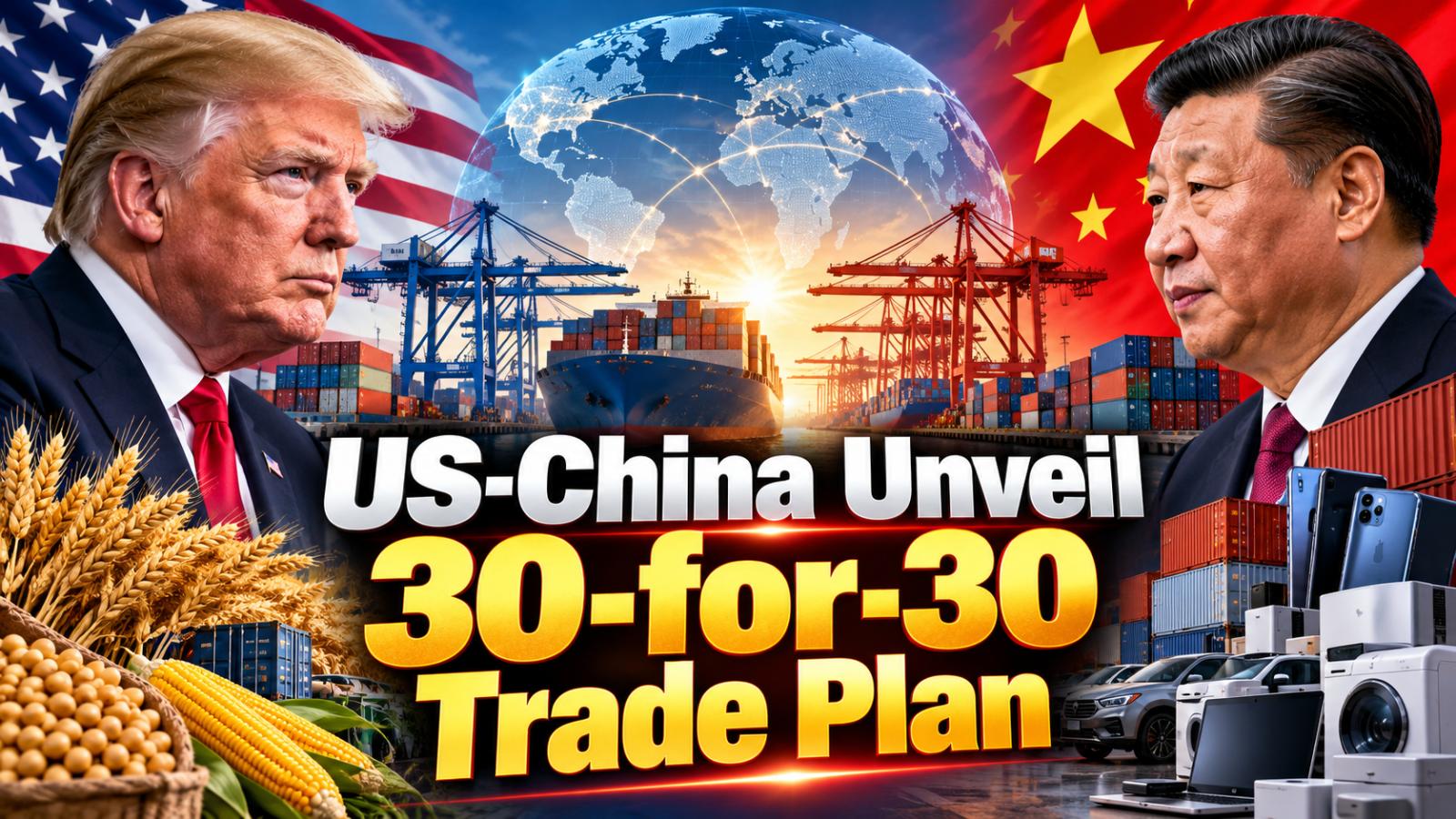
The US-China 30-for-30 trade framework could lower tariffs on about $60 billion in two-way commerce, with each country identifying roughly $30 billion in non-sensitive imports. Farm goods, medical devices and consumer goods are included, but exact tariff rates and an implementation date remain unsettled.
Tariff cuts
Washington and Beijing have published product recommendations under the new U.S.-China Board of Trade following President Donald Trump and President Xi Jinping’s September summit in Washington.
The U.S. Trade Representative said each side identified about $30 billion in non-sensitive trade that could receive more favorable tariff treatment. China’s Ministry of Commerce said the two governments agreed that reductions would be offered reciprocally, subject to their domestic laws and procedures.
The U.S. list contains 77 categories of Chinese products, while China’s list covers 1,619 categories of American goods. However, neither government has yet announced one uniform new tariff rate or a firm date when the reductions will take effect.
Farm goods
Agriculture makes up a large part of China’s proposed list. American beef, pork, poultry, seafood, corn, wheat, sorghum, dairy products and other farm exports are among the goods positioned for possible lower tariffs.
The arrangement could improve market access for U.S. farmers if the proposed treatment is implemented. Washington has also stressed that agricultural and energy purchases will remain part of its broader trade discussions with Beijing.
China has also committed to purchasing U.S. coal under separate elements of the wider trade understanding, adding energy trade to the economic relationship.
Medical devices
China’s proposed reductions also cover higher-value American medical technology, including equipment such as MRI systems, pacemakers, surgical technology and cardiovascular products.
This makes the framework broader than a simple agricultural agreement. It gives U.S. manufacturers another potential route into the Chinese market while keeping strategically sensitive technologies outside the arrangement.
Both governments have emphasized that the Board of Trade focuses on non-sensitive products rather than sectors at the center of national-security disputes.
Consumer goods
Washington’s list is narrower and focuses heavily on Chinese consumer products. Goods identified for potential tariff relief include toys, children’s products, household appliances, bed linen, kitchen equipment, sporting goods and seasonal decorations.
U.S. Trade Representative Jamieson Greer said the framework is intended to promote more balanced trade while improving market access for American producers and lowering barriers for selected goods that Washington considers non-sensitive.
Soybeans
One notable omission is U.S. soybeans. Although soybeans have historically ranked among America’s most important exports to China, they are not broadly included in the new tariff-relief list. Seeds for planting receive different treatment, but commercial soybean imports remain subject to separate arrangements.
That exclusion shows the limits of the agreement. The 30-for-30 framework is not a comprehensive end to U.S.-China tariff tensions. Instead, it creates a controlled area for reciprocal trade relief while negotiations continue over larger disputes.
The next issue to watch is implementation. Until Washington and Beijing announce specific tariff rates and effective dates, the published lists represent a framework for lower tariffs rather than completed tariff reductions.