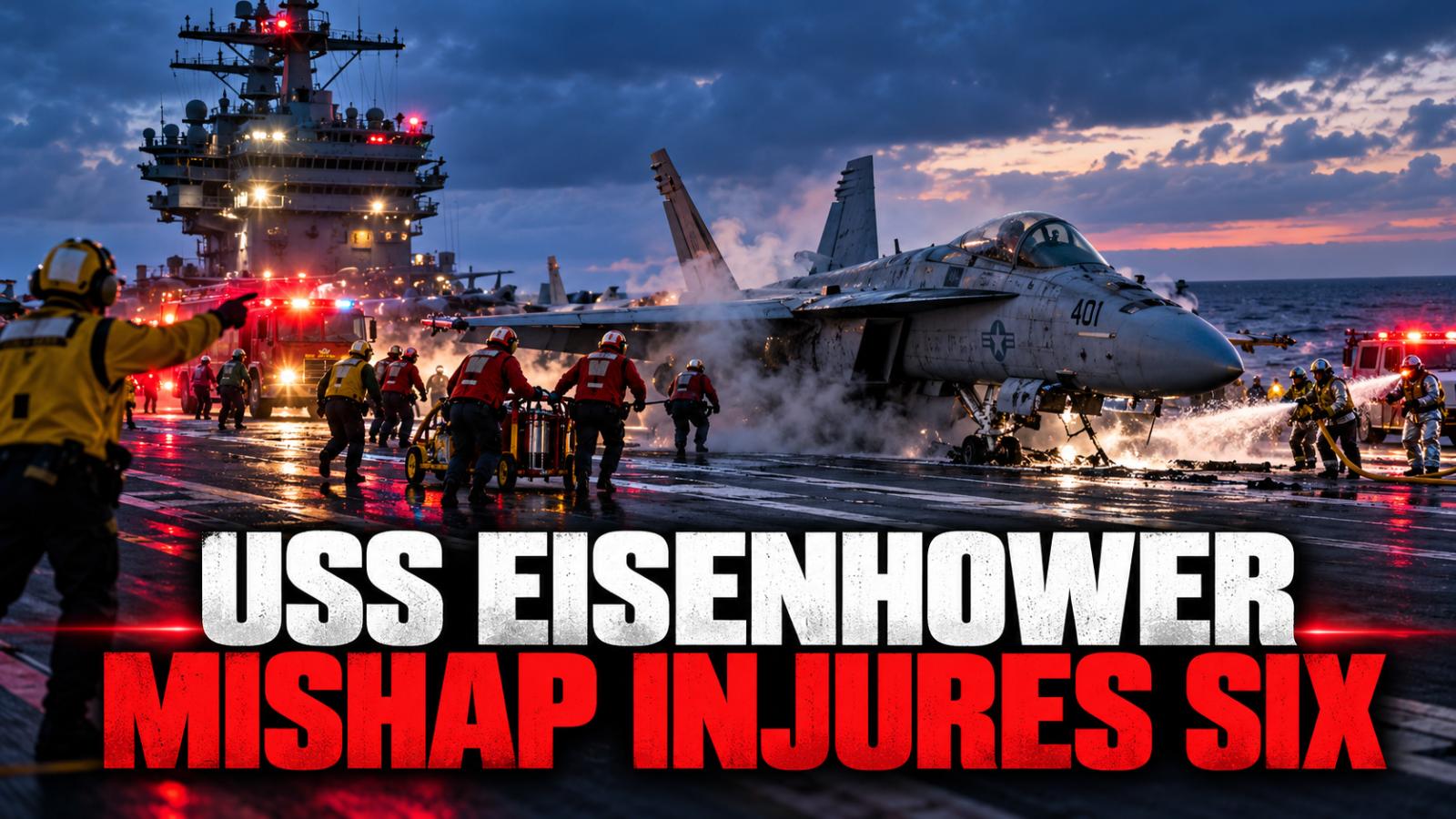
The USS Eisenhower landing mishap off Virginia forced two naval aviators to eject from an EA-18G Growler and injured four sailors working aboard the aircraft carrier. The US Navy is investigating the September 28 accident, which occurred during aircraft recovery operations.
Carrier safety
The incident occurred at about 6:18 p.m. EDT as the Nimitz-class USS Dwight D. Eisenhower was conducting aircraft recovery operations off the Virginia coast.
The two aviators ejected from their aircraft and were recovered by search-and-rescue personnel. Four other sailors aboard the carrier were injured during the mishap. One sailor was transferred to a Norfolk-area hospital with injuries described as non-life-threatening.
Initial Navy statements did not identify the aircraft involved. Subsequent information identified it as an EA-18G Growler, a two-seat electronic warfare aircraft used by carrier air wings.
Arresting gear
The accident occurred during the critical landing phase of carrier operations. Carrier aircraft use an arresting hook to catch steel cables stretched across the flight deck, rapidly bringing the aircraft to a stop.
Later information indicated that the mishap involved a malfunction in the arresting system. The precise sequence of events and what caused the equipment failure remain under investigation.
The Navy has not announced findings from the investigation, so broader conclusions about mechanical reliability should not yet be drawn from this single incident.
Navy probe
The Eisenhower had recently returned to operations following a maintenance period and was carrying out carrier qualification activities when the accident occurred.
Investigators will examine the aircraft, flight-deck equipment, arresting system and operational procedures to determine what happened and whether technical or human factors contributed.
Carrier recoveries are among the most demanding operations in military aviation because aircraft must land within a short deck area while crews work only metres away.
Aviator ejection
Both aviators survived the emergency ejection and were returned to the ship for medical evaluation. Ejection systems are designed as a last-resort escape measure when pilots can no longer safely control or recover an aircraft.
The four injured flight-deck personnel also received medical treatment. Authorities have not reported any fatalities from the incident.
The episode adds to scrutiny of naval aviation safety, but it should not automatically be presented as proof that the wider US surface fleet is suffering a systemic mechanical breakdown.
Fleet readiness
The US Navy does face documented maintenance pressures across parts of its fleet. An August Government Accountability Office report found that attack-submarine maintenance delays alone had caused more than 15,000 lost operational days over a decade and generated an estimated $3.4 billion in additional costs.
Those findings demonstrate broader readiness challenges, but they concern submarine maintenance and should not be used as direct evidence that the Eisenhower accident resulted from deployment strain or shipyard backlogs.
For now, the clearest story is the carrier accident itself: six personnel required medical attention, both aviators survived, and investigators are working to determine why the arresting system failed during the landing.