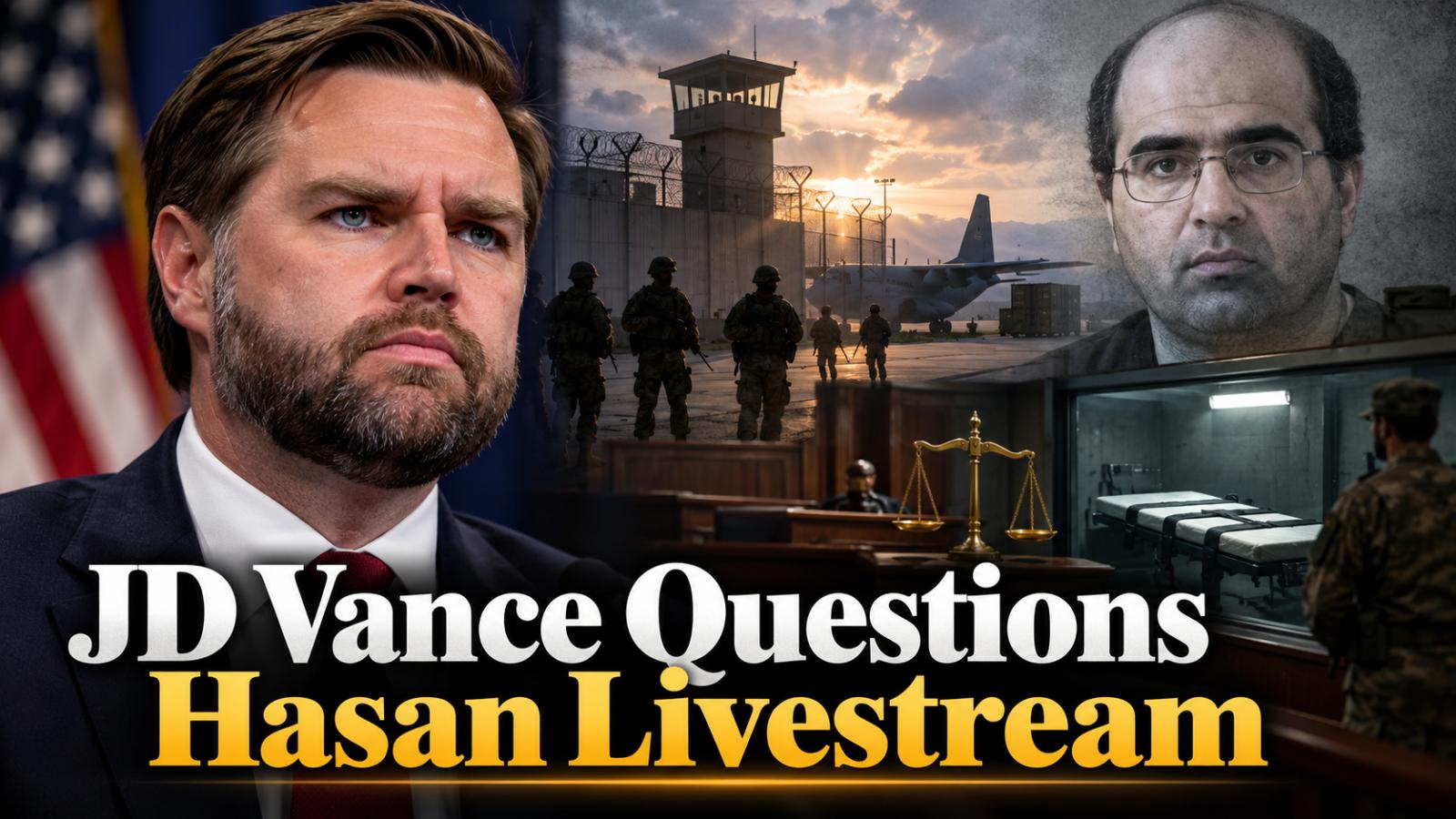
US Vice President JD Vance has raised doubts about the Pentagon's plan to livestream the execution of Nidal Malik Hasan, the former Army psychiatrist convicted in the 2009 Fort Hood shooting in Texas. The JD Vance Hasan livestream controversy follows an announcement that Hasan faces execution by firing squad on December 3, 2026.
Pentagon Plan Faces Uncertainty
Speaking to reporters on October 9, Vance questioned whether the proposed broadcast would take place. “I don’t know that that’s actually going to happen,” he said, distancing himself from the public viewing proposal.
Vance also stated that he would not watch the execution if it were livestreamed. He urged Americans to remember the victims rather than focus entirely on the controversy over how Hasan would be put to death.
Hegseth Defends Public Execution Proposal
Defense Secretary Pete Hegseth announced on October 8 that the execution would be made available for public viewing. During an interview with Real America's Voice, he argued that Americans should understand the serious consequences of such crimes.
However, the proposal has drawn criticism from Republican and Democratic lawmakers, religious leaders and human rights organizations. President Donald Trump approved Hasan's execution, but uncertainty remains over whether he will authorize the livestream.
Fort Hood Shooting Left 13 People Dead
On November 5, 2009, Hasan opened fire at Fort Hood, a US military installation in Texas, killing 13 people and injuring 32 others. The attack became one of the deadliest shootings at an American military base.
A military court convicted Hasan in 2013 of 13 counts of premeditated murder and 32 counts of attempted premeditated murder. The court sentenced him to death, although further legal proceedings could delay the scheduled execution.
Firing Squad Execution Raises Historical Questions
A firing squad carries out capital punishment through a group of designated shooters. The US military historically used this method for certain wartime offences, including desertion.
Private Eddie Slovik was the last American soldier executed by firing squad in 1945. If Hasan's execution proceeds, it would mark the first US military execution since 1961, making the case historically significant.
Public Stream Sparks Legal and Ethical Debate
The proposed public stream has renewed concerns about the ethics of broadcasting executions. Critics argue that showing a person's death could turn punishment into entertainment and expose viewers, including children, to disturbing footage.
Supporters believe public access could demonstrate accountability for serious crimes. However, military officials have not announced final broadcast arrangements, and legal challenges could affect the execution schedule.
For now, the Pentagon's livestream proposal remains controversial as officials face growing pressure to clarify how the execution will proceed.