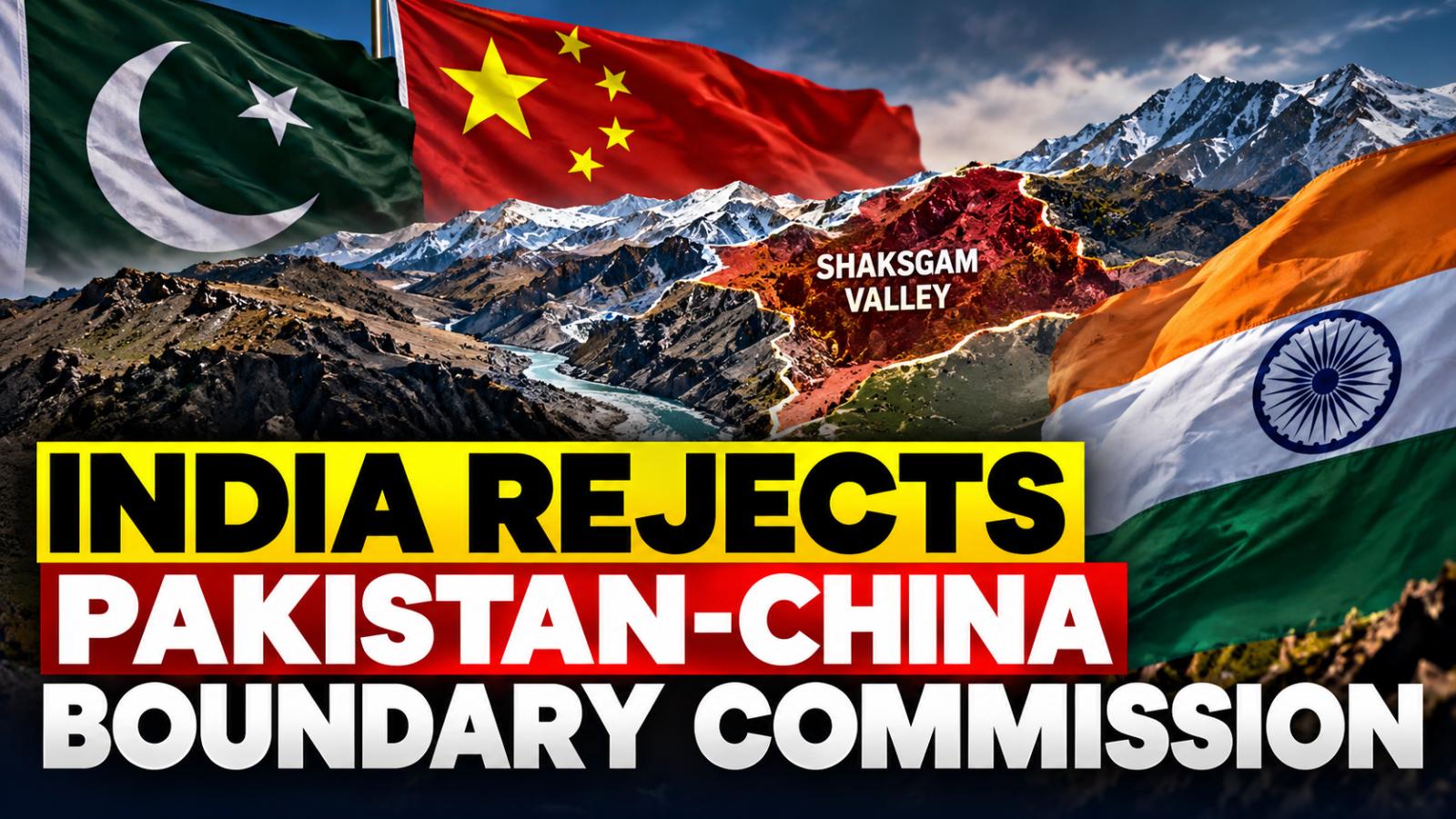
India Rejects Pakistan-China Boundary Commission Over Shaksgam after Islamabad and Beijing launched a long-planned border forum. The September meeting revived a dispute over the 1963 agreement, with India rejecting its legal basis and Pakistan defending the arrangement.
Pakistan-China Boundary Joint Commission
The Pakistan-China Boundary Joint Commission held its inaugural session in Islamabad on September 16–17, 2026. Pakistan's Foreign Ministry said officials discussed joint border surveys, movement of goods and people, and cross-border trade. The mechanism was established under a 2013 boundary management agreement. Its launch formalizes cooperation along a frontier that Pakistan and China administer but India disputes.
1963 China-Pakistan Boundary Agreement
The argument reaches back to the 1963 China-Pakistan Boundary Agreement. India's government says Pakistan ceded about 5,180 square kilometres of territory in the Shaksgam Valley without legal authority. Pakistan and China treat the agreement as valid. Notably, Article 6 of the pact provides for fresh talks with China after a final settlement of the Kashmir dispute, a qualification often missing from accounts of the accord.
Shaksgam Valley Territorial Dispute
Shaksgam lies near China's Xinjiang region, north of the Karakoram Range. Its remote location and proximity to Gilgit-Baltistan give the Shaksgam Valley territorial dispute wider strategic importance. Border surveys and better coordination could strengthen routine administration, but they do not resolve competing sovereignty claims. Claims that the new panel proves a Chinese troop deployment have not been independently verified.
India's Ministry of External Affairs Response
India's Ministry of External Affairs rejected the commission on September 16. Spokesperson Randhir Jaiswal said India recognizes no Pakistan-China boundary in the disputed area and has never accepted the 1963 pact. New Delhi says Jammu and Kashmir and Ladakh are Indian territory and asked Pakistan to leave areas it controls. Pakistan's Foreign Ministry rejected India's position and argued that the 1963 agreement remains valid.
China-Pakistan Economic Corridor Concerns
China-Pakistan Economic Corridor concerns add another dimension. India opposes projects passing through territory it claims in Pakistan-administered Kashmir, including Gilgit-Baltistan. Pakistan and China frame their new commission as a practical forum for trade and connectivity. Whether the panel changes security arrangements remains uncertain; its first public agenda focused on border management rather than military deployments.