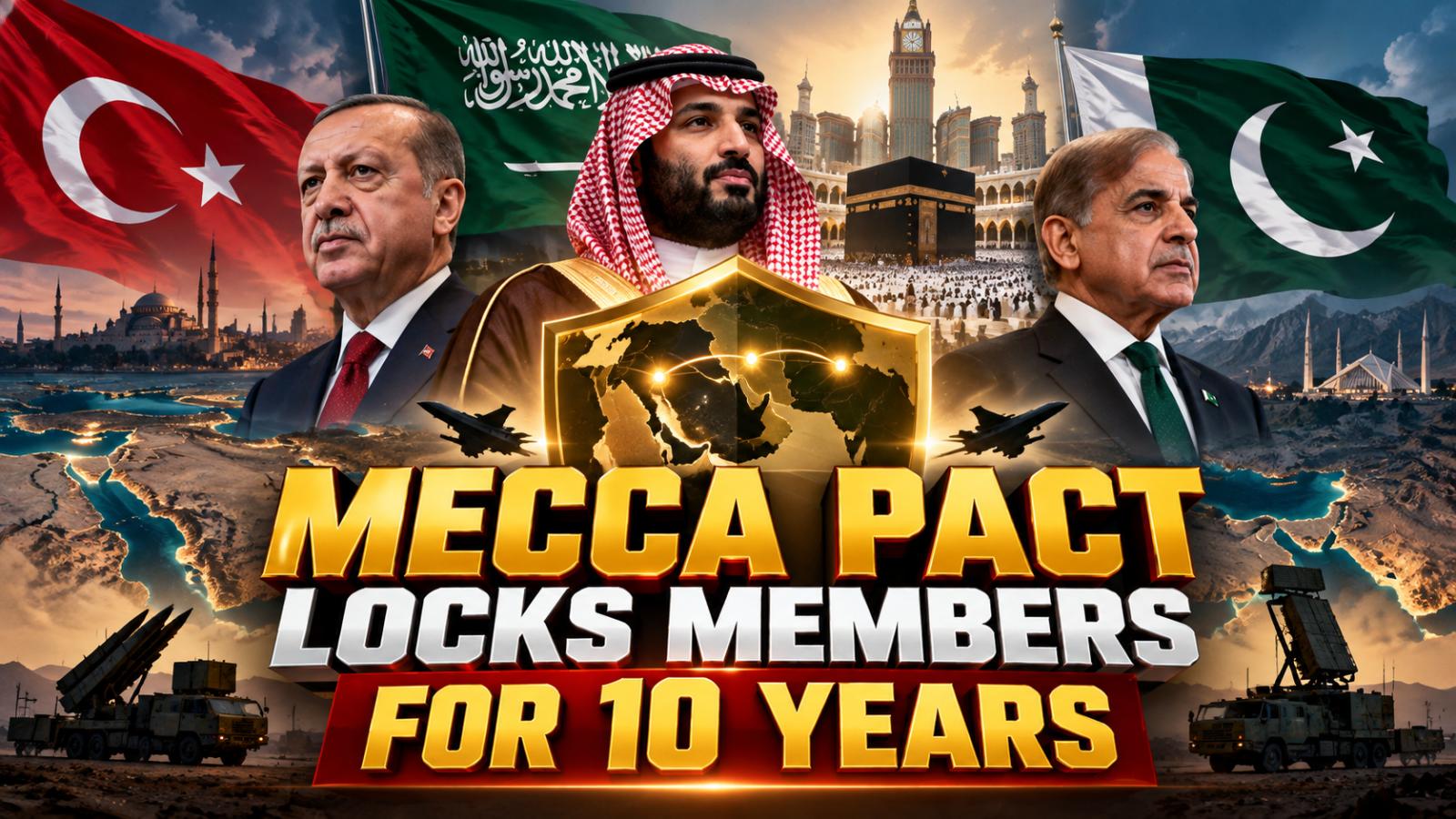
Mecca defence pact locks members in for 10 years after the agreement enters into force, while requiring Pakistan, Saudi Arabia and Turkey to assist one another if a member faces an external armed attack. The newly disclosed pact also details military cooperation, intelligence sharing, logistics and withdrawal procedures.
10-year withdrawal clause
The Mecca Joint Defence Agreement will remain in force indefinitely, but a member cannot withdraw during its first decade. Article 16 states that a party may leave only after 10 years have passed from the agreement's entry into force and must provide at least three months' written notice through diplomatic channels.
The 10-year period does not begin from the signing date. It starts when the final instrument of ratification is deposited with the alliance's secretariat. Ongoing projects and obligations involving classified information can also continue after a member withdraws.
Collective defence obligation
The pact establishes a clear collective defence principle. An externally originating armed attack on Pakistan, Saudi Arabia or Turkey will be treated as an attack on all three members. The other parties must immediately assist the country under attack.
However, the agreement does not automatically require a fixed troop deployment. Members will determine the scale and type of assistance after assessing what support is needed and what military resources each country can provide. This gives governments flexibility while preserving the obligation to respond.
Houthi attacks test alliance
Houthi missile and drone attacks on Saudi Arabia are emerging as an early test of how the defence commitment could work in practice. The three members have discussed rapid deployment of forces and capabilities to protect the kingdom.
Pakistan's military says protecting Saudi sovereignty, territorial integrity and holy sites is a priority, although it has not publicly detailed its assistance. Turkey's expected contribution has been described as focused on equipment, intelligence and weapons systems rather than offensive troop deployments.
Ratification and troop deployment
Domestic laws will shape how each country applies the pact. Turkey requires parliamentary ratification and separate approval for sending troops abroad, while Saudi Arabia approves treaties through royal decree.
Pakistan maintains that deployments covered by the agreement can proceed under existing legal procedures. Islamabad has also said its troops would defend Saudi territory rather than cross into Yemen for offensive operations against the Houthis.
Intelligence and defence cooperation
The agreement extends well beyond mutual defence. Members are expected to conduct joint exercises, personnel exchanges and training while improving military interoperability. It also promotes joint defence production, technology sharing, research and development, and cooperation between defence industries.
A Strategic Political and Defence Committee will bring together foreign ministers, defence ministers and military chiefs, while a Saudi-based secretariat will coordinate implementation. The pact also establishes secure intelligence sharing and logistical support involving weapons, ammunition, fuel and spare parts.
The agreement therefore creates a long-term security framework rather than a temporary military arrangement. Its real significance will depend on how Pakistan, Saudi Arabia and Turkey interpret their collective defence duties when a member faces an actual external attack.