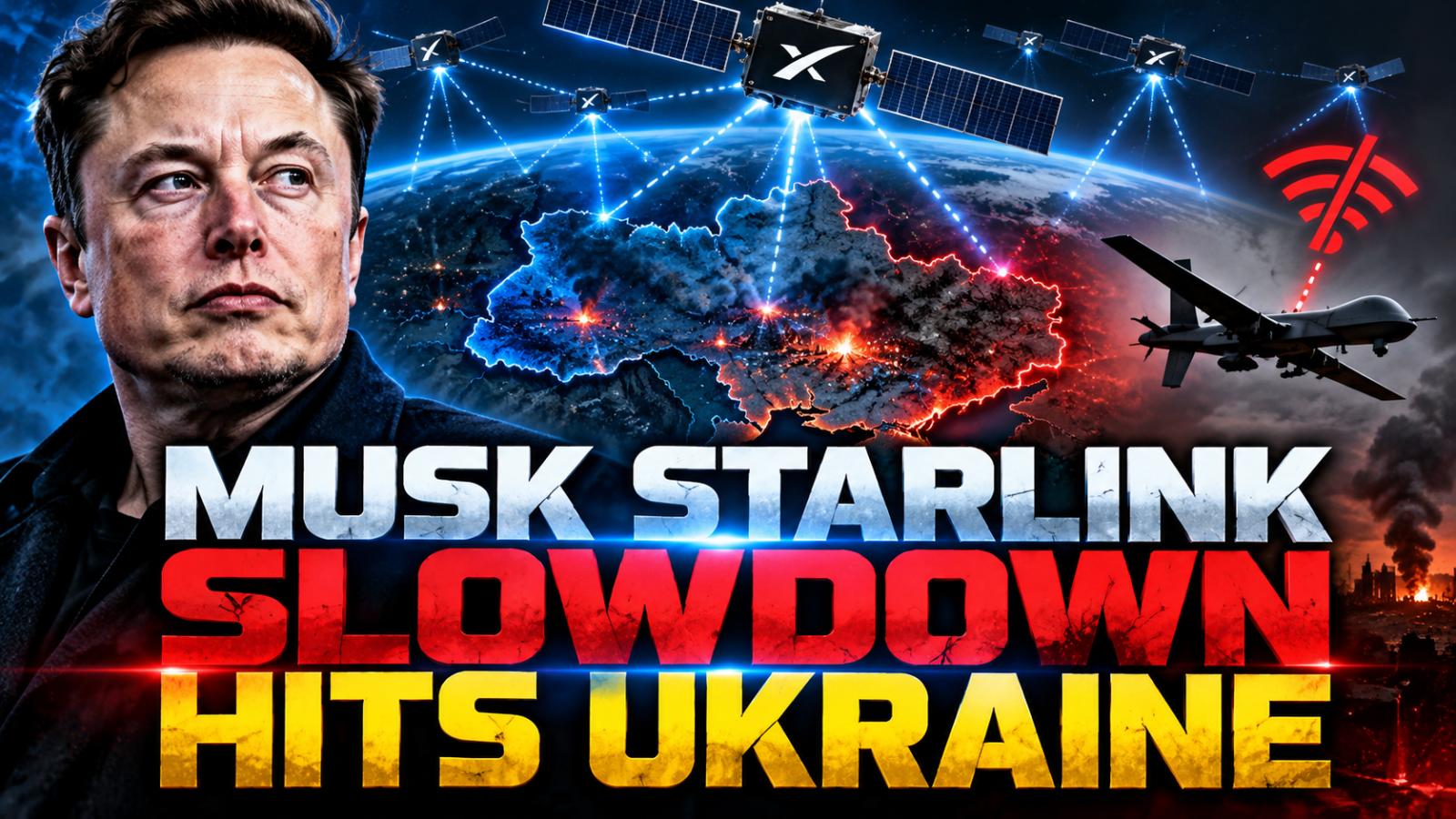
Musk Starlink slowdown in Ukraine sparks White House confusion after military-linked satellite connections used by Ukrainian forces were reportedly restricted. The limits affected drone operations, while Kyiv sought answers from SpaceX and US officials over who authorized the change and whether full service would return.
Starlink restrictions hit Ukrainian drones
Military-grade Starlink connectivity used by Ukrainian forces was reportedly slowed beginning October 14, affecting some offensive and interceptor drone operations. Ukrainian officials said reduced speeds made certain systems far less effective and complicated battlefield coordination.
Starlink has become critical to Ukraine because it provides communications in areas where conventional networks are damaged, jammed or unavailable. Any restriction can therefore affect reconnaissance, logistics, drone control and responses to Russian attacks.
President Volodymyr Zelensky warned that continued limits could cost lives and called for unrestricted service to be restored.
White House questions who ordered slowdown
The controversy quickly created confusion inside the Trump administration. People familiar with the matter said Elon Musk discussed the situation with President Donald Trump and other senior officials, although accounts differ on whether those conversations took place before or after the restrictions were imposed.
Musk later wrote that limits on military Starlink usage were ultimately determined by the US military and the president. Trump, however, told reporters that he did not know who had ordered the slowdown and wanted to find out.
That conflicting messaging raised questions about the decision-making chain governing a communications system with direct battlefield consequences.
US-Ukraine tensions deepen
The Starlink dispute comes as relations between Washington and Kyiv have deteriorated over Ukraine's strikes on Russian energy infrastructure.
Trump has publicly criticised Zelensky for targeting Russian refineries, arguing that such attacks can affect international fuel supplies and prices. Musk has echoed that criticism, saying Zelensky had gone too far.
Ukraine, meanwhile, views strikes on Russian energy facilities as part of its effort to weaken Moscow's ability to finance and sustain military operations.
Intelligence support dispute
Zelensky has also accused Washington of temporarily limiting intelligence assistance used to detect Russian missile launches and support deeper Ukrainian strikes.
Trump administration officials have denied suspending intelligence cooperation. Secretary of State Marco Rubio said claims of a broader cutoff were not accurate.
The overlapping disputes over intelligence and Starlink have nevertheless increased concern in Kyiv about its dependence on US-controlled technologies and information systems during active combat.
Diesel prices fuel political row
Trump's criticism of Ukrainian refinery strikes has also become linked to his focus on diesel and broader energy prices ahead of the November midterm elections.
He has argued that attacks on Russian refineries contribute to fuel-market pressure and has urged Ukraine to stop targeting them. Other factors, including conflict in West Asia and disruptions to global energy supplies, are also influencing prices.
The Starlink episode therefore extends beyond a technical dispute. It highlights how privately operated infrastructure, US foreign policy and battlefield requirements are becoming increasingly intertwined.
For Ukraine, the central question is whether military satellite access can remain reliable during political disagreements. For Washington and SpaceX, the controversy raises a broader issue: who ultimately controls a privately built system when it has become essential to an allied country's defence.