



































New GPT 5.6 series rollout tied to US government AI security framework
OpenAI begins restricted rollout of new AI model series OpenAI has launched a limited preview of its latest artificial intelligence model series in the United States, restricting access to a small group of trusted partners following coordination with government authorities. The rollout marks one of the most controlled releases in the company’s history, reflecting growing regulatory attention around advanced AI systems and their potential national security implications. Government oversight shapes early deployment strategy The preview follows increased scrutiny from US policymakers, including a recent executive order establishing a voluntary federal review framework for high-capability AI models prior to public release. Under the arrangement, OpenAI briefed government officials on the capabilities of its new models before deployment. Access has been limited to selected US-based organisations, although employees working outside the United States within those organisations may still interact with the system under controlled conditions. The company stated that the decision to restrict access was made in coordination with authorities overseeing AI risk management. GPT 5.6 series introduces tiered model architecture The newly introduced GPT 5.6 series includes three distinct models designed for different use cases. The flagship model, Sol, is positioned for high-performance tasks requiring advanced reasoning capabilities. Terra is optimized for general-purpose applications and everyday workloads, while Luna is designed as a faster and lower-cost alternative for scalable deployment. OpenAI also indicated that once the models are broadly released, Terra will be priced significantly lower than its predecessor, reflecting competitive pressure in the AI sector. Broader US policy shifts impact AI ecosystem The controlled rollout comes amid broader regulatory changes affecting the artificial intelligence industry. In a parallel development, US authorities recently adjusted restrictions on competing AI systems, allowing wider institutional access to previously constrained models following earlier national security concerns. These policy shifts highlight an evolving approach in Washington, balancing innovation in AI development with safeguards intended to reduce misuse risks. The developments also underscore intensifying competition among major AI firms as governments increasingly play a direct role in shaping deployment boundaries.
New GPT 5.6 series rollout tied to US government AI security framework
OpenAI begins restricted rollout of new AI model series OpenAI has launched a limited preview of its latest artificial intelligence model series in the United States, restricting access to a small group of trusted partners following coordination with government authorities. The rollout marks one of the most controlled releases in the company’s history, reflecting growing regulatory attention around advanced AI systems and their potential national security implications. Government oversight shapes early deployment strategy The preview follows increased scrutiny from US policymakers, including a recent executive order establishing a voluntary federal review framework for high-capability AI models prior to public release. Under the arrangement, OpenAI briefed government officials on the capabilities of its new models before deployment. Access has been limited to selected US-based organisations, although employees working outside the United States within those organisations may still interact with the system under controlled conditions. The company stated that the decision to restrict access was made in coordination with authorities overseeing AI risk management. GPT 5.6 series introduces tiered model architecture The newly introduced GPT 5.6 series includes three distinct models designed for different use cases. The flagship model, Sol, is positioned for high-performance tasks requiring advanced reasoning capabilities. Terra is optimized for general-purpose applications and everyday workloads, while Luna is designed as a faster and lower-cost alternative for scalable deployment. OpenAI also indicated that once the models are broadly released, Terra will be priced significantly lower than its predecessor, reflecting competitive pressure in the AI sector. Broader US policy shifts impact AI ecosystem The controlled rollout comes amid broader regulatory changes affecting the artificial intelligence industry. In a parallel development, US authorities recently adjusted restrictions on competing AI systems, allowing wider institutional access to previously constrained models following earlier national security concerns. These policy shifts highlight an evolving approach in Washington, balancing innovation in AI development with safeguards intended to reduce misuse risks. The developments also underscore intensifying competition among major AI firms as governments increasingly play a direct role in shaping deployment boundaries.
How maritime tensions are affecting LPG transport and fuel prices
Rising concerns around LPG supply and transport Recent disruptions in global shipping routes have sparked renewed public concern about LPG availability and pricing in several markets. While speculation often increases during periods of geopolitical tension, the actual movement of liquefied petroleum gas depends on a tightly controlled logistics system involving specia
How maritime tensions are affecting LPG transport and fuel prices
Rising concerns around LPG supply and transport Recent disruptions in global shipping routes have sparked renewed public concern about LPG availability and pricing in several markets. While speculation often increases during periods of geopolitical tension, the actual movement of liquefied petroleum gas depends on a tightly controlled logistics system involving specia
Strait of Hormuz tensions rise as US targets Iranian military locations
US conducts strikes after escalation in Strait of Hormuz The United States military carried out targeted airstrikes on Iranian missile and drone storage facilities, along with coastal radar installations, following what US Central Command described as a drone attack on a commercial vessel in the Strait of Hormuz. The operation was conducted in response to heightened t
Strait of Hormuz tensions rise as US targets Iranian military locations
US conducts strikes after escalation in Strait of Hormuz The United States military carried out targeted airstrikes on Iranian missile and drone storage facilities, along with coastal radar installations, following what US Central Command described as a drone attack on a commercial vessel in the Strait of Hormuz. The operation was conducted in response to heightened t
Rolls-Royce Eyes India Manufacturing Investment Under UK Pact
Rolls-Royce and India discussed deeper manufacturing investment, technology partnerships and an engine proposal tied to the country’s next-generation AMCA fighter program on Friday, June 26, 2026. The talks focused on how the India-UK Comprehensive Economic and Trade Agreement, or CETA, could support advanced manufacturing, engineering cooperation and more resilient supply chains. Rolls-Royce India Manufacturing Investment
Rolls-Royce Eyes India Manufacturing Investment Under UK Pact
Rolls-Royce and India discussed deeper manufacturing investment, technology partnerships and an engine proposal tied to the country’s next-generation AMCA fighter program on Friday, June 26, 2026. The talks focused on how the India-UK Comprehensive Economic and Trade Agreement, or CETA, could support advanced manufacturing, engineering cooperation and more resilient supply chains. Rolls-Royce India Manufacturing Investment
Beijing Plane Crash: Aircraft Reportedly Hits CITIC Tower
BEIJING — A small aircraft reportedly crashed into CITIC Tower in Beijing’s central business district at about 6:00 p.m. China Standard Time on Friday, June 26, 2026. The Beijing plane crash damaged part of the tower’s glass facade and sent debris toward streets below. The 108-story building, widely known as China Zun, stands 528 meters, or 1,732 feet, tall and is Beijing’s tallest skyscraper. Beijing Plane Crash Prompts Evacuation A fi
Beijing Plane Crash: Aircraft Reportedly Hits CITIC Tower
BEIJING — A small aircraft reportedly crashed into CITIC Tower in Beijing’s central business district at about 6:00 p.m. China Standard Time on Friday, June 26, 2026. The Beijing plane crash damaged part of the tower’s glass facade and sent debris toward streets below. The 108-story building, widely known as China Zun, stands 528 meters, or 1,732 feet, tall and is Beijing’s tallest skyscraper. Beijing Plane Crash Prompts Evacuation A fi
Bath & Body Works at Ulta Beauty: Juniper Breeze returns in 600-store fragrance launch
Bath & Body Works at Ulta Beauty will become a new shopping option for fragrance, body care and candle customers as the retailer expands beyond its own stores. The rollout is scheduled to begin July 12, with select Bath & Body Works products available in more than 600 Ulta Beauty stores and on Ulta.com. The source information said the companies announced the partnership on June 23, but it did not provide a year, day of the week or exac
Bath & Body Works at Ulta Beauty: Juniper Breeze returns in 600-store fragrance launch
Bath & Body Works at Ulta Beauty will become a new shopping option for fragrance, body care and candle customers as the retailer expands beyond its own stores. The rollout is scheduled to begin July 12, with select Bath & Body Works products available in more than 600 Ulta Beauty stores and on Ulta.com. The source information said the companies announced the partnership on June 23, but it did not provide a year, day of the week or exac
Why MIT Cambridge Has Ranked No. 1 for 15 Straight Years
The Massachusetts Institute of Technology in Cambridge, Massachusetts, has been named the world’s No. 1 university in the QS World University Rankings for 15 consecutive years. MIT retained the top position in the QS World University Rankings 2027, published on Thursday, June 18, 2026. Its continued leadership reflects strength across research, academic reputation, graduate employability and several science and engineering subjects. Related:
Why MIT Cambridge Has Ranked No. 1 for 15 Straight Years
The Massachusetts Institute of Technology in Cambridge, Massachusetts, has been named the world’s No. 1 university in the QS World University Rankings for 15 consecutive years. MIT retained the top position in the QS World University Rankings 2027, published on Thursday, June 18, 2026. Its continued leadership reflects strength across research, academic reputation, graduate employability and several science and engineering subjects. Related:
MIT Cambridge: How Many Indian Students Study There in 2025–26?
The Massachusetts Institute of Technology recorded 286 students from India during the 2025–26 academic year, according to statistics published by MIT’s International Students Office. MIT, which holds the No. 1 position in the QS World University Rankings 2027, remains one of the most sought-after US universities among students interested in engineering, science, technology and research. MIT’s appeal to international students is also supported by its
MIT Cambridge: How Many Indian Students Study There in 2025–26?
The Massachusetts Institute of Technology recorded 286 students from India during the 2025–26 academic year, according to statistics published by MIT’s International Students Office. MIT, which holds the No. 1 position in the QS World University Rankings 2027, remains one of the most sought-after US universities among students interested in engineering, science, technology and research. MIT’s appeal to international students is also supported by its
QS World University Rankings 2027: Top 7 Universities Revealed
The QS World University Rankings 2027 place the Massachusetts Institute of Technology at No. 1 globally, while Imperial College London and Stanford University share second place. Released on Thursday, June 18, 2026, the latest ranking compares more than 1,500 universities worldwide. Four of the seven highest-ranked institutions are in the United States, while three are in the United Kingdom. QS World University Rankings 2027: Top Seven
QS World University Rankings 2027: Top 7 Universities Revealed
The QS World University Rankings 2027 place the Massachusetts Institute of Technology at No. 1 globally, while Imperial College London and Stanford University share second place. Released on Thursday, June 18, 2026, the latest ranking compares more than 1,500 universities worldwide. Four of the seven highest-ranked institutions are in the United States, while three are in the United Kingdom. QS World University Rankings 2027: Top Seven
Anthropic H-1B Filings Show AI Base Salaries as High as $1.38 Million
Anthropic salaries reached as high as $1.38 million in newly disclosed federal H-1B visa filings, illustrating how aggressively artificial intelligence companies are competing for specialized technical workers in the United States. The records cover nearly 80 Anthropic positions certified during the first half of US fiscal year 2026. They show fixed annual base salaries offered to foreign workers sponsored through the H-1B program. Bonuses, stock awards and other benefits are not in
Anthropic H-1B Filings Show AI Base Salaries as High as $1.38 Million
Anthropic salaries reached as high as $1.38 million in newly disclosed federal H-1B visa filings, illustrating how aggressively artificial intelligence companies are competing for specialized technical workers in the United States. The records cover nearly 80 Anthropic positions certified during the first half of US fiscal year 2026. They show fixed annual base salaries offered to foreign workers sponsored through the H-1B program. Bonuses, stock awards and other benefits are not in
Chiranjeevi, Nagarjuna, Venkatesh attend Khushbu Sundar wedding event
Veteran actors Chiranjeevi, Nagarjuna, Venkatesh and several leading stars from the South Indian film industry attended the wedding of Avantika Sundar, daughter of actor-politician Khushbu Sundar and filmmaker Sundar C, at a luxury resort in Goa. The wedding celebrations of Avantika Sundar, the elder daughter of actor-politician Khushbu Sundar and filmmaker Sundar C, turned into a star-studded affair as several leading per
Chiranjeevi, Nagarjuna, Venkatesh attend Khushbu Sundar wedding event
Veteran actors Chiranjeevi, Nagarjuna, Venkatesh and several leading stars from the South Indian film industry attended the wedding of Avantika Sundar, daughter of actor-politician Khushbu Sundar and filmmaker Sundar C, at a luxury resort in Goa. The wedding celebrations of Avantika Sundar, the elder daughter of actor-politician Khushbu Sundar and filmmaker Sundar C, turned into a star-studded affair as several leading per
Global AI competition moves beyond US and China rivalry
The global AI competition is no longer limited to a simple US versus China narrative. The landscape is expanding into a wider system where multiple countries, companies, and open-source communities are influencing how artificial intelligence is built and deployed. Earlier assumptions that a small group of American tech giants control AI progress are now being questioned as new model ecosystems grow rapidly across regions. For many years, US technology companies held a clear advantag
Global AI competition moves beyond US and China rivalry
The global AI competition is no longer limited to a simple US versus China narrative. The landscape is expanding into a wider system where multiple countries, companies, and open-source communities are influencing how artificial intelligence is built and deployed. Earlier assumptions that a small group of American tech giants control AI progress are now being questioned as new model ecosystems grow rapidly across regions. For many years, US technology companies held a clear advantag
AR Rahman Receives Golden Plate Award From Peter Jackson
A.R. Rahman has received the Golden Plate Award from the American Academy of Achievement in Washington, with filmmaker Peter Jackson presenting the honour. The recognition marks another proud global moment for the Oscar-winning Indian composer and for Indian music. AR Rahman Receives Golden Plate Award Music maestro A.R. Rahman has been honoured with the Golden Plate Award at an American Academy of Achievement
AR Rahman Receives Golden Plate Award From Peter Jackson
A.R. Rahman has received the Golden Plate Award from the American Academy of Achievement in Washington, with filmmaker Peter Jackson presenting the honour. The recognition marks another proud global moment for the Oscar-winning Indian composer and for Indian music. AR Rahman Receives Golden Plate Award Music maestro A.R. Rahman has been honoured with the Golden Plate Award at an American Academy of Achievement
Russian army dissent claims raise tension over Ukraine war
A video circulating online featuring former Russian volunteer commander Alexander Lunin has triggered discussion about possible internal strain within sections of Russia’s military. In the recording, he suggests that prolonged combat operations in Ukraine have created growing frustration among some soldiers, though no independent verification supports claims of organized unrest. The remarks have drawn attention because public criticism linke
Russian army dissent claims raise tension over Ukraine war
A video circulating online featuring former Russian volunteer commander Alexander Lunin has triggered discussion about possible internal strain within sections of Russia’s military. In the recording, he suggests that prolonged combat operations in Ukraine have created growing frustration among some soldiers, though no independent verification supports claims of organized unrest. The remarks have drawn attention because public criticism linke
B-52 nuclear alert during Cuban missile crisis explained simply
The discovery of Soviet missiles in Cuba pushed the United States and the Soviet Union into a direct nuclear confrontation. With only a short distance separating missile sites from U.S. territory, decision-makers in Washington treated the situation as an immediate existential threat rather than a routine diplomatic crisis. Shift to maximum military readiness As intelligence confirmed missile dep
B-52 nuclear alert during Cuban missile crisis explained simply
The discovery of Soviet missiles in Cuba pushed the United States and the Soviet Union into a direct nuclear confrontation. With only a short distance separating missile sites from U.S. territory, decision-makers in Washington treated the situation as an immediate existential threat rather than a routine diplomatic crisis. Shift to maximum military readiness As intelligence confirmed missile dep
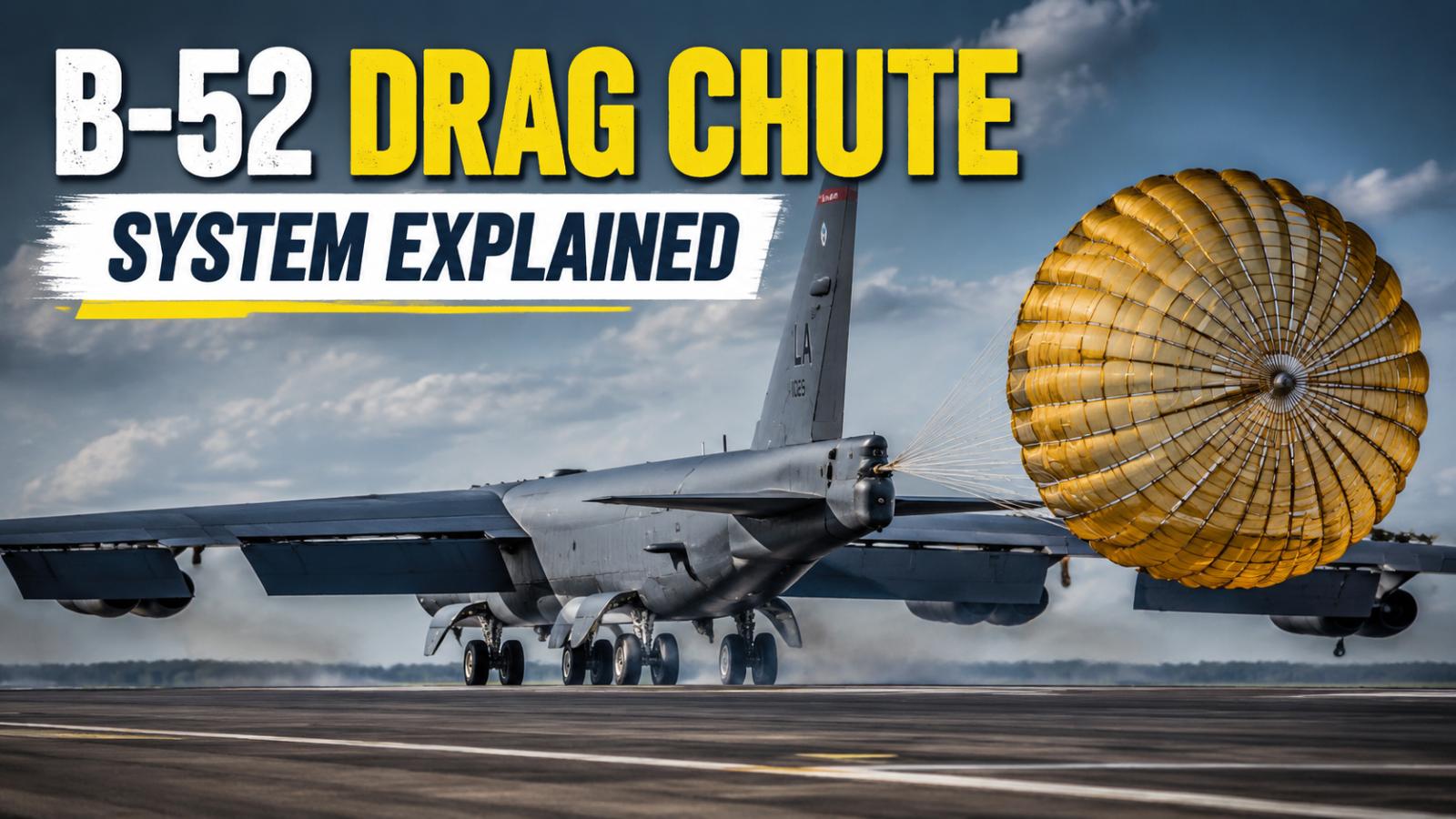
B-52 drag chute system and landing braking explained
The B-52 Stratofortress relies on a drag chute to help slow the aircraft immediately after touchdown. Instead of depending only on wheel brakes, the system deploys a parachute from the rear of the aircraft that creates strong air resistance. This resistance reduces speed quickly and stabilizes the landing rollout, especially important for such a large and heavy bomber. Why the aircraft needs extra braking support A fully loaded B-52 carries enormous mass and lands at high speeds, which naturally generates extreme heat and stress on its wheel braking system. If only standard brakes were used, stopping distance would increase significantly and brake components could overheat or wear out rapidly. The drag chute reduces this burden by absorbing a portion of the kinetic energy during rollout. How the system is activated during landing Once the aircraft touches down and is stable on the runway, the crew initiates the drag chute deployment. A small pilot chute is released first, which pulls out the main parachute from its housing in the tail section. As it inflates, it creates immediate drag force that slows the aircraft even before full brake pressure is applied on the wheels. Impact on runway distance and safety The chute significantly shortens the distance required to bring the bomber to a safe stop. This becomes especially valuable on wet, icy, or short runways where braking efficiency is reduced. By lowering reliance on friction-based braking alone, the system improves safety margins and allows more flexible landing operations in different environments. Operational use in real conditions In practice, crews often rely on the drag chute as a standard part of landing procedures because it protects the braking system and enhances control. It is particularly important during adverse weather conditions or high-weight landings. Ground teams then recover and repack the chute after use for the next mission. A system built for rapid nuclear response... Why the system is still relevant today Despite being designed decades ago, the drag chute remains an effective and simple solution to a complex problem: stopping a very heavy aircraft safely in limited runway space. Its continued use highlights how practical engineering solutions can stay valuable long after the aircraft itself enters modern service cycles.
B-52 drag chute system and landing braking explained
The B-52 Stratofortress relies on a drag chute to help slow the aircraft immediately after touchdown. Instead of depending only on wheel brakes, the system deploys a parachute from the rear of the aircraft that creates strong air resistance. This resistance reduces speed quickly and stabilizes the landing rollout, especially important for such a large and heavy bomber. Why the aircraft needs extra braking support A fully loaded B-52 carries enormous mass and lands at high speeds, which naturally generates extreme heat and stress on its wheel braking system. If only standard brakes were used, stopping distance would increase significantly and brake components could overheat or wear out rapidly. The drag chute reduces this burden by absorbing a portion of the kinetic energy during rollout. How the system is activated during landing Once the aircraft touches down and is stable on the runway, the crew initiates the drag chute deployment. A small pilot chute is released first, which pulls out the main parachute from its housing in the tail section. As it inflates, it creates immediate drag force that slows the aircraft even before full brake pressure is applied on the wheels. Impact on runway distance and safety The chute significantly shortens the distance required to bring the bomber to a safe stop. This becomes especially valuable on wet, icy, or short runways where braking efficiency is reduced. By lowering reliance on friction-based braking alone, the system improves safety margins and allows more flexible landing operations in different environments. Operational use in real conditions In practice, crews often rely on the drag chute as a standard part of landing procedures because it protects the braking system and enhances control. It is particularly important during adverse weather conditions or high-weight landings. Ground teams then recover and repack the chute after use for the next mission. A system built for rapid nuclear response... Why the system is still relevant today Despite being designed decades ago, the drag chute remains an effective and simple solution to a complex problem: stopping a very heavy aircraft safely in limited runway space. Its continued use highlights how practical engineering solutions can stay valuable long after the aircraft itself enters modern service cycles.
Venezuela earthquake 7.5 magnitude leaves 235 dead
A major earthquake struck the northern coastline of Venezuela, causing severe destruction across coastal cities and leaving at least 235 people dead. The tremor, measured at magnitudes 7.2 to 7.5, hit suddenly and was felt across a wide stretch of the Caribbean region. Thousands of residents were forced out of their homes within minutes as buildings swayed and collapsed under the force of the shaking.
Venezuela earthquake 7.5 magnitude leaves 235 dead
A major earthquake struck the northern coastline of Venezuela, causing severe destruction across coastal cities and leaving at least 235 people dead. The tremor, measured at magnitudes 7.2 to 7.5, hit suddenly and was felt across a wide stretch of the Caribbean region. Thousands of residents were forced out of their homes within minutes as buildings swayed and collapsed under the force of the shaking.
Gulf US talks focus Gaza rebuild, Iran risks and Hormuz security
A recent round of discussions between the United States and Gulf Cooperation Council members centered on the future of Gaza, with a strong emphasis on preventing forced displacement and prioritizing civilian safety. The participating sides underscored that any population movement must remain voluntary and reversible, rejecting any framework that would permanently alter the demographic structure of the territory. The talks also reflected growin
Gulf US talks focus Gaza rebuild, Iran risks and Hormuz security
A recent round of discussions between the United States and Gulf Cooperation Council members centered on the future of Gaza, with a strong emphasis on preventing forced displacement and prioritizing civilian safety. The participating sides underscored that any population movement must remain voluntary and reversible, rejecting any framework that would permanently alter the demographic structure of the territory. The talks also reflected growin
Strait of Hormuz drone strike damages cargo vessel near Oman
A commercial vessel sailing through waters near the Strait of Hormuz was damaged after being struck by a drone-type projectile, triggering renewed concerns over the safety of one of the world’s most critical maritime trade routes. The Singapore-flagged cargo ship Ever Lovely was affected while transiting close to Oman’s maritime zone after exiting the narrow passage. Authorities confirmed the vessel sustained structural damage, but all crew members
Strait of Hormuz drone strike damages cargo vessel near Oman
A commercial vessel sailing through waters near the Strait of Hormuz was damaged after being struck by a drone-type projectile, triggering renewed concerns over the safety of one of the world’s most critical maritime trade routes. The Singapore-flagged cargo ship Ever Lovely was affected while transiting close to Oman’s maritime zone after exiting the narrow passage. Authorities confirmed the vessel sustained structural damage, but all crew members
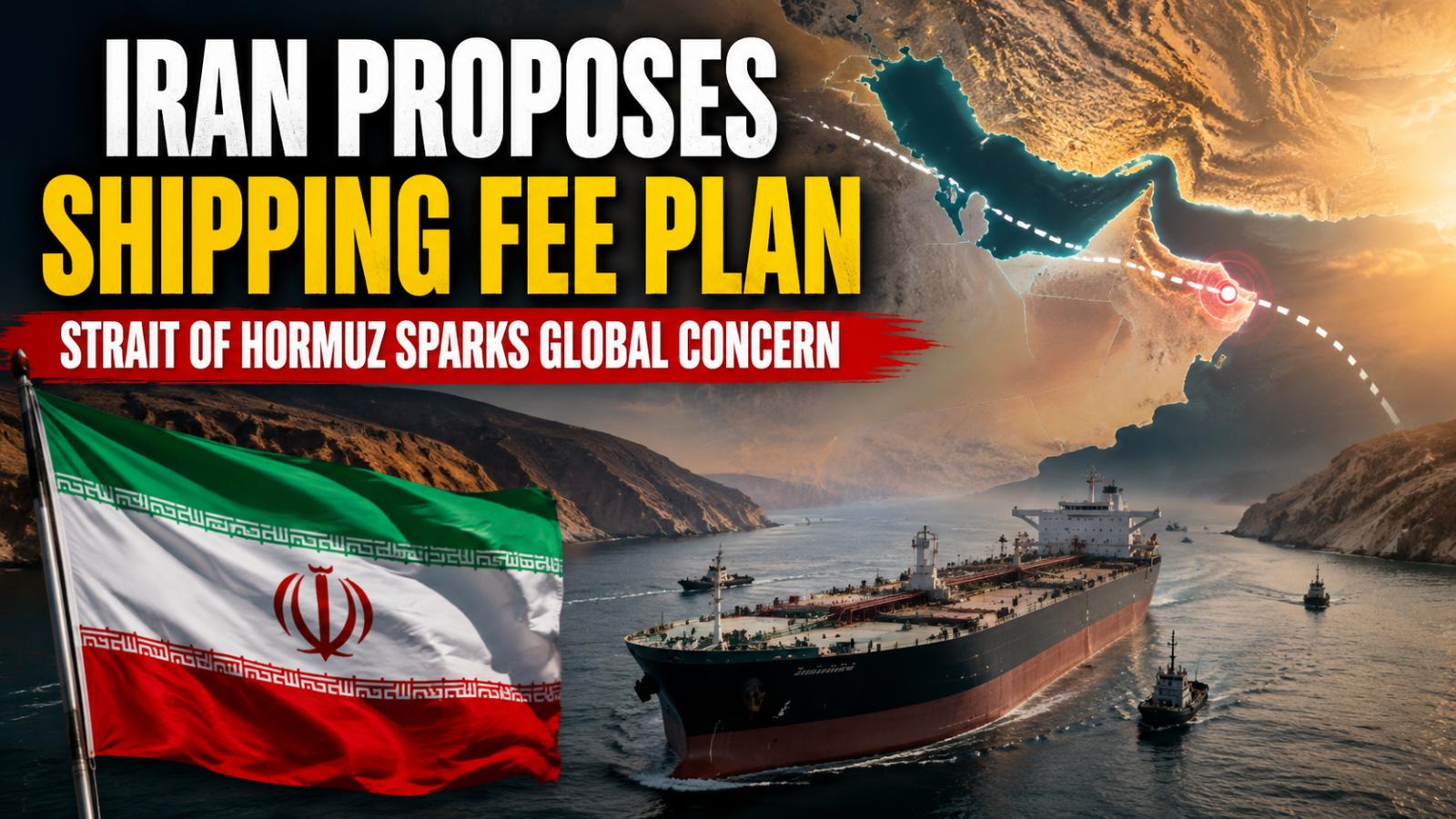
Iran proposal on shipping charges draws US criticism
A proposal linked to Iran suggesting charges on vessels passing through the Strait of Hormuz has triggered renewed international attention on one of the world’s most sensitive maritime corridors. The passage connects the Persian Gulf to open oceans and handles a major share of global crude oil shipments, making even minor policy changes capable of influencing energy markets. Proposed fee structure and stated objectives The idea under discussion involves introducing a structured fee system for ships using the route. The proposal frames the charges as payments for services such as navigation safety, maritime monitoring, and environmental management. Early estimates circulating in policy discussions suggest the mechanism could generate substantial annual revenue if implemented at scale. However, the concept also raises immediate legal and operational questions, particularly regarding jurisdiction over international waters and the practicality of enforcing such a system on heavily trafficked global shipping lanes. Regional outreach and diplomatic positioning Reports indicate that discussions around the proposal have included outreach to several regional and global stakeholders, including major energy-importing nations. The objective appears to be building support for a shared governance or cost-sharing model for maritime traffic management in the region. Some interpretations suggest the plan is part of a broader effort to increase regional leverage over strategic trade routes. Others view it as an attempt to formalize compensation mechanisms for security responsibilities in a highly militarized shipping corridor. International reaction and US opposition The proposal has drawn clear resistance from the United States, which maintains that key international waterways must remain free for unrestricted commercial passage. US officials argue that introducing toll-like systems could disrupt global supply chains and increase volatility in energy pricing. Concerns have also been raised by other maritime stakeholders who rely heavily on stable passage through the Strait of Hormuz for crude oil and liquefied natural gas transport. Any change in cost structure or transit policy is seen as having a direct impact on insurance premiums and shipping routes. Wider implications for global energy markets The debate comes at a time when global energy markets remain highly sensitive to geopolitical developments in the Gulf region. Even the perception of restricted access or added transit costs can influence oil price expectations and shipping risk assessments. Analysts note that the discussion highlights ongoing tensions between strategic control of critical chokepoints and the principle of open international navigation. The outcome of such proposals could shape future frameworks governing global energy transport corridors.
Iran proposal on shipping charges draws US criticism
A proposal linked to Iran suggesting charges on vessels passing through the Strait of Hormuz has triggered renewed international attention on one of the world’s most sensitive maritime corridors. The passage connects the Persian Gulf to open oceans and handles a major share of global crude oil shipments, making even minor policy changes capable of influencing energy markets. Proposed fee structure and stated objectives The idea under discussion involves introducing a structured fee system for ships using the route. The proposal frames the charges as payments for services such as navigation safety, maritime monitoring, and environmental management. Early estimates circulating in policy discussions suggest the mechanism could generate substantial annual revenue if implemented at scale. However, the concept also raises immediate legal and operational questions, particularly regarding jurisdiction over international waters and the practicality of enforcing such a system on heavily trafficked global shipping lanes. Regional outreach and diplomatic positioning Reports indicate that discussions around the proposal have included outreach to several regional and global stakeholders, including major energy-importing nations. The objective appears to be building support for a shared governance or cost-sharing model for maritime traffic management in the region. Some interpretations suggest the plan is part of a broader effort to increase regional leverage over strategic trade routes. Others view it as an attempt to formalize compensation mechanisms for security responsibilities in a highly militarized shipping corridor. International reaction and US opposition The proposal has drawn clear resistance from the United States, which maintains that key international waterways must remain free for unrestricted commercial passage. US officials argue that introducing toll-like systems could disrupt global supply chains and increase volatility in energy pricing. Concerns have also been raised by other maritime stakeholders who rely heavily on stable passage through the Strait of Hormuz for crude oil and liquefied natural gas transport. Any change in cost structure or transit policy is seen as having a direct impact on insurance premiums and shipping routes. Wider implications for global energy markets The debate comes at a time when global energy markets remain highly sensitive to geopolitical developments in the Gulf region. Even the perception of restricted access or added transit costs can influence oil price expectations and shipping risk assessments. Analysts note that the discussion highlights ongoing tensions between strategic control of critical chokepoints and the principle of open international navigation. The outcome of such proposals could shape future frameworks governing global energy transport corridors.


