The discovery of Soviet missiles in Cuba pushed the United States and the Soviet Union into a direct nuclear confrontation. With only a short distance separating missile sites from U.S. territory, decision-makers in Washington treated the situation as an immediate existential threat rather than a routine diplomatic crisis.
Shift to maximum military readiness
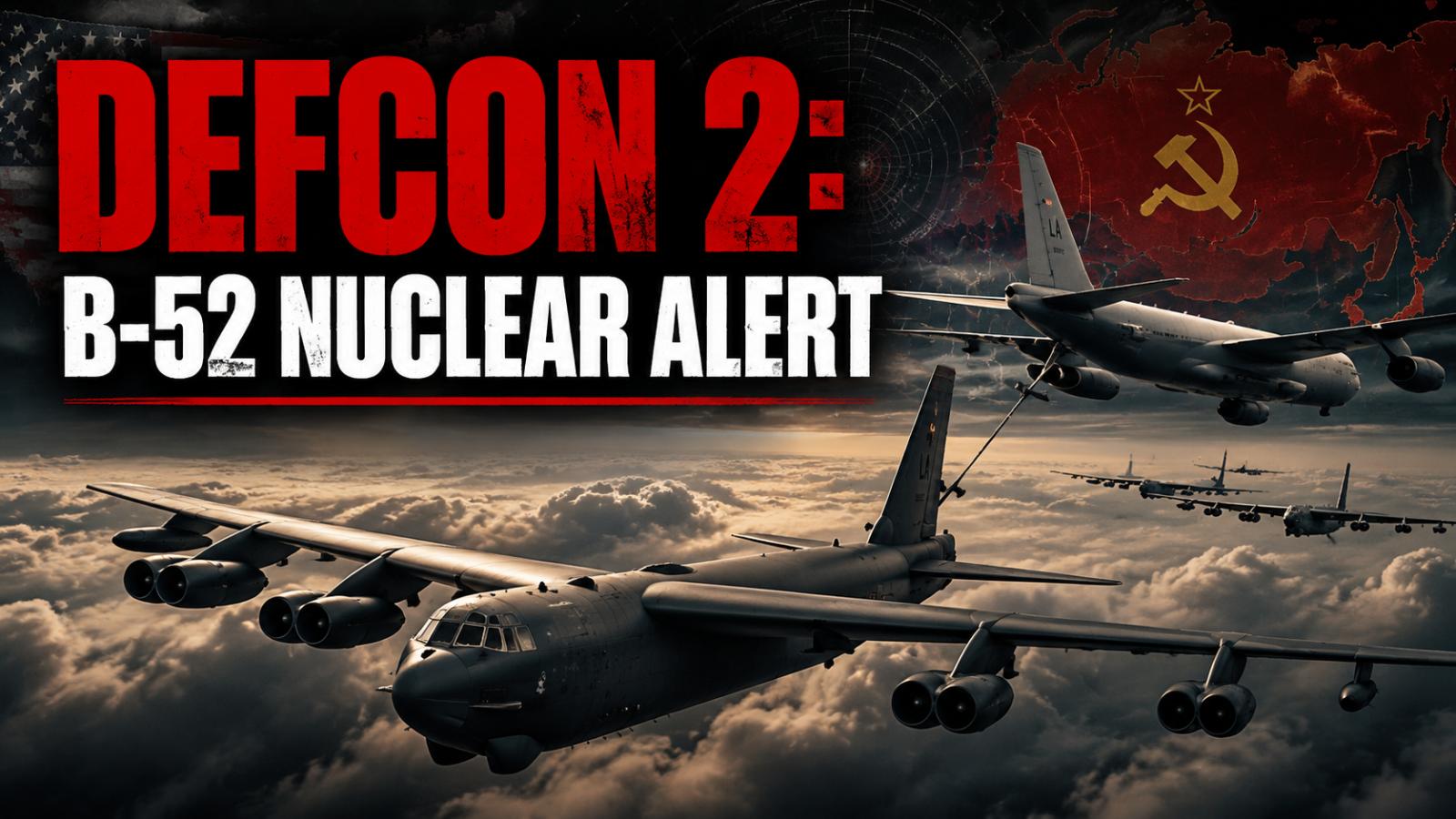
As intelligence confirmed missile deployment, the U.S. military moved its Strategic Air Command into DEFCON 2. This was not symbolic escalation—it meant forces were prepared for imminent nuclear war. Among the most critical assets placed on alert were B-52 Stratofortress bombers, fully armed and assigned pre-planned strike targets.
Continuous airborne nuclear patrols
A portion of the bomber fleet was kept airborne around the clock to ensure survivability in case of a first strike. Aircraft rotated in and out of missions while maintaining constant presence in the air. These flights were not routine exercises; they were live nuclear deterrence missions operating under real wartime assumptions.
Heavy reliance on aerial refueling systems
Sustaining nonstop bomber operations required an extensive tanker network. KC-135 refueling aircraft enabled B-52s to remain airborne for extended periods over oceanic routes. This coordination created a continuous loop of aircraft movement designed to guarantee immediate strike capability if ordered.
How the system is activated during landing...
A system built for rapid nuclear response
Every airborne and ground-based bomber was integrated into a tightly controlled command structure. Crews were kept on high alert, weapons were ready for deployment, and communication channels were streamlined for speed. The entire system functioned on the assumption that escalation could move from political decision to military action within minutes.
The closest point to nuclear war in the Cold War
The crisis eventually de-escalated after diplomatic negotiations between Washington and Moscow. However, the period remains one of the most intense moments in modern military history. The B-52 alert posture under DEFCON 2 demonstrated how close global powers came to full-scale nuclear conflict—and how dependent the world was on rapid political resolution rather than military certainty.