Khaan Quest 2026 has officially begun at the Five Hills Training Area near Ulaanbaatar, marking one of the largest annual UN peacekeeping training exercises in the region. The drill brings together troops from 18 nations, with a focus on improving coordination in complex peace support environments. More than 1,000 personnel are taking part in structured field training designed to replicate real-world mission conditions under United Nations mandates.
India strengthens peacekeeping engagement through participation
The Indian Army has deployed a 40-member contingent for the exercise, including personnel from a battalion of the JAT Regiment along with supporting arms. Their participation reflects India’s continued operational commitment to global peacekeeping frameworks. Indian troops are actively engaged in tactical drills such as area domination, checkpoint operations, search procedures, and controlled movement scenarios that simulate volatile environments.
Training designed for real-world mission readiness
The exercise is structured around practical peacekeeping scenarios where multinational forces must operate under unified command conditions. Activities include convoy protection, casualty evacuation drills, and humanitarian response simulations. A strong emphasis is placed on interoperability, ensuring that forces from different countries can communicate and operate seamlessly during international deployments.
Women, Peace and Security module gains importance
A dedicated training segment on Women, Peace and Security is a key feature of this year’s exercise. It focuses on improving gender awareness in operational settings, strengthening civilian protection measures, and encouraging greater participation of women in peacekeeping roles. The module is designed to reflect evolving global expectations in modern conflict management.
Exercise highlights growing global coordination
Khaan Quest began as a bilateral initiative between Mongolia and the United States in the early 2000s and has since expanded into a multinational platform co-sponsored by US Indo-Pacific Command. Over the years, it has evolved into a key training ground for preparing forces for UN peace operations. The 2026 edition reinforces international cooperation, operational readiness, and shared security practices among participating nations.
Strategic relevance of Khaan Quest 2026
The exercise serves as more than just a training event—it acts as a platform for military diplomacy and operational alignment among partner countries. By working together in simulated peace missions, participating forces strengthen trust, improve tactical compatibility, and enhance readiness for future UN deployments in conflict and post-conflict zones.
Khaan Quest 2026 has officially begun at the Five Hills Training Area near Ulaanbaatar, marking one of the largest annual UN peacekeeping training exercises in the region. The drill brings together troops from 18 nations, with a focus on improving coordination in complex peace support environments. More than 1,000 personnel are taking part in structured field training designed to replicate real-world mission conditions under United Nations mandates.
India strengthens peacekeeping engagement through participation
The Indian Army has deployed a 40-member contingent for the exercise, including personnel from a battalion of the JAT Regiment along with supporting arms. Their participation reflects India’s continued operational commitment to global peacekeeping frameworks. Indian troops are actively engaged in tactical drills such as area domination, checkpoint operations, search procedures, and controlled movement scenarios that simulate volatile environments.
Training designed for real-world mission readiness
The exercise is structured around practical peacekeeping scenarios where multinational forces must operate under unified command conditions. Activities include convoy protection, casualty evacuation drills, and humanitarian response simulations. A strong emphasis is placed on interoperability, ensuring that forces from different countries can communicate and operate seamlessly during international deployments.
Women, Peace and Security module gains importance
A dedicated training segment on Women, Peace and Security is a key feature of this year’s exercise. It focuses on improving gender awareness in operational settings, strengthening civilian protection measures, and encouraging greater participation of women in peacekeeping roles. The module is designed to reflect evolving global expectations in modern conflict management.
Exercise highlights growing global coordination
Khaan Quest began as a bilateral initiative between Mongolia and the United States in the early 2000s and has since expanded into a multinational platform co-sponsored by US Indo-Pacific Command. Over the years, it has evolved into a key training ground for preparing forces for UN peace operations. The 2026 edition reinforces international cooperation, operational readiness, and shared security practices among participating nations.
Strategic relevance of Khaan Quest 2026
The exercise serves as more than just a training event—it acts as a platform for military diplomacy and operational alignment among partner countries. By working together in simulated peace missions, participating forces strengthen trust, improve tactical compatibility, and enhance readiness for future UN deployments in conflict and post-conflict zones.
Thiruvananthapuram, June 24: Leader of the Opposition in the Kerala Assembly, Pinarayi Vijayan, on Wednesday wrote to Chief Minister V D Satheesan, urging immediate steps to bring back the mortal remains of Arjun, a Keralite worker who died in an explosion at an industrial facility in Qatar.
Arjun, a native of Kozhikode district, was working at the Barzan gas facility in Ras Laffan Industrial City when the incident occurre
Thiruvananthapuram, June 24: Leader of the Opposition in the Kerala Assembly, Pinarayi Vijayan, on Wednesday wrote to Chief Minister V D Satheesan, urging immediate steps to bring back the mortal remains of Arjun, a Keralite worker who died in an explosion at an industrial facility in Qatar.
Arjun, a native of Kozhikode district, was working at the Barzan gas facility in Ras Laffan Industrial City when the incident occurre
The Cornell Tata Scholarship provides need-based financial aid to eligible undergraduate students who attended secondary school in India. Applicants must gain admission to Cornell University, demonstrate financial need and complete the university’s required financial-aid process.
Created through a $25 million endowment from the Tata Education and Development Trust, the program supports about 20 scholars at any one time and awards assistance annually.
The Cornell Tata Scholarship provides need-based financial aid to eligible undergraduate students who attended secondary school in India. Applicants must gain admission to Cornell University, demonstrate financial need and complete the university’s required financial-aid process.
Created through a $25 million endowment from the Tata Education and Development Trust, the program supports about 20 scholars at any one time and awards assistance annually.
Thiruvananthapuram, June 24, 2026: Kerala Chief Minister V D Satheesan has reached out to the governments of Karnataka, Tamil Nadu and Puducherry, seeking enhanced cooperation to combat the growing threat of interstate drug trafficking. The initiative is part of Kerala's intensified anti-drug campaign, Operation Toofan, which aims to curb narcotics abuse and dismantle organized trafficking networks operating across state borders.
According to an official release from the Chief Minis
Thiruvananthapuram, June 24, 2026: Kerala Chief Minister V D Satheesan has reached out to the governments of Karnataka, Tamil Nadu and Puducherry, seeking enhanced cooperation to combat the growing threat of interstate drug trafficking. The initiative is part of Kerala's intensified anti-drug campaign, Operation Toofan, which aims to curb narcotics abuse and dismantle organized trafficking networks operating across state borders.
According to an official release from the Chief Minis
Kolkata, June 24, 2026: Trinamool Congress (TMC) MP Mahua Moitra has stirred fresh political discussions in West Bengal after publicly recalling the support she received from Chief Minister Suvendu Adhikari during the early stages of her political journey. Her remarks come at a crucial time when the TMC is facing internal challenges, defections, and a growing leadership crisis.
Mahua Moitra described her relationship with Suvendu Adhikari as one built on personal respect and emotion
Kolkata, June 24, 2026: Trinamool Congress (TMC) MP Mahua Moitra has stirred fresh political discussions in West Bengal after publicly recalling the support she received from Chief Minister Suvendu Adhikari during the early stages of her political journey. Her remarks come at a crucial time when the TMC is facing internal challenges, defections, and a growing leadership crisis.
Mahua Moitra described her relationship with Suvendu Adhikari as one built on personal respect and emotion
France is experiencing an intense heat surge that has pushed temperatures across several regions to dangerous levels, placing large parts of the country under the highest weather alert category. Authorities have warned that the current conditions are among the most severe in recent years, with urban areas like Paris feeling the strongest impact due to dense infrastructure and limited night-time cooling.
Paris tourism slows as conditions become unsafe
Tourist activity in Paris has taken a noticeable hit as extreme heat makes outdoor movement difficult during peak hours. Visitors are shortening itineraries, avoiding long walking routes, and shifting to indoor attractions wherever possible. Public spaces remain crowded, but activity is largely concentrated in shaded areas and air-conditioned venues as people try to avoid prolonged exposure.
Major landmarks adjust operations due to heat stress
Several iconic sites have been forced to modify schedules in response to the heat conditions. The Eiffel Tower has adjusted operating hours, closing earlier than usual to reduce visitor risk during peak temperatures. The Louvre Museum has also shifted to reduced visiting hours, prioritizing safety for both staff and tourists. Other regional attractions have issued advisories urging travelers to delay or reschedule visits until conditions improve.
Weather pattern driving the extreme temperatures
Meteorologists attribute the heat surge to a stalled atmospheric pattern that is trapping warm air over Western Europe. This system is reinforced by hot air moving in from North Africa, intensifying the temperature spike across France. Combined with stagnant wind conditions, the heat is persisting longer than typical summer peaks, limiting overnight cooling and increasing strain on infrastructure.
Climate trend raising frequency of extreme heat events
Experts note that Europe is warming faster than many other regions globally, contributing to more frequent and intense heat episodes. France is increasingly experiencing prolonged summer heat events that disrupt transport, tourism, and daily routines. The current situation highlights how rising baseline temperatures are turning what were once rare extremes into recurring seasonal challenges.
France is experiencing an intense heat surge that has pushed temperatures across several regions to dangerous levels, placing large parts of the country under the highest weather alert category. Authorities have warned that the current conditions are among the most severe in recent years, with urban areas like Paris feeling the strongest impact due to dense infrastructure and limited night-time cooling.
Paris tourism slows as conditions become unsafe
Tourist activity in Paris has taken a noticeable hit as extreme heat makes outdoor movement difficult during peak hours. Visitors are shortening itineraries, avoiding long walking routes, and shifting to indoor attractions wherever possible. Public spaces remain crowded, but activity is largely concentrated in shaded areas and air-conditioned venues as people try to avoid prolonged exposure.
Major landmarks adjust operations due to heat stress
Several iconic sites have been forced to modify schedules in response to the heat conditions. The Eiffel Tower has adjusted operating hours, closing earlier than usual to reduce visitor risk during peak temperatures. The Louvre Museum has also shifted to reduced visiting hours, prioritizing safety for both staff and tourists. Other regional attractions have issued advisories urging travelers to delay or reschedule visits until conditions improve.
Weather pattern driving the extreme temperatures
Meteorologists attribute the heat surge to a stalled atmospheric pattern that is trapping warm air over Western Europe. This system is reinforced by hot air moving in from North Africa, intensifying the temperature spike across France. Combined with stagnant wind conditions, the heat is persisting longer than typical summer peaks, limiting overnight cooling and increasing strain on infrastructure.
Climate trend raising frequency of extreme heat events
Experts note that Europe is warming faster than many other regions globally, contributing to more frequent and intense heat episodes. France is increasingly experiencing prolonged summer heat events that disrupt transport, tourism, and daily routines. The current situation highlights how rising baseline temperatures are turning what were once rare extremes into recurring seasonal challenges.
On June 23, 2026, a shocking triple murder was reported from Sai Green Apartment in the Seegehalli area under KR Puram police limits in Bengaluru. Three members of a family were found dead inside their residence, triggering a major police investigation.
The victims have been identified as Somasundar (55), his wife Muthulakshmi (48), and their younger daughter Supriya (20). Police suspect that the elder daughter, Shwetha, along with her live-in partner Kenneth, may be involved in the
On June 23, 2026, a shocking triple murder was reported from Sai Green Apartment in the Seegehalli area under KR Puram police limits in Bengaluru. Three members of a family were found dead inside their residence, triggering a major police investigation.
The victims have been identified as Somasundar (55), his wife Muthulakshmi (48), and their younger daughter Supriya (20). Police suspect that the elder daughter, Shwetha, along with her live-in partner Kenneth, may be involved in the
Tick-bite emergency room visits are rising as Illinois tick season reaches one of its busiest periods. Federal health data shows weekly tick-bite ER visit rates in every U.S. region except the South Central states are at their highest level for this point in the year since 2017, according to the Centers for Disease Control and Prevention.
Illinois tick season brings several species into focus
The Illinois Department of Public Health says
Tick-bite emergency room visits are rising as Illinois tick season reaches one of its busiest periods. Federal health data shows weekly tick-bite ER visit rates in every U.S. region except the South Central states are at their highest level for this point in the year since 2017, according to the Centers for Disease Control and Prevention.
Illinois tick season brings several species into focus
The Illinois Department of Public Health says
The United States is stepping up its focus on quantum computing as governments and private companies race to control the next major shift in computing power. The strategy combines research funding, national security planning, and stronger digital defense systems designed to prepare for future computational threats.
Rather than treating quantum computing as a distant research topic, policymakers are now positioning it as a strategic infrastructure priority. The direction signals a broader effort to maintain technological leadership in areas where classical computing is approaching its limits.
Big tech and government alignment
Federal agencies are increasingly coordinating with major technology companies including IBM, Microsoft, and Google, all of which are actively building experimental quantum systems. These companies are exploring how quantum processors could eventually solve complex optimization, material science, and cryptography-related problems that are currently impractical for classical machines.
The collaboration is not just scientific. It reflects a competitive global environment where control over advanced computing could influence national security, economic strength, and cybersecurity resilience.
Why qubits change the computing model
Unlike traditional computers that process data in binary form, quantum systems rely on qubits. These units can exist in multiple states simultaneously, enabling different types of computation through principles such as superposition and entanglement.
In theory, this allows quantum systems to evaluate a vast number of possibilities at once. However, real-world systems remain extremely fragile, expensive, and difficult to scale. Most current machines operate in controlled laboratory environments rather than practical deployment settings.
Cybersecurity pressure is rising
One of the biggest drivers behind quantum investment is its impact on encryption. Modern security systems depend on mathematical problems that are extremely difficult for classical computers to solve. Quantum algorithms, in the long term, could potentially break some of these systems.
This risk is pushing governments toward post-quantum cryptography standards developed by research bodies such as NIST. These new encryption models are designed to remain secure even against quantum-level computational attacks.
Long road to practical systems
Despite rapid progress, fully functional large-scale quantum computers are still years away. Challenges include error correction, stability, and hardware scaling. Researchers agree that meaningful commercial use is still in early stages.
Even so, the strategic push continues because early leadership in quantum infrastructure could determine future advantages in defense, intelligence, and advanced science applications.
The current phase is less about immediate transformation and more about positioning for a technological shift that could redefine computing over the next decade.
The United States is stepping up its focus on quantum computing as governments and private companies race to control the next major shift in computing power. The strategy combines research funding, national security planning, and stronger digital defense systems designed to prepare for future computational threats.
Rather than treating quantum computing as a distant research topic, policymakers are now positioning it as a strategic infrastructure priority. The direction signals a broader effort to maintain technological leadership in areas where classical computing is approaching its limits.
Big tech and government alignment
Federal agencies are increasingly coordinating with major technology companies including IBM, Microsoft, and Google, all of which are actively building experimental quantum systems. These companies are exploring how quantum processors could eventually solve complex optimization, material science, and cryptography-related problems that are currently impractical for classical machines.
The collaboration is not just scientific. It reflects a competitive global environment where control over advanced computing could influence national security, economic strength, and cybersecurity resilience.
Why qubits change the computing model
Unlike traditional computers that process data in binary form, quantum systems rely on qubits. These units can exist in multiple states simultaneously, enabling different types of computation through principles such as superposition and entanglement.
In theory, this allows quantum systems to evaluate a vast number of possibilities at once. However, real-world systems remain extremely fragile, expensive, and difficult to scale. Most current machines operate in controlled laboratory environments rather than practical deployment settings.
Cybersecurity pressure is rising
One of the biggest drivers behind quantum investment is its impact on encryption. Modern security systems depend on mathematical problems that are extremely difficult for classical computers to solve. Quantum algorithms, in the long term, could potentially break some of these systems.
This risk is pushing governments toward post-quantum cryptography standards developed by research bodies such as NIST. These new encryption models are designed to remain secure even against quantum-level computational attacks.
Long road to practical systems
Despite rapid progress, fully functional large-scale quantum computers are still years away. Challenges include error correction, stability, and hardware scaling. Researchers agree that meaningful commercial use is still in early stages.
Even so, the strategic push continues because early leadership in quantum infrastructure could determine future advantages in defense, intelligence, and advanced science applications.
The current phase is less about immediate transformation and more about positioning for a technological shift that could redefine computing over the next decade.
Alleged internal revolt in TMC triggers political buzz
A major political development has been reported within the Trinamool Congress (TMC) in West Bengal, with claims of an internal revolt challenging the leadership of party supremo Mamata Banerjee and MP Abhishek Banerjee. According to reports, the development unfolded shortly after the state’s first BJP-led government presented its budget in the Assembly, adding to the political tension in the state.
Alleged internal revolt in TMC triggers political buzz
A major political development has been reported within the Trinamool Congress (TMC) in West Bengal, with claims of an internal revolt challenging the leadership of party supremo Mamata Banerjee and MP Abhishek Banerjee. According to reports, the development unfolded shortly after the state’s first BJP-led government presented its budget in the Assembly, adding to the political tension in the state.
Iran claims new Hormuz role
Iran’s chief negotiator and Parliament Speaker Mohammad Bagher Ghalibaf said the Strait of Hormuz would be administered by Tehran following the first round of US Iran talks in Switzerland. In a video message quoted by Iranian state media on Tuesday, June 23, Ghalibaf said the strategic waterway would not return to its pre-war conditions and would be managed by the Islamic Republic of Iran in accordance with inter
Iran claims new Hormuz role
Iran’s chief negotiator and Parliament Speaker Mohammad Bagher Ghalibaf said the Strait of Hormuz would be administered by Tehran following the first round of US Iran talks in Switzerland. In a video message quoted by Iranian state media on Tuesday, June 23, Ghalibaf said the strategic waterway would not return to its pre-war conditions and would be managed by the Islamic Republic of Iran in accordance with inter
Thirteen people were killed and 66 others were injured in an explosion at a gas facility in Qatar’s Ras Laffan Industrial City on Sunday, June 21, 2026.
According to preliminary information released by authorities, the people killed included Indian and Pakistani nationals. Officials have not disclosed how many victims were from India or provided a complete nationality-wise breakdown of the deaths.
Indians Injured in Ras Laffan Gas Facility Explosion
Thirteen people were killed and 66 others were injured in an explosion at a gas facility in Qatar’s Ras Laffan Industrial City on Sunday, June 21, 2026.
According to preliminary information released by authorities, the people killed included Indian and Pakistani nationals. Officials have not disclosed how many victims were from India or provided a complete nationality-wise breakdown of the deaths.
Indians Injured in Ras Laffan Gas Facility Explosion
Balakrishna and Koratala Siva join hands
Nandamuri Balakrishna is teaming up with director Koratala Siva for the first time, and the combination has already created strong buzz among Telugu cinema fans. Balakrishna, known for his powerful screen presence and mass appeal, joining hands with Koratala Siva has raised expectations for a large-scale commercial entertainer.
The film’s announcement poster had already suggested that the makers are planning a h
Balakrishna and Koratala Siva join hands
Nandamuri Balakrishna is teaming up with director Koratala Siva for the first time, and the combination has already created strong buzz among Telugu cinema fans. Balakrishna, known for his powerful screen presence and mass appeal, joining hands with Koratala Siva has raised expectations for a large-scale commercial entertainer.
The film’s announcement poster had already suggested that the makers are planning a h
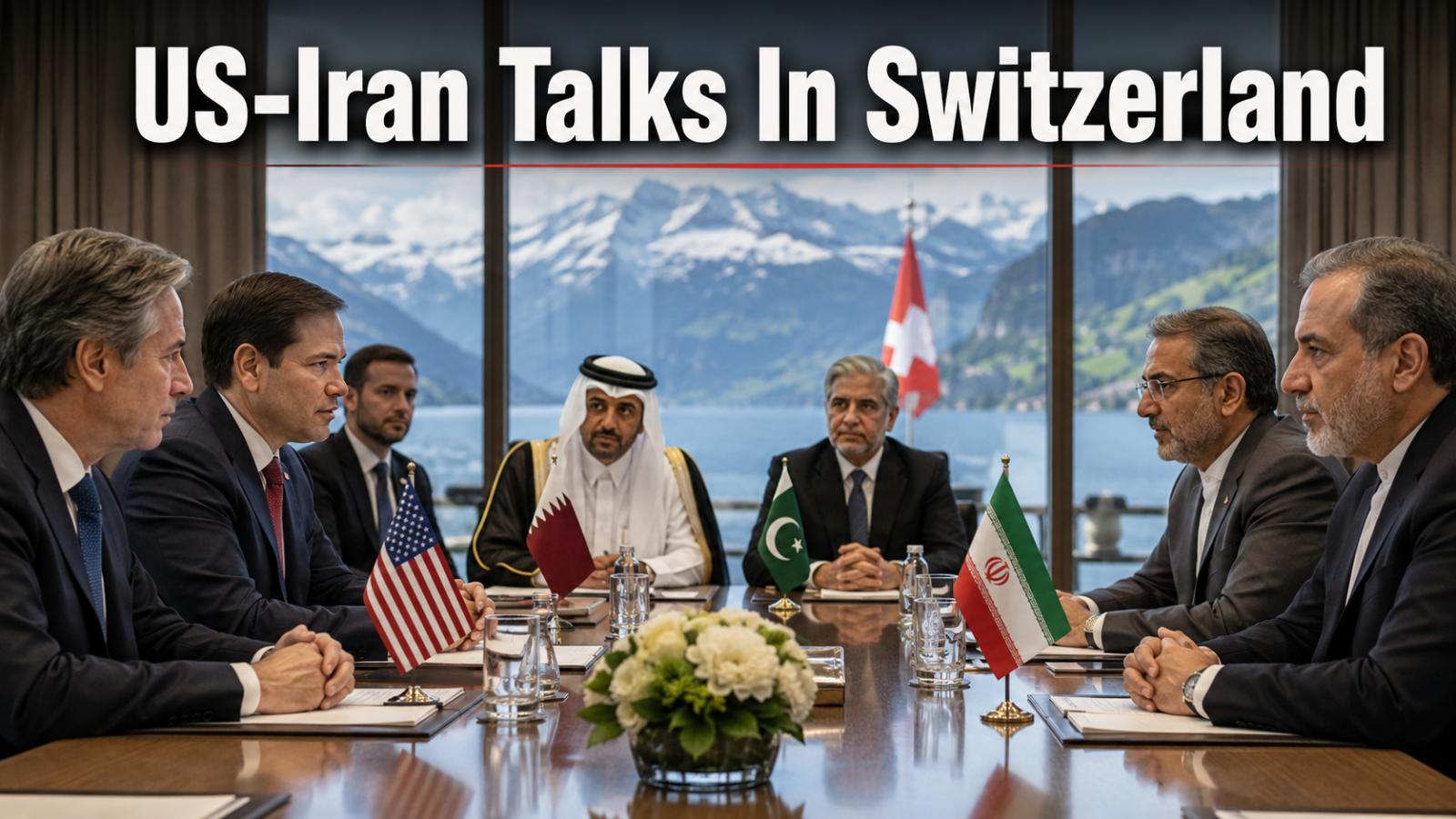
US Iran peace talks in Switzerland have drawn fresh attention as Qatar and Pakistan take a more visible role in efforts to reduce regional tensions. The discussions, held near Lake Lucerne, brought together senior representatives linked to Washington, Tehran, Doha and Islamabad at a time when the Middle East remains under pressure from nuclear concerns, shipping risks and ceasefire disputes.
The talks are being watched closely because they
US Iran peace talks in Switzerland have drawn fresh attention as Qatar and Pakistan take a more visible role in efforts to reduce regional tensions. The discussions, held near Lake Lucerne, brought together senior representatives linked to Washington, Tehran, Doha and Islamabad at a time when the Middle East remains under pressure from nuclear concerns, shipping risks and ceasefire disputes.
The talks are being watched closely because they
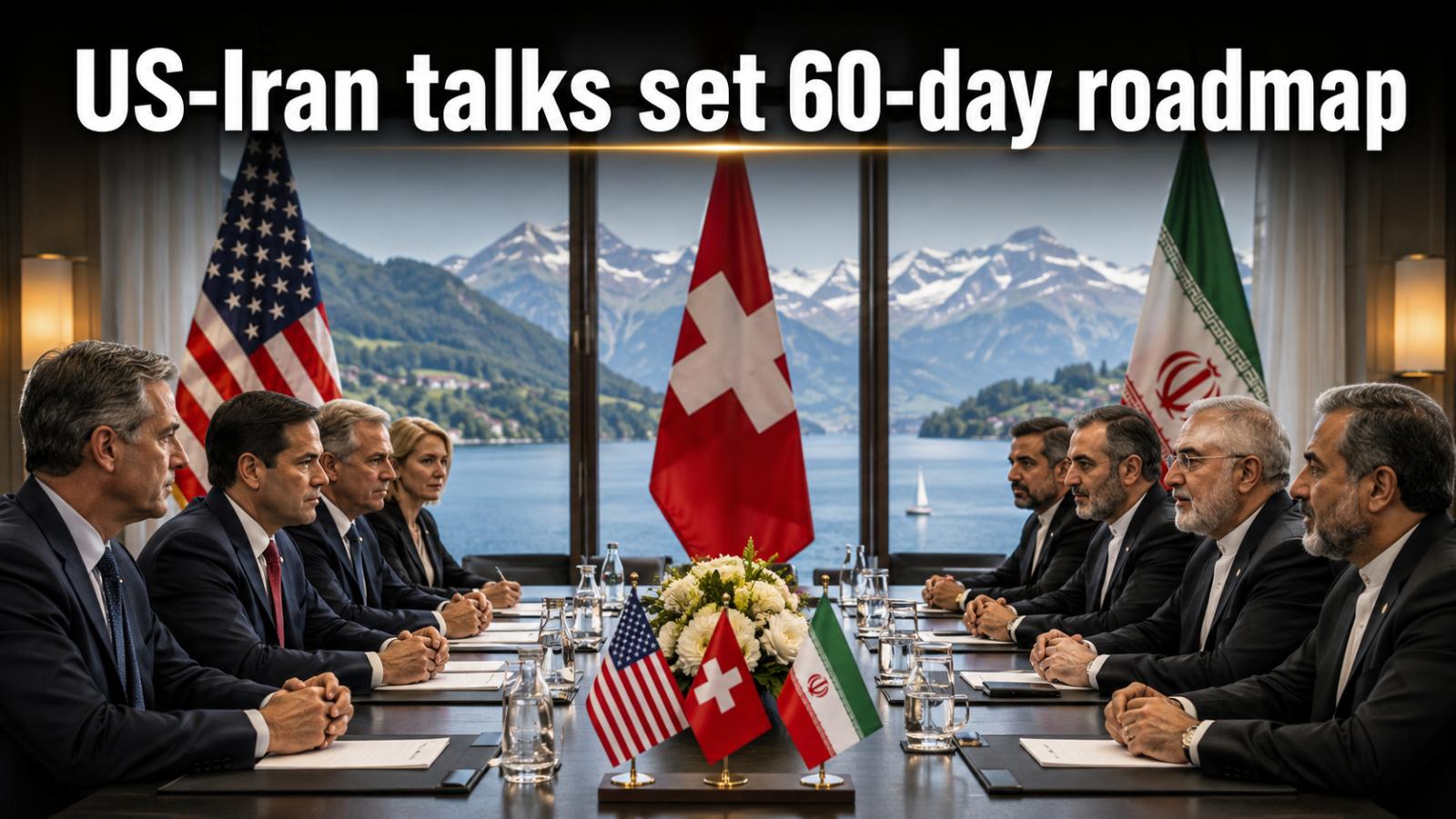
US-Iran talks in Switzerland have ended with cautious progress after senior officials from Washington and Tehran agreed to continue discussions through a 60-day roadmap. The meeting, supported by Pakistan and Qatar as mediators, did not deliver a final agreement, but it gave both sides a structured process to address sanctions, nuclear concerns, regional security and the safety of shipping through the Strait of Hormuz.
The talks were held
US-Iran talks in Switzerland have ended with cautious progress after senior officials from Washington and Tehran agreed to continue discussions through a 60-day roadmap. The meeting, supported by Pakistan and Qatar as mediators, did not deliver a final agreement, but it gave both sides a structured process to address sanctions, nuclear concerns, regional security and the safety of shipping through the Strait of Hormuz.
The talks were held
Qatar factory blast triggers search operation
An explosion at a factory in Qatar’s Ras Laffan industrial zone injured 54 people and left 18 others missing, the country’s interior ministry said Monday, June 22. Authorities described the blast as the result of a technical incident and said emergency teams were continuing search and response operations at the site. The ministry did not immediately provide further details on the condition of
Qatar factory blast triggers search operation
An explosion at a factory in Qatar’s Ras Laffan industrial zone injured 54 people and left 18 others missing, the country’s interior ministry said Monday, June 22. Authorities described the blast as the result of a technical incident and said emergency teams were continuing search and response operations at the site. The ministry did not immediately provide further details on the condition of
US Iran talks end with cautious optimism
The first round of US Iran talks in Switzerland has concluded with cautious optimism, according to a joint statement issued by mediators Pakistan and Qatar on Monday, June 22. The discussions, held at the Lake Lucerne Summit, focused on ending the wider Middle East conflict and creating a framework for continued negotiations. Mediators described the session as constructive and positive, while noting th
US Iran talks end with cautious optimism
The first round of US Iran talks in Switzerland has concluded with cautious optimism, according to a joint statement issued by mediators Pakistan and Qatar on Monday, June 22. The discussions, held at the Lake Lucerne Summit, focused on ending the wider Middle East conflict and creating a framework for continued negotiations. Mediators described the session as constructive and positive, while noting th
US Iran talks face early tension in Switzerland
US and Iranian negotiators continued discussions in Switzerland into the early hours of Monday, June 22, as both sides attempted to advance a fragile diplomatic process aimed at reducing months of conflict across the Middle East. The talks, held at the Swiss resort of Burgenstock, focused on regional security issues and efforts to prevent further escalation that has unsettled global energy marke
US Iran talks face early tension in Switzerland
US and Iranian negotiators continued discussions in Switzerland into the early hours of Monday, June 22, as both sides attempted to advance a fragile diplomatic process aimed at reducing months of conflict across the Middle East. The talks, held at the Swiss resort of Burgenstock, focused on regional security issues and efforts to prevent further escalation that has unsettled global energy marke
PM Modi Leads International Yoga Day 2026 From Kolkata’s Red Road
Kolkata became the national focus of India’s global wellness message on Sunday, June 21, 2026, as Prime Minister Narendra Modi led the 12th International Day of Yoga celebrations at the city’s historic Red Road.
The event marked one of the biggest public gatherings for Yoga Day 2026, with the theme “Yoga for Healthy
PM Modi Leads International Yoga Day 2026 From Kolkata’s Red Road
Kolkata became the national focus of India’s global wellness message on Sunday, June 21, 2026, as Prime Minister Narendra Modi led the 12th International Day of Yoga celebrations at the city’s historic Red Road.
The event marked one of the biggest public gatherings for Yoga Day 2026, with the theme “Yoga for Healthy
Iran-US technical talks in Switzerland are set to begin Sunday, June 21, 2026, as Washington and Tehran move into the next phase of a mediation effort involving Pakistan and Qatar.
Pakistan’s Ministry of Foreign Affairs said the discussions will take place in Bürgenstock and will include representatives from the United States and Iran, along with Pakistani and Qatari mediators.
Iran-US Technical Talks in Switzerland Follow Islamabad Deal
The
Iran-US technical talks in Switzerland are set to begin Sunday, June 21, 2026, as Washington and Tehran move into the next phase of a mediation effort involving Pakistan and Qatar.
Pakistan’s Ministry of Foreign Affairs said the discussions will take place in Bürgenstock and will include representatives from the United States and Iran, along with Pakistani and Qatari mediators.
Iran-US Technical Talks in Switzerland Follow Islamabad Deal
The