


#constitution-of-india

Supreme Court Declares Right To Walk On Footpaths A Fundamental Right
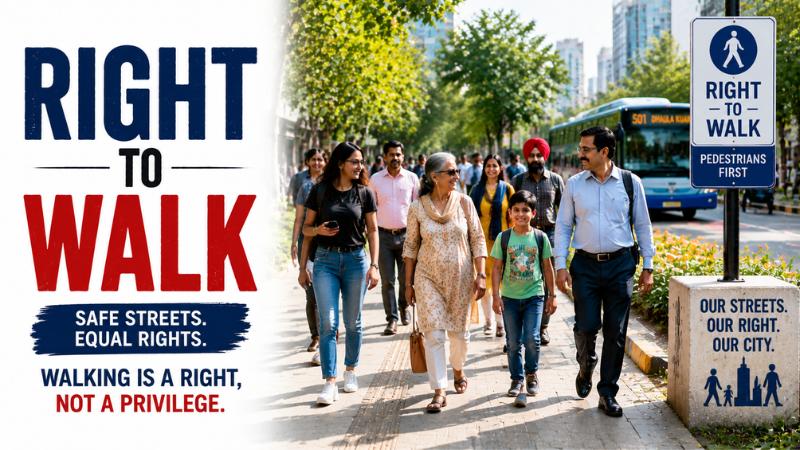
Supreme Court Says Right To Walk On Safe Footpaths Is A Fundamental Right The Supreme Court has declared that walking on safe and clearly marked footpaths is a fundamental right, strengthening the legal protection available to pedestrians across India. In a significant ruling, the court said public authorities have a duty to provide and maintain footpaths wherever roads exist. The judgment pl
Supreme Court Declares Right To Walk On Footpaths A Fundamental Right
Supreme Court Says Right To Walk On Safe Footpaths Is A Fundamental Right The Supreme Court has declared that walking on safe and clearly marked footpaths is a fundamental right, strengthening the legal protection available to pedestrians across India. In a significant ruling, the court said public authorities have a duty to provide and maintain footpaths wherever roads exist. The judgment pl
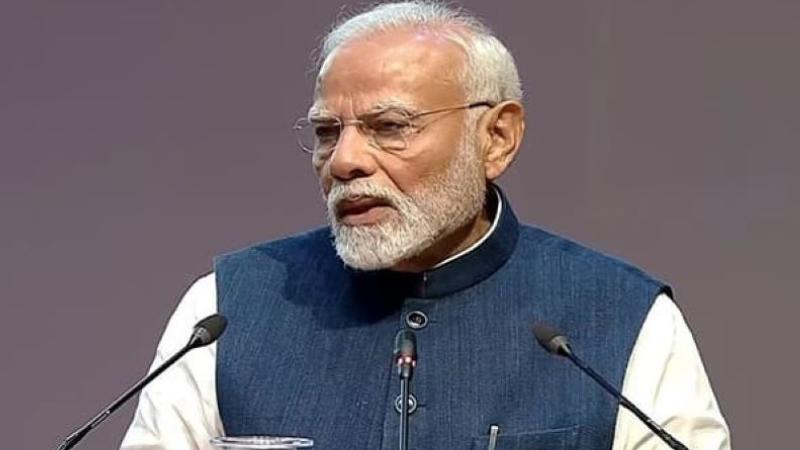
PM Modi Promises Fair Delimitation, Says All States Will Be Treated Equally
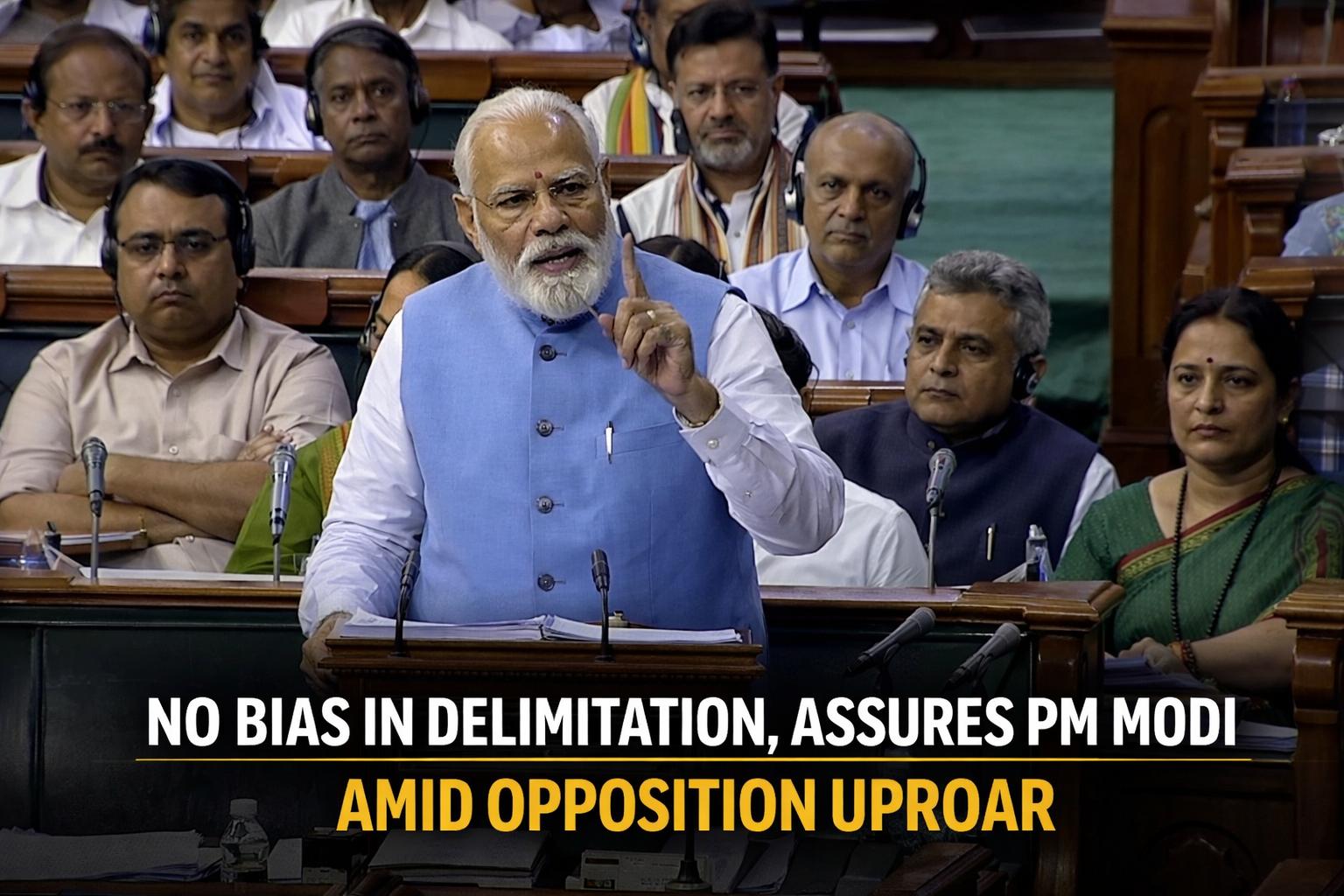
Prime Minister Narendra Modi addressed the Lok Sabha during the ongoing special Parliament session, offering a strong assurance that the proposed delimitation process will be conducted without bias toward any region. His statement comes at a time when the issue has triggered a major political confrontation between the ruling NDA and Opposition parties, especially leaders from southern states who fea
PM Modi Promises Fair Delimitation, Says All States Will Be Treated Equally
Prime Minister Narendra Modi addressed the Lok Sabha during the ongoing special Parliament session, offering a strong assurance that the proposed delimitation process will be conducted without bias toward any region. His statement comes at a time when the issue has triggered a major political confrontation between the ruling NDA and Opposition parties, especially leaders from southern states who fea
Special Parliament Session Live: Opposition Unites Against Delimitation, Supports Women’s Reservation
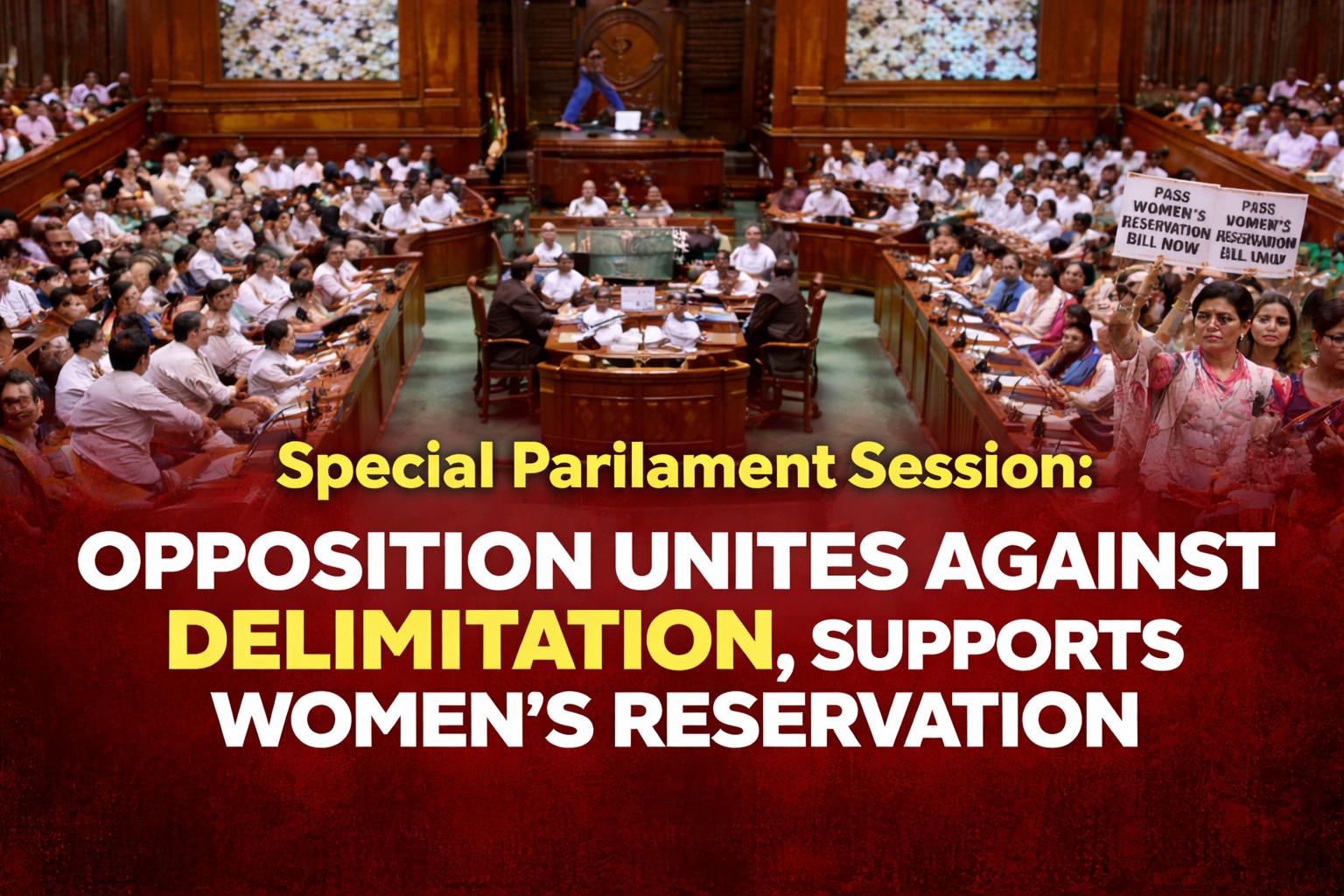
The Special Parliament Session, set to run from April 16 to 18, has kicked off with significant debates surrounding the government’s proposed amendments. One of the most anticipated legislative pieces is the operationalization of the Women’s Reservation Act, which aims to ensure 33% representation for women in both the Lok Sabha and state assemblies by 2029. Alongside this, a Constitution amendment bill will be presented on the first day of the session, marking the beginning of what promi
Special Parliament Session Live: Opposition Unites Against Delimitation, Supports Women’s Reservation
The Special Parliament Session, set to run from April 16 to 18, has kicked off with significant debates surrounding the government’s proposed amendments. One of the most anticipated legislative pieces is the operationalization of the Women’s Reservation Act, which aims to ensure 33% representation for women in both the Lok Sabha and state assemblies by 2029. Alongside this, a Constitution amendment bill will be presented on the first day of the session, marking the beginning of what promi
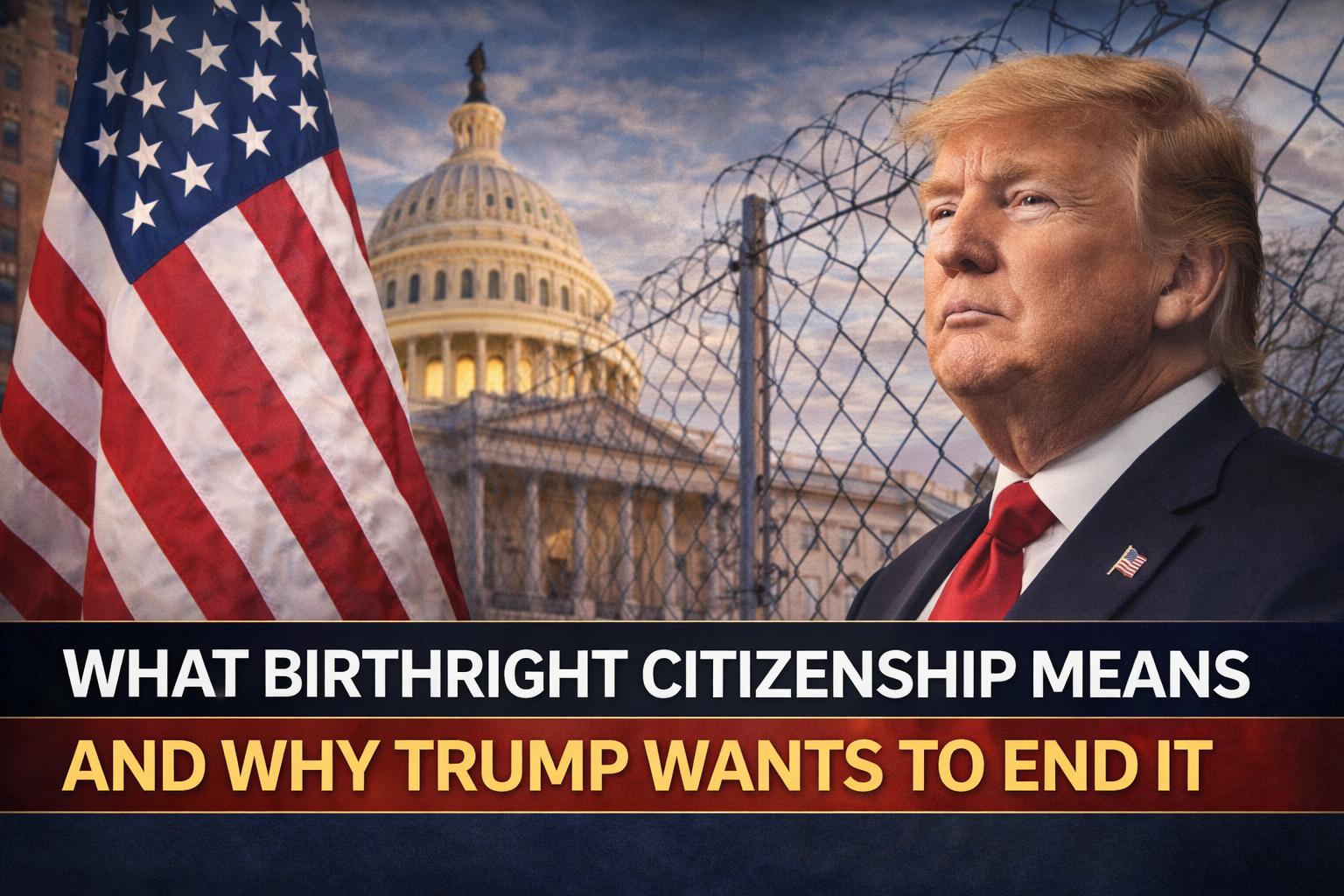
What birthright citizenship means and why Trump wants to end it
The US Supreme Court is reviewing a major legal challenge to President Donald Trump’s January 2025 executive order seeking to end birthright citizenship. During a hearing on Wednesday, April 1, 2026, justices examined whether the policy aligns with the US Constitution and federal law. Birthright citizenship is based on the 14th Amendment, which states that anyone born in the United States is automatically a citizen, regardless of their parents’ immigration status. This principle
What birthright citizenship means and why Trump wants to end it
The US Supreme Court is reviewing a major legal challenge to President Donald Trump’s January 2025 executive order seeking to end birthright citizenship. During a hearing on Wednesday, April 1, 2026, justices examined whether the policy aligns with the US Constitution and federal law. Birthright citizenship is based on the 14th Amendment, which states that anyone born in the United States is automatically a citizen, regardless of their parents’ immigration status. This principle
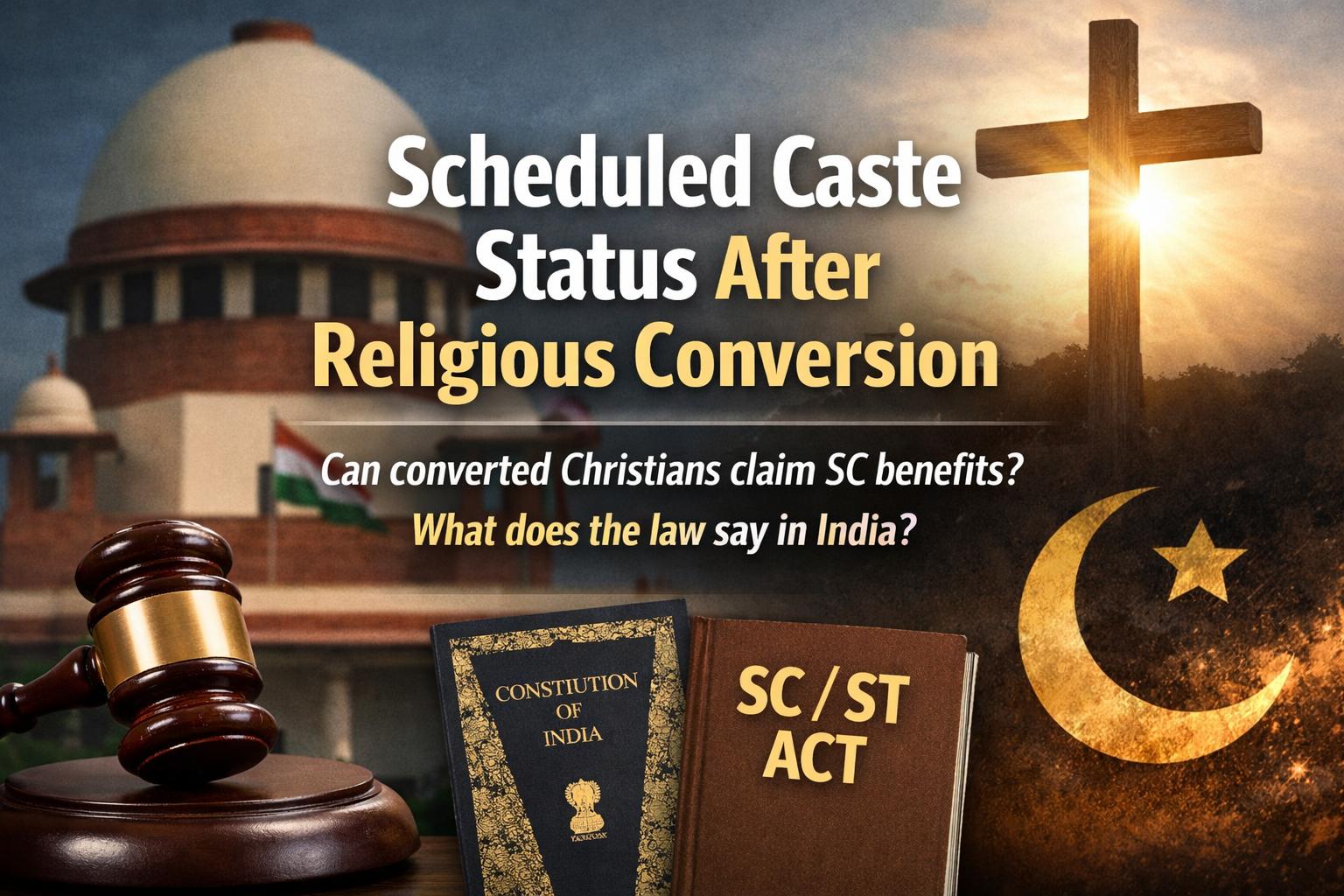
Supreme Court of India rules conversion ends Scheduled Caste status
The Supreme Court of India, in a significant judgment delivered on March 24, 2026, has reaffirmed that individuals who convert to religions other than Hinduism, Sikhism, or Buddhism cannot retain or claim Scheduled Caste status under the law. The ruling reinforces the constitutional framework governing caste-based reservations and legal protections in India. The verdict came in an appeal challenging an earlier decision of the Andhra Pradesh High Court, which had quashed criminal proceedings filed under the Scheduled Castes and Scheduled Tribes (Prevention of Atrocities) Act. The complainant, who was born into a Scheduled Caste but had converted to Christianity and was functioning as a pastor, had alleged caste-based abuse and assault. However, the court held that his conversion disentitled him from invoking protections meant specifically for Scheduled Castes. A bench of the Supreme Court observed that the Constitution (Scheduled Castes) Order, 1950, clearly restricts Scheduled Caste recognition to persons professing Hinduism, Sikhism, or Buddhism. The court described this restriction as categorical, stating that conversion to any other religion results in the immediate and complete loss of Scheduled Caste status, regardless of birth. The court further clarified that a person cannot simultaneously profess a religion outside the specified categories and claim Scheduled Caste identity for statutory benefits. It emphasized that such positions are mutually exclusive within the constitutional scheme, and no statutory protection or reservation can be extended once a person ceases to fall within the legally defined category. In its interpretation, the court also highlighted that the term “profess” implies a public declaration and active practice of a religion. This interpretation played a key role in assessing the individual’s eligibility, particularly in cases where religious identity is visibly demonstrated through roles such as clergy or religious leadership. The judgment is expected to have wide-ranging implications for individuals who convert to religions outside the constitutionally recognised framework while seeking benefits or protections linked to Scheduled Caste status. While the ruling reinforces existing legal provisions, it also brings renewed attention to ongoing debates about caste discrimination and its persistence beyond religious boundaries.
Supreme Court of India rules conversion ends Scheduled Caste status
The Supreme Court of India, in a significant judgment delivered on March 24, 2026, has reaffirmed that individuals who convert to religions other than Hinduism, Sikhism, or Buddhism cannot retain or claim Scheduled Caste status under the law. The ruling reinforces the constitutional framework governing caste-based reservations and legal protections in India. The verdict came in an appeal challenging an earlier decision of the Andhra Pradesh High Court, which had quashed criminal proceedings filed under the Scheduled Castes and Scheduled Tribes (Prevention of Atrocities) Act. The complainant, who was born into a Scheduled Caste but had converted to Christianity and was functioning as a pastor, had alleged caste-based abuse and assault. However, the court held that his conversion disentitled him from invoking protections meant specifically for Scheduled Castes. A bench of the Supreme Court observed that the Constitution (Scheduled Castes) Order, 1950, clearly restricts Scheduled Caste recognition to persons professing Hinduism, Sikhism, or Buddhism. The court described this restriction as categorical, stating that conversion to any other religion results in the immediate and complete loss of Scheduled Caste status, regardless of birth. The court further clarified that a person cannot simultaneously profess a religion outside the specified categories and claim Scheduled Caste identity for statutory benefits. It emphasized that such positions are mutually exclusive within the constitutional scheme, and no statutory protection or reservation can be extended once a person ceases to fall within the legally defined category. In its interpretation, the court also highlighted that the term “profess” implies a public declaration and active practice of a religion. This interpretation played a key role in assessing the individual’s eligibility, particularly in cases where religious identity is visibly demonstrated through roles such as clergy or religious leadership. The judgment is expected to have wide-ranging implications for individuals who convert to religions outside the constitutionally recognised framework while seeking benefits or protections linked to Scheduled Caste status. While the ruling reinforces existing legal provisions, it also brings renewed attention to ongoing debates about caste discrimination and its persistence beyond religious boundaries.
Difference Between Independence Day And Republic Day Explained Simply
Aspect Independence Day Republic Day
Difference Between Independence Day And Republic Day Explained Simply
Aspect Independence Day Republic Day
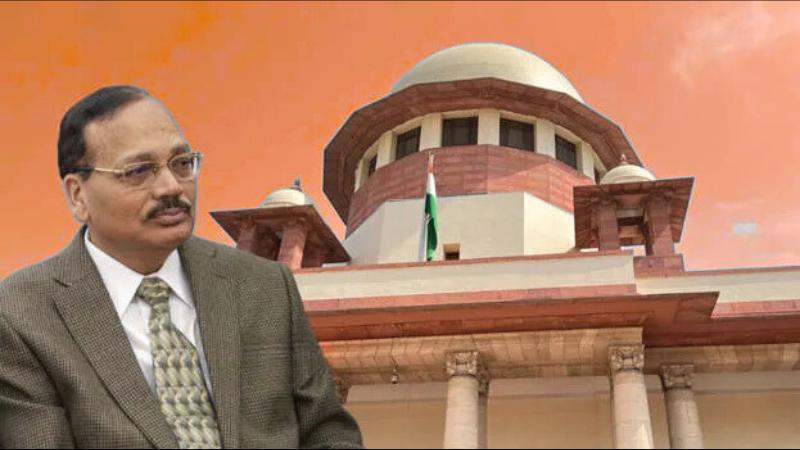
Justice Surya Kant Appointed 53rd Chief Justice of India, To Assume Office on Nov 24
Justice Surya Kant, one of the senior-most judges of the Supreme Court, has been officially appointed as the 53rd Chief Justice of India (CJI). The announcement was made by Union Law Minister Arjun Ram Meghwal, who congratulated Justice Kant on his appointment via X (formerly Twitter). He will take charge on November 24, 2025, succeeding Chief Justice DY Chandrachud, and will hold office until February 9, 2027. Justice Surya Kant, who hails from Haryana, has a distinguished judicial
Justice Surya Kant Appointed 53rd Chief Justice of India, To Assume Office on Nov 24
Justice Surya Kant, one of the senior-most judges of the Supreme Court, has been officially appointed as the 53rd Chief Justice of India (CJI). The announcement was made by Union Law Minister Arjun Ram Meghwal, who congratulated Justice Kant on his appointment via X (formerly Twitter). He will take charge on November 24, 2025, succeeding Chief Justice DY Chandrachud, and will hold office until February 9, 2027. Justice Surya Kant, who hails from Haryana, has a distinguished judicial
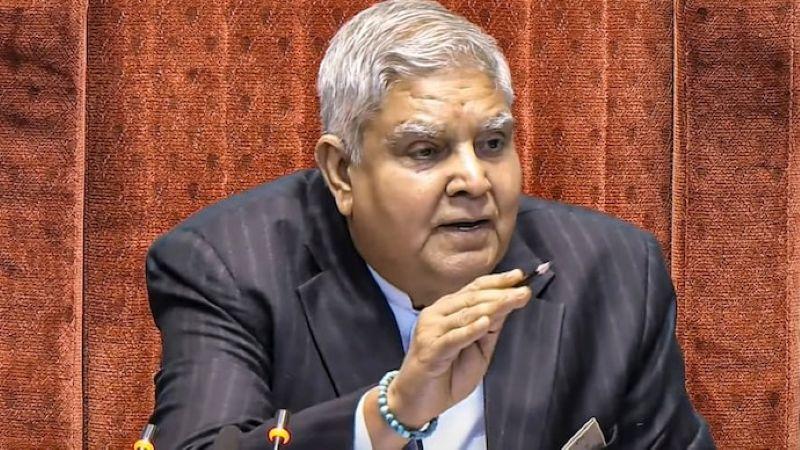
Jagdeep Dhankhar Resigns As Vice President of India Citing Health Reasons
Jagdeep Dhankhar, the 14th Vice President of India, has officially resigned from his post, citing health concerns. This surprising resignation comes as the country’s political landscape faces an unexpected shift on the first day of the Monsoon Parliament session. Dhankhar, who was also serving as the Chairman of the Rajya Sabha, had taken office in August 2022. His resignation letter, addressed to President Droupadi Murmu, was a formal declaration in whi
Jagdeep Dhankhar Resigns As Vice President of India Citing Health Reasons
Jagdeep Dhankhar, the 14th Vice President of India, has officially resigned from his post, citing health concerns. This surprising resignation comes as the country’s political landscape faces an unexpected shift on the first day of the Monsoon Parliament session. Dhankhar, who was also serving as the Chairman of the Rajya Sabha, had taken office in August 2022. His resignation letter, addressed to President Droupadi Murmu, was a formal declaration in whi
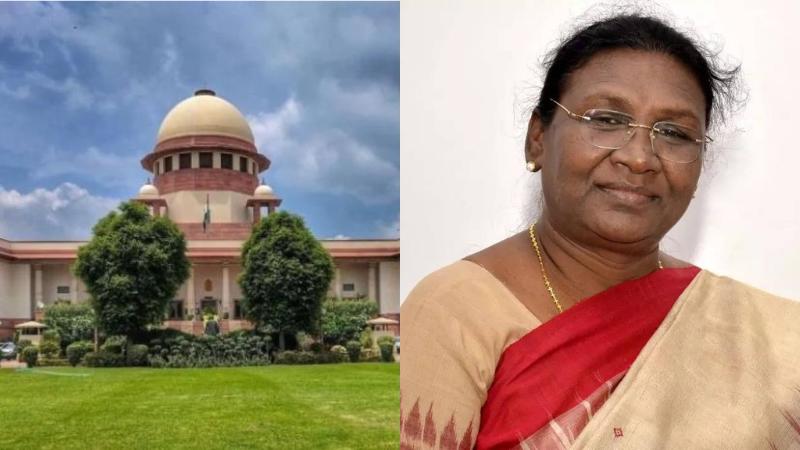
President Murmu Questions Supreme Court Bill Assent Ruling
In a rare and potentially historic clash between two of India's highest constitutional offices, President Droupadi Murmu has openly questioned a recent Supreme Court ruling that mandates timelines for approving bills passed by legislatures. This bold move marks the first time in independent India’s history that a sitting President has directly contested a decision made by the apex court, highlighting a deepening constitutional debate over the separation of powers. The Supr
President Murmu Questions Supreme Court Bill Assent Ruling
In a rare and potentially historic clash between two of India's highest constitutional offices, President Droupadi Murmu has openly questioned a recent Supreme Court ruling that mandates timelines for approving bills passed by legislatures. This bold move marks the first time in independent India’s history that a sitting President has directly contested a decision made by the apex court, highlighting a deepening constitutional debate over the separation of powers. The Supr
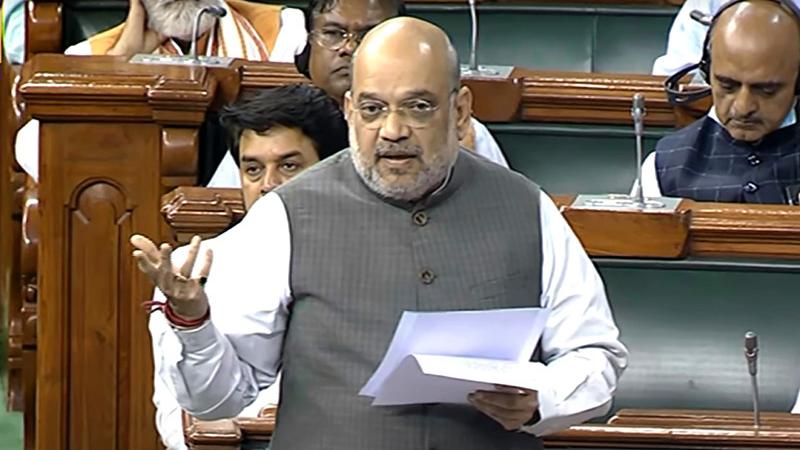
Amit Shah's Key Quotes on India's Constitution and Political Landscape
Union Home Minister Amit Shah recently made significant remarks regarding India’s Constitution, highlighting the democratic process of its adoption and emphasizing its deep connection with India's traditions. Shah stated that the Constitution was adopted after extensive feedback from the people, marking a democratic milestone in India’s history. Some of his key quotes touched upon the ongoing debates in Parliament about the Constitution, noting that they have served
Amit Shah's Key Quotes on India's Constitution and Political Landscape
Union Home Minister Amit Shah recently made significant remarks regarding India’s Constitution, highlighting the democratic process of its adoption and emphasizing its deep connection with India's traditions. Shah stated that the Constitution was adopted after extensive feedback from the people, marking a democratic milestone in India’s history. Some of his key quotes touched upon the ongoing debates in Parliament about the Constitution, noting that they have served
PM Modi Marks Constitution Day, Reaffirms Commitment to Constitution
On the 75th anniversary of the adoption of India's Constitution, Prime Minister Narendra Modi reaffirmed his commitment to performing his duties within the Constitution's framework. In his speech at the Supreme Court during Constitution Day celebrations, he clarified that his actions have always aligned with constitutional provisions without overstepping boundaries. Modi addressed opposition claims that efforts were underway to undermine the Constitution and asserted that his governme
PM Modi Marks Constitution Day, Reaffirms Commitment to Constitution
On the 75th anniversary of the adoption of India's Constitution, Prime Minister Narendra Modi reaffirmed his commitment to performing his duties within the Constitution's framework. In his speech at the Supreme Court during Constitution Day celebrations, he clarified that his actions have always aligned with constitutional provisions without overstepping boundaries. Modi addressed opposition claims that efforts were underway to undermine the Constitution and asserted that his governme