


















#dhsrule
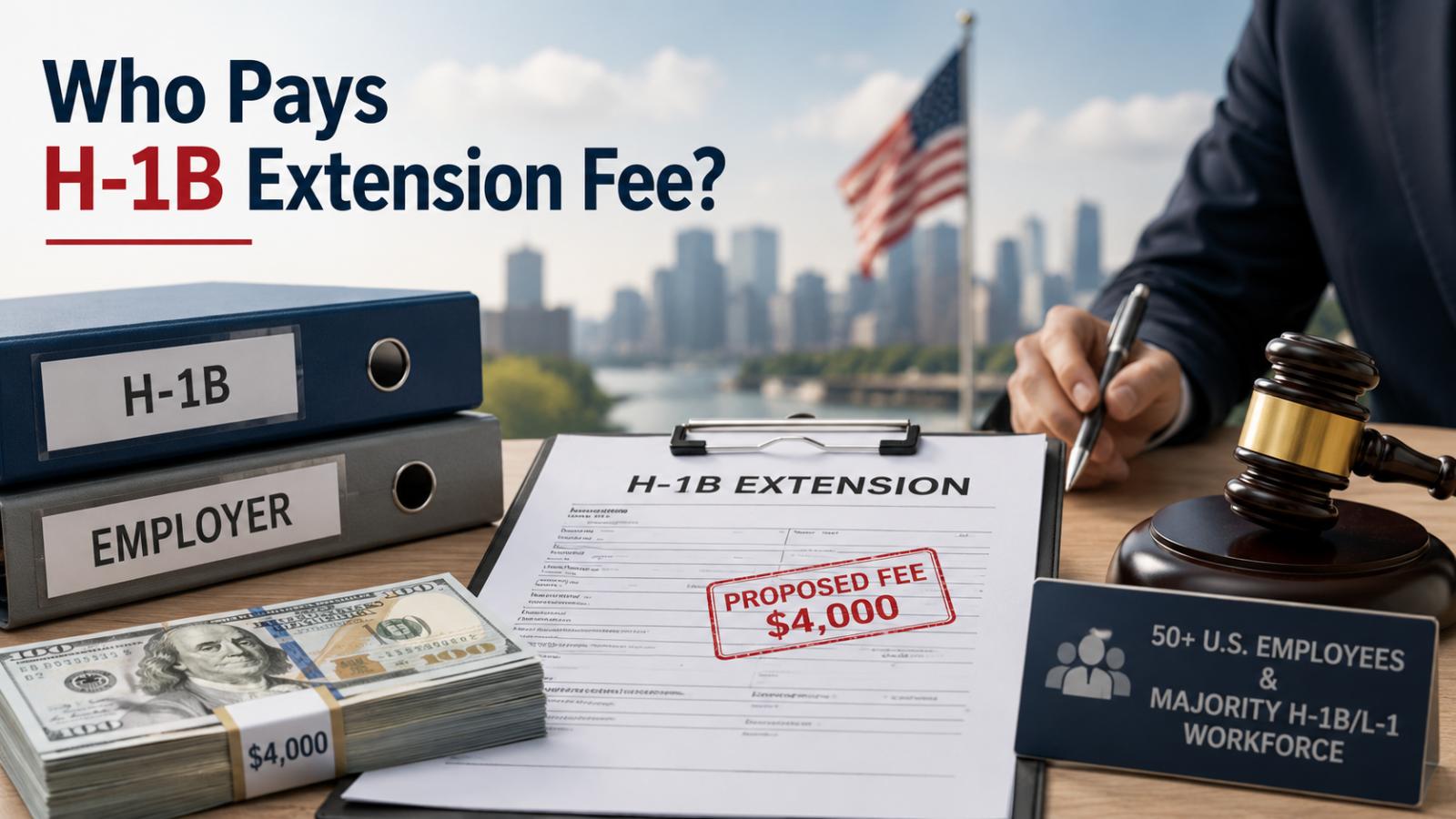
Who must pay the proposed $4,000 H-1B extension fee?
The proposed $4,000 H-1B extension fee would not apply to every employer or visa holder. It targets companies with at least 50 U.S. employees when more than half hold H-1B or L-1 status, expanding the surcharge to same-employer extension petitions as well. Which employers meet the threshold? The eligibility rules are part of a broader
Who must pay the proposed $4,000 H-1B extension fee?
The proposed $4,000 H-1B extension fee would not apply to every employer or visa holder. It targets companies with at least 50 U.S. employees when more than half hold H-1B or L-1 status, expanding the surcharge to same-employer extension petitions as well. Which employers meet the threshold? The eligibility rules are part of a broader
U.S. plan could add $4,000 H-1B extension fee
A pending DHS rule could extend the $4,000 H-1B extension fee and $4,500 L-1 surcharge to routine stay extensions filed by large visa-dependent employers, increasing retention costs for technology and consulting companies and affecting many India-born professionals. DHS keeps broader surcharge at final-rule stage The Department of Homeland Security proposed the change on June 6, 2024. It would
U.S. plan could add $4,000 H-1B extension fee
A pending DHS rule could extend the $4,000 H-1B extension fee and $4,500 L-1 surcharge to routine stay extensions filed by large visa-dependent employers, increasing retention costs for technology and consulting companies and affecting many India-born professionals. DHS keeps broader surcharge at final-rule stage The Department of Homeland Security proposed the change on June 6, 2024. It would
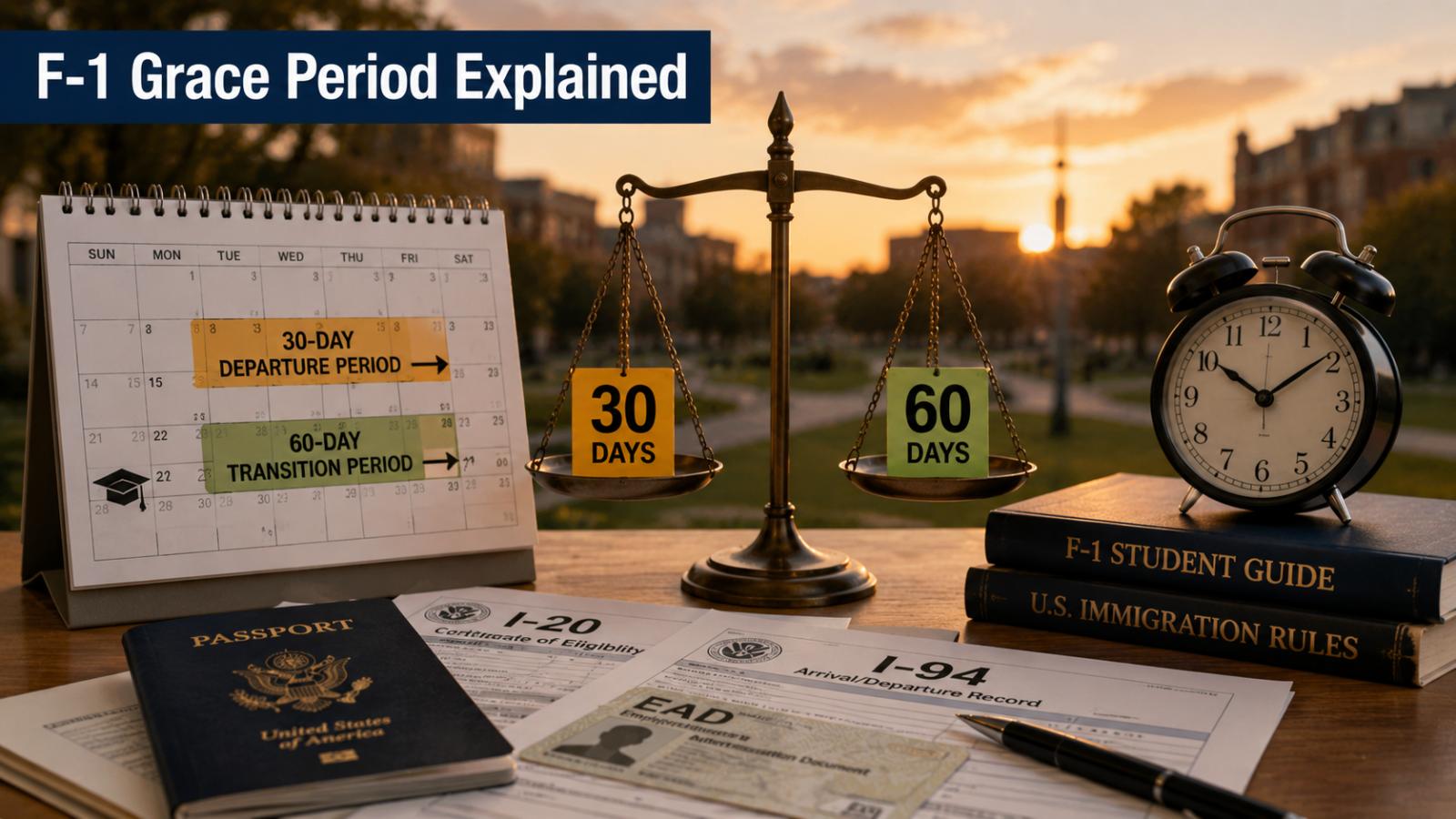
F-1 grace period: Who gets 30 days and who gets 60?
The F-1 grace period will generally fall from 60 days to 30 days under the DHS fixed-stay rule effective September 15, 2026. Qualifying students protected by the transition provisions may retain 60 days after their Form I-20 or EAD end date, subject to the rule’s limits. The Department of Homeland Security’s final fixed-stay rule will reduce the standard F-1 departure period from 60 days to 30 days for students admitted un
F-1 grace period: Who gets 30 days and who gets 60?
The F-1 grace period will generally fall from 60 days to 30 days under the DHS fixed-stay rule effective September 15, 2026. Qualifying students protected by the transition provisions may retain 60 days after their Form I-20 or EAD end date, subject to the rule’s limits. The Department of Homeland Security’s final fixed-stay rule will reduce the standard F-1 departure period from 60 days to 30 days for students admitted un
New F-1 transition rules for students already in the U.S.
The F-1 transition rules allow many students maintaining D/S status in the United States on September 15, 2026, to remain through their current Form I-20 or EAD end date, subject to a four-year cap. Travel, program changes or additional study time may require new action. The Department of Homeland Security published its final fixed-stay rule on Friday, July 17, 2026. It is scheduled to take effect on Tuesday, September 15, 2026, and includes a transition period for
New F-1 transition rules for students already in the U.S.
The F-1 transition rules allow many students maintaining D/S status in the United States on September 15, 2026, to remain through their current Form I-20 or EAD end date, subject to a four-year cap. Travel, program changes or additional study time may require new action. The Department of Homeland Security published its final fixed-stay rule on Friday, July 17, 2026. It is scheduled to take effect on Tuesday, September 15, 2026, and includes a transition period for
DHS ends F-1 duration of status under new fixed-stay rule
The DHS F-1 duration of status rule takes effect September 15, 2026, replacing open-ended D/S admission with fixed stays. New students may receive up to four years, while eligible students already in the U.S. receive transition protection and new extension filing requirements. The Department of Homeland Security has finalized a rule ending the “duration of status,” or D/S, admission system for F-1 students. Published on Friday, July 17, 2026, the rule takes effe
DHS ends F-1 duration of status under new fixed-stay rule
The DHS F-1 duration of status rule takes effect September 15, 2026, replacing open-ended D/S admission with fixed stays. New students may receive up to four years, while eligible students already in the U.S. receive transition protection and new extension filing requirements. The Department of Homeland Security has finalized a rule ending the “duration of status,” or D/S, admission system for F-1 students. Published on Friday, July 17, 2026, the rule takes effe
Trump Student Visa Rule Sets Four-Year Admission Limit
The Trump student visa rule would replace duration of status with fixed admission periods of up to four years. F-1 and J-1 students may face new USCIS extension filings, shorter departure periods, travel effects and tighter limits on school or program changes. WASHINGTON — The Department of Homeland Security published a final rule on Friday, July 17, 2026, replacing the “duration of status” system for F-1 students, J
Trump Student Visa Rule Sets Four-Year Admission Limit
The Trump student visa rule would replace duration of status with fixed admission periods of up to four years. F-1 and J-1 students may face new USCIS extension filings, shorter departure periods, travel effects and tighter limits on school or program changes. WASHINGTON — The Department of Homeland Security published a final rule on Friday, July 17, 2026, replacing the “duration of status” system for F-1 students, J


