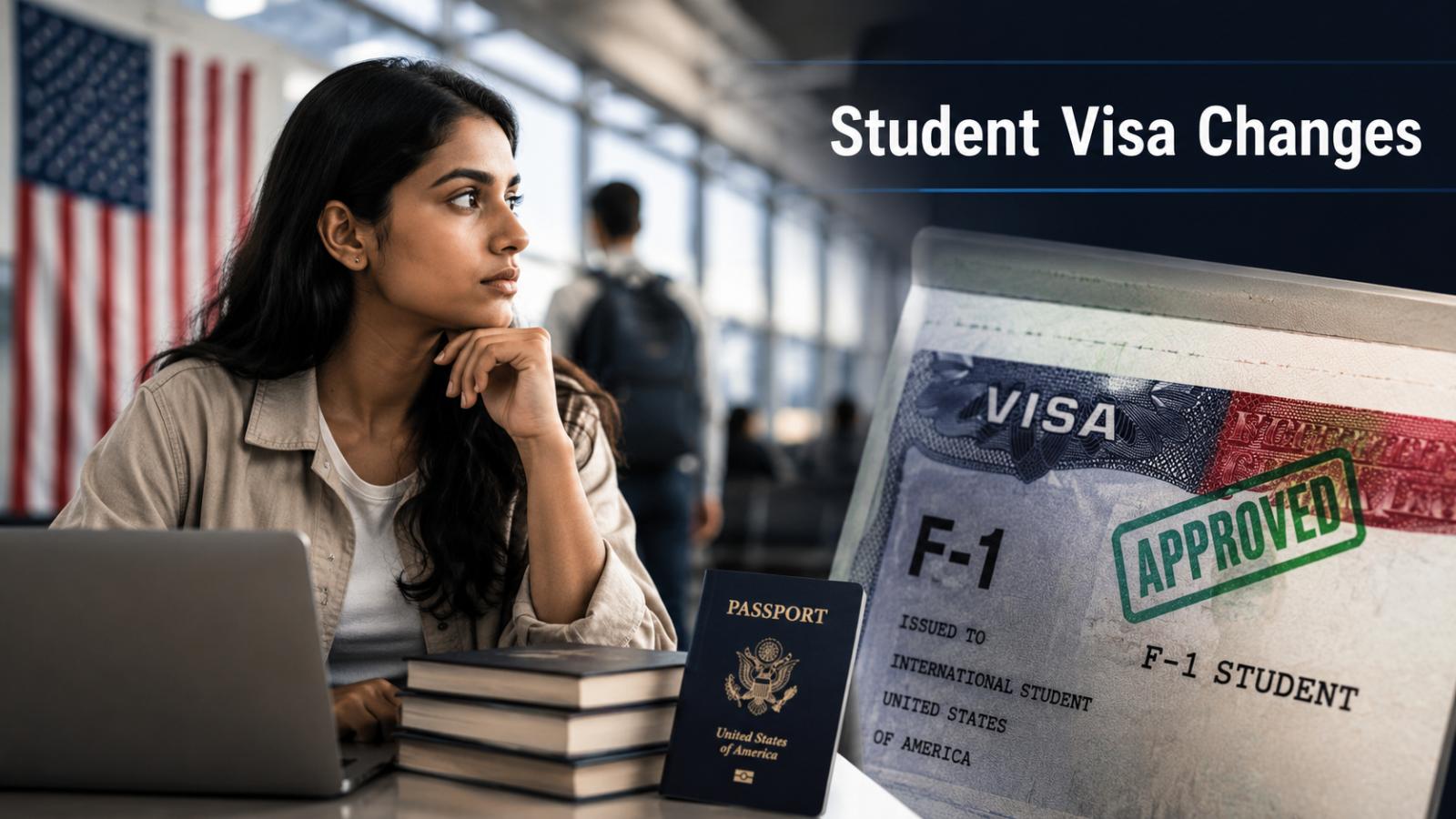
The Trump student visa rule would replace duration of status with fixed admission periods of up to four years. F-1 and J-1 students may face new USCIS extension filings, shorter departure periods, travel effects and tighter limits on school or program changes.
WASHINGTON — The Department of Homeland Security published a final rule on Friday, July 17, 2026, replacing the “duration of status” system for F-1 students, J-1 exchange visitors and most foreign media representatives with fixed admission periods.
The rule is scheduled to take effect on Tuesday, September 15, 2026. However, because it is classified as a major rule subject to congressional review, DHS said the effective date could be changed or the rule could be terminated following that review.
Fixed Admission Periods Replace Duration of Status
Under the new framework, international students would no longer generally be admitted for the indefinite “duration of status,” commonly shown as D/S on Form I-94.
Admission Limited to Four Years
F-1 and J-1 nonimmigrants would generally be admitted through the program end date listed on Form I-20 or DS-2019, but the authorized period could not exceed four years.
Students enrolled in longer programs could remain eligible to continue their education, but they would need to obtain an extension of stay before their authorized admission expires.
Departure Period Reduced to 30 Days
The rule reduces the departure preparation period for F-1 students from 60 days to 30 days after completing an academic program or authorized post-completion practical training.
Students who end their studies or training early would also generally have 30 days to leave the United States or take action to maintain lawful status.
USCIS Extension Requirements
Students who need additional time to complete a degree, practical training or another authorized activity would generally have to submit an extension-of-stay request to U.S. Citizenship and Immigration Services.
Students May Continue Studying During Review
An F-1 student who files a timely extension application would be permitted to continue a full course of study after the Form I-94 admission period expires while USCIS reviews the request.
Delays May Not Always Qualify
DHS states that academic probation, suspension or repeated failure to complete a program may generally be considered unacceptable reasons for extending an F-1 student’s authorized period.
New Transfer and Program Restrictions
The final rule also changes when some F-1 students may transfer schools or change their educational objectives.
First-Year Transfer Restrictions
Students would generally need to complete their first academic year at the institution that issued their initial Form I-20 before transferring or changing educational objectives. SEVP could authorize exceptions in qualifying circumstances.
Graduate Students Face Tighter Rules
Graduate-level students would generally be prohibited from changing their educational objective during a program. Transferring during a graduate program would require an SEVP exception based on extenuating circumstances.
Travel, OPT and Transition Protection
Students maintaining duration of status when the rule takes effect would receive transition protections under provisions established by DHS.
International Travel May Change Admission Dates
Students traveling outside the United States after the effective date should check the Form I-94 issued when they return. Readmission would normally result in a fixed expiration date instead of D/S.
Temporary Relief for OPT Applicants
The rule provides limited relief during its first six months for certain students applying for post-completion Optional Practical Training or a STEM OPT extension.
What International Students Should Do Next
Students should review their passport, Form I-20 or DS-2019 and Form I-94 after every entry into the United States.
Indian students considering travel, school transfers, program changes, OPT or extensions should confirm their deadlines with their university’s international student office. DHS may publish further notices if congressional review changes the rule’s scheduled September 15, 2026, implementation date.